

















See’s Candies celebrates its newest flavor with Lollypalooza all July long, but the real story is what didn’t change, the same way since the 1940s
See’s Candies has been making the same Lollypop since the 1940s. In an industry that treats reinvention as a survival strategy, that kind of stubbornness is worth paying attention to.
Most food products from the 1940s are artifacts now, curiosities in culinary history books, discontinued by brand managers who decided the category needed refreshing. The See’s Candies square Lollypop is an exception that never asked for permission to keep existing.
The square shape is not aesthetic whimsy. It is the product. Hard candy in that geometry holds its flavor differently than a round pop, more surface area on the flat face, more concentrated contact with the tongue on the corners. Whether or not that was the engineering intent in the 1940s, it is what eighty years of production has delivered: a lollypop with a specific texture and a finish that lingers without cloying.
See’s has been making this format in continuous production since its introduction in the 1940s. That alone separates it from nearly every candy brand of that era still operating.
The Lollypop survived the Great Depression’s aftermath, World War II rationing, the sugar price volatility of the 1970s, and the premium-snack gold rush of the 2000s that convinced every heritage brand to launch a “craft” extension. See’s did not launch a craft extension. It kept making the square Lollypop.
The Berkshire Test
Warren Buffett acquired See’s Candies in 1972 for $25 million: a figure that significantly exceeded the company’s book value at the time. He has since called See’s “the prototype of a dream business.” That designation is precise. A dream business is not one that grows fast. It is one that generates returns on capital with minimal reinvestment and holds pricing power with its customer base regardless of what happens in the market around it. The square Lollypop is not incidental to that story. It is the story.
There is something quietly instructive about the fact that one of the most celebrated investors of the twentieth century built a case study around a candy on a stick that costs less than two dollars. The insight is not about the candy. It is about what it takes to keep something people trust.
What July 20 Actually Means
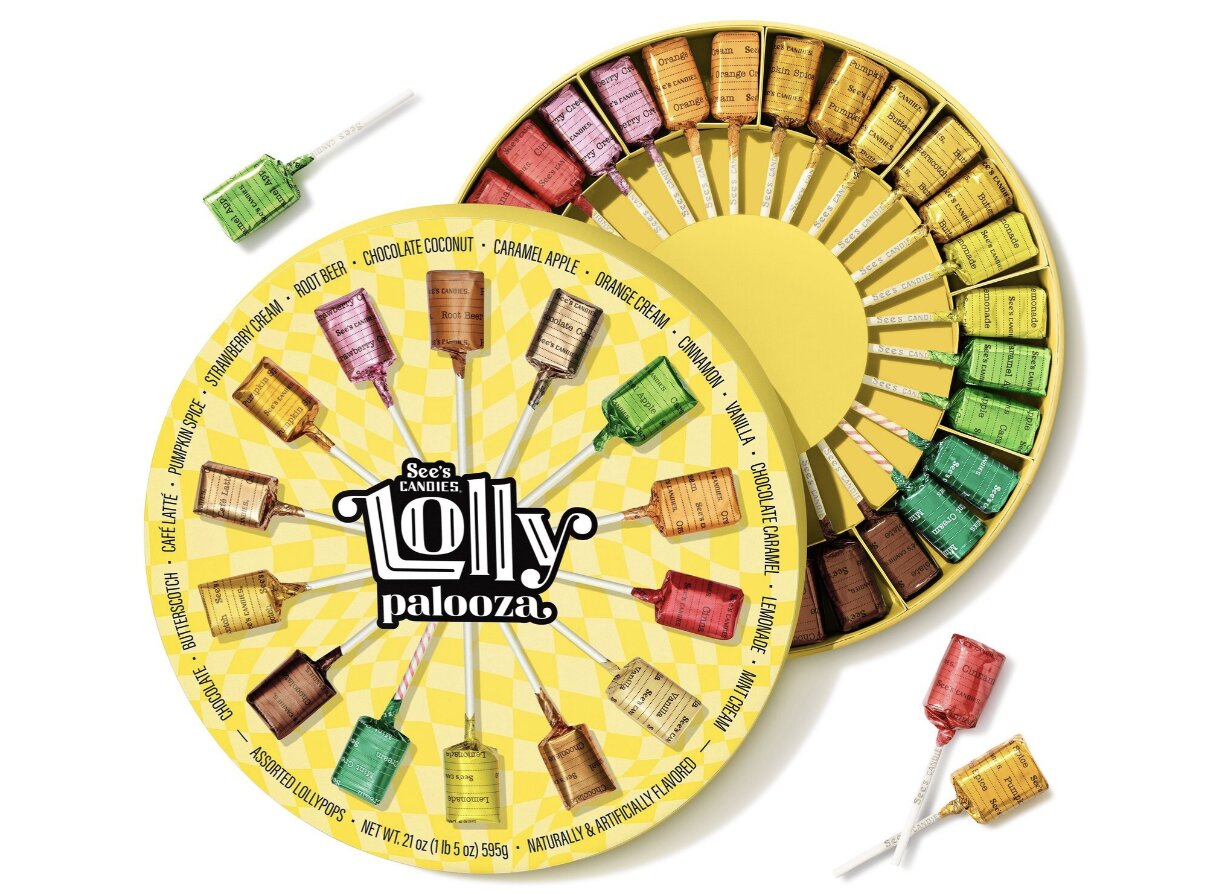
This July, See’s runs its fourth annual Lollypalooza celebration — a month-long showcase of the full Lollypop lineup culminating on July 20, National Lollypop Day, with the debut of a brand-new flavor. The company has not announced what it is. That restraint is deliberate, and it works precisely because of the weight behind it.
The current year-round lineup spans butterscotch, chocolate, vanilla, café latté, and cinnamon — flavors with the kind of mass appeal that reads as obvious until you consider how few brands have maintained them without drift for decades. The butterscotch in particular is built from cream, brown sugar, and butter in a ratio that produces a finish with genuine warmth rather than synthetic sweetness. It is not trying to be anything other than what it is.
When See’s announces a new flavor, the announcement lands differently than a product launch from a brand that hasn’t earned the comparison point. The question implicit in every new See’s Lollypop is the same: does this belong next to the butterscotch?
That is a harder bar than most candy companies will ever have to clear.
Most brands build anticipation by revealing things. See’s built anticipation by not revealing this one. It’s a smarter use of silence than most marketing departments will produce in a year.
The Los Angeles Origin
See’s was founded in Los Angeles in 1921, not San Francisco. Charles See opened the first shop at 135 Western Avenue — the neighborhood now called Koreatown — with his mother Mary’s recipes as the cornerstone. The company later expanded into San Francisco and is now headquartered in South San Francisco, but the origin is Southern California. The square Lollypop was introduced there, in a city that has since become the national center of food culture, trend cycles, and the particular Los Angeles habit of treating local institutions as permanent.
The Lollypop factory See’s opened in Burlingame in the late 1990s, dedicated exclusively to Lollypop and Little Pops production, processes 2.5 million pounds annually. That number is not a marketing statistic. It is the structural evidence that the square Lollypop is not a nostalgia product. It is a core business.
On July 20, a new flavor joins that production line. Whatever it is, it will be made the same way, in the same square format, at the same Burlingame facility. The format does not change. That is the whole point.
See’s Candies Lollypalooza runs through July 31. The new Lollypop flavor debuts in shops and online on July 20.
FAQ: See’s Candies Lollypalooza
Q1: When is the new See’s Candies Lollypop flavor coming out?
A: See’s Candies will reveal and release its new Lollypop flavor on July 20, 2026 — National Lollypop Day. The flavor has not been announced in advance. It will be available in See’s shops and online beginning that date.
Q2: How long has See’s Candies been making its square Lollypop?
A: See’s Candies introduced its signature square Lollypop in the 1940s. The format has been in continuous production for more than eight decades, making it one of the longest-running candy formats from a major American confectionery brand.
Q3: Where was See’s Candies founded?
A: See’s Candies was founded in Los Angeles in 1921 by Charles See and his mother Mary, whose original recipes formed the foundation of the business. The company later expanded to San Francisco and is now headquartered in South San Francisco, California.