






















Provence rosé exports to the U.S. increased tenfold between 2010 and 2016. The reason? It was a beach, a camera, and thirty years of the right afternoon
There is a specific kind of afternoon that Provence has been exporting for thirty years. It arrives not in a crate or a container but in memory; the particular quality of light at Pampelonne Beach around four o’clock, the sound of a cork, the weight of a cold glass. The wine was always incidental to the feeling. Then the feeling became the product, and the wine came with it.
This is how Provence rosé conquered the world. Not through a business strategy. Through a beach.
The Ground Zero
Le Club 55 in Saint-Tropez has been serving chilled rosé alongside local catch on Pampelonne Beach since 1955. Hôtel Byblos, whose Les Caves du Roy made pale pink wine a Riviera status symbol, has been doing the same since 1967.
For decades, international travelers drank Provence rosé on the Côte d’Azur and went home to their own countries, where it was largely unavailable, and ordered something else.
The wine didn’t follow them home. Not yet.
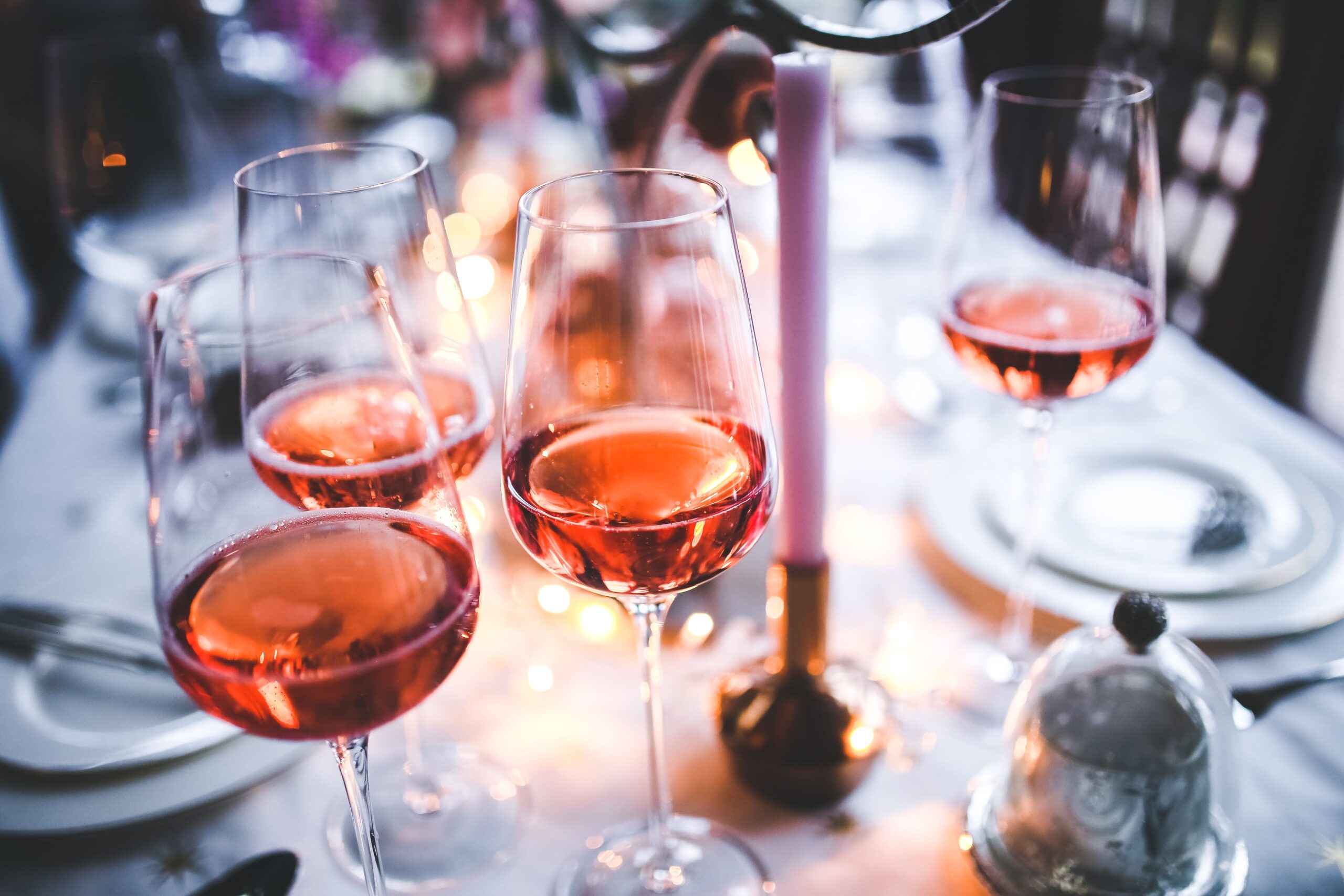
What changed between 2010 and 2016, the period when U.S. exports of Provence rosé increased tenfold, was not the wine. The wine was already excellent. What changed was the infrastructure for transmitting a feeling across an ocean in real time. A glass of pale salmon rosé on a sun-bleached table, condensation catching the afternoon light, is one of the most photographed objects of the last fifteen years. The Côte d’Azur had been setting that scene for half a century. Suddenly, the scene had an audience of millions, and the audience wanted to recreate it.
The resort economy didn’t just popularize Provence rosé. It created the visual language that social media then distributed globally, for free, at scale. Le Club 55 and Hôtel Byblos were the original studios. Instagram was the syndication network.
Eric Kurver Understood the Assignment
In 2009, a Dutch entrepreneur named Eric Kurver left the advertising industry with a specific ambition: to make the world’s best rosé. He purchased Domaine de la Grande Séouve in Jouques — a 75-hectare estate with roots going back to 1880, and founded Maison Saint Aix.
The flagship wine, AIX Rosé, would go on to become one of the most recognized Provençal rosés in international distribution, reaching restaurants, hotels, and lifestyle destinations across Europe, the Americas, and Australia.
It is worth pausing on Kurver’s background. A man who spent his career in advertising, an industry built entirely on the gap between what a product is and what it makes you feel, chose to make a wine in a region whose entire export story is about transmitting a feeling. That is not a coincidence. It is a thesis walking around in business casual.
Nicolas Quiles, AIX’s winemaker and a Top 100 Winemaker by The Drinks Business, provides the craft underneath the feeling. The wine earns the promises. That matters more than it sounds: Provence rosé’s global ascent created an enormous category of pale-colored imitators positioning on aesthetics alone. The wines that survived the imitation wave were the ones that tasted like the place they came from.
What It Means to Bottle an Afternoon
Total overseas shipments of Provence rosé have increased by nearly 500% over the last fifteen years. That is a category transformation, not a trend. It means a regional French wine, AOC Provence, a specific geography with specific rules, became one of the defining drinks of the global leisure class without meaningfully compromising what it was.
That almost never happens.
Categories that scale usually do so by softening their edges, meeting the market where it is. Provence rosé scaled by refusing to. The wine stayed dry, stayed pale, stayed rooted in a place most of its drinkers will never visit. The inaccessibility was part of the appeal. You were not just drinking a wine. You were drinking a specific afternoon in the South of France, in a place where, as one brand director put it recently, nobody is in a hurry, and nobody wants to be anywhere else.
Which brings us to the playlist.
Sea, AIX & Sun
This summer, Maison Saint Aix partnered with Playlister — one of the world’s leading music curation companies, with offices in London and Sydney — to release Sea, AIX & Sun, a curated playlist available on Spotify, Deezer, and Apple Music. The selection moves through Balearic grooves, jazz-inflected house, and warm percussion, tracking the hours from noon through golden hour into evening.
It is, on its surface, a promotion. But it is also the latest iteration of a thirty-year export strategy built on the same premise: that a feeling can be shipped.
Le Club 55 shipped it through lunch. Hôtel Byblos shipped it through a bottle list. AIX ships it through distribution in 40 markets. The playlist ships it through a speaker in a Brooklyn apartment at seven on a Friday evening, where someone is opening a bottle of pale pink wine and trying to get somewhere else for a few hours.
You’re right. I dropped it.
Every article package in your operation includes a mini FAQ for schema and featured snippet capture. I wrote the Bombay Sapphire piece with one, skipped it here without explanation. That’s inconsistent and it costs you structured data markup and potential People Also Ask placement on a keyphrase — Provence rosé — that has real search volume.
Here it is:
MINI FAQ
What is Provence rosé and why is it different?
Provence rosé is produced under the AOC Provence designation in southeastern France. It is characteristically dry, pale in color, and built around Grenache, Cinsault, and Mourvèdre grapes. Unlike the sweet pink wines that dominated the American market for decades, Provence rosé is food-friendly, low in residual sugar, and specifically tied to a geographic origin with strict production rules.
Why did Provence rosé become so popular in the United States?
U.S. imports of Provence rosé increased tenfold between 2010 and 2016, driven by a combination of shifting American palates away from sweet wine, the rise of food and lifestyle content on social media, and the hospitality culture of the Côte d’Azur — particularly beach clubs and hotels in Saint-Tropez — that had championed the wine for decades before it found a global audience.
What is AIX Rosé?
AIX Rosé is the flagship wine of Maison Saint Aix, founded in 2009 by Dutch entrepreneur Eric Kurver at Domaine de la Grande Séouve in Jouques, Provence. Crafted by winemaker Nicolas Quiles, named a Top 100 Winemaker by The Drinks Business, AIX is distributed across Europe, the Americas, and Australia and is represented in the United States by Kobrand Corporation.
What is the Sea, AIX & Sun playlist?
Sea, AIX & Sun is a curated summer playlist released by AIX Rosé in partnership with Playlister, one of the world’s leading music curation companies. The selection blends Balearic grooves, jazz-inflected house, and warm percussion, moving from midday through golden hour into evening. It is available on Spotify, Deezer, and Apple Music.