



























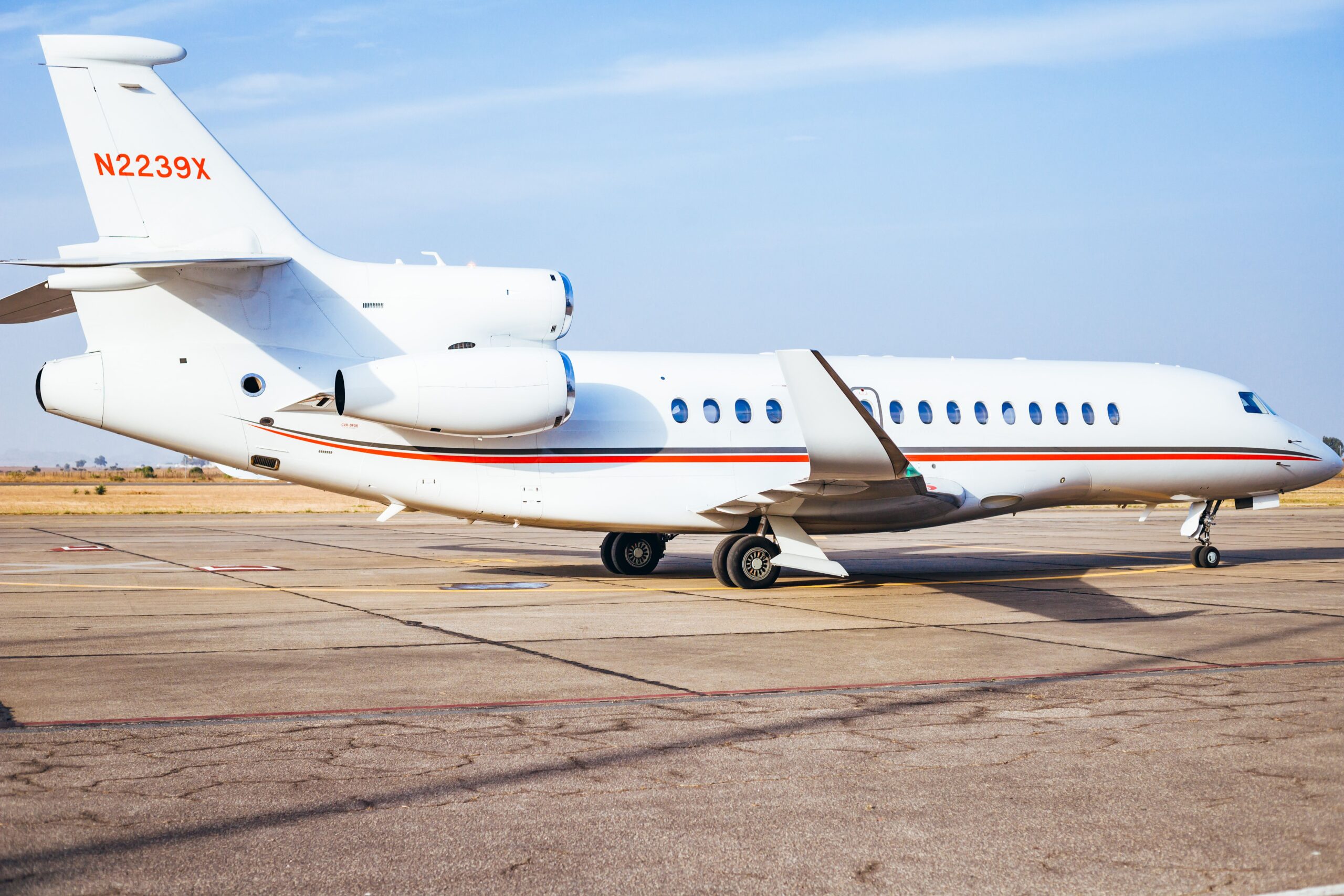
Teterboro wins every year. But Las Vegas, LA, and Fort Lauderdale tell you where private aviation is actually going. Here’s what the rankings miss.
The rankings come out every January. Teterboro wins. It has won every year since anyone started counting. Seventy-five thousand departures in 2025, essentially unchanged from the year before, the gap between it and second place wide enough to park a Gulfstream in sideways. The list is accurate. It is also, if you read it the right way, not particularly interesting.
Volume tells you where the money has already settled. It tells you where the infrastructure was built twenty years ago and has been compounding ever since. What it doesn’t tell you is where private aviation is being stress-tested, disrupted, and rebuilt in real time. For that, you need to look at the cities that just missed the top five, and understand exactly why they missed it.
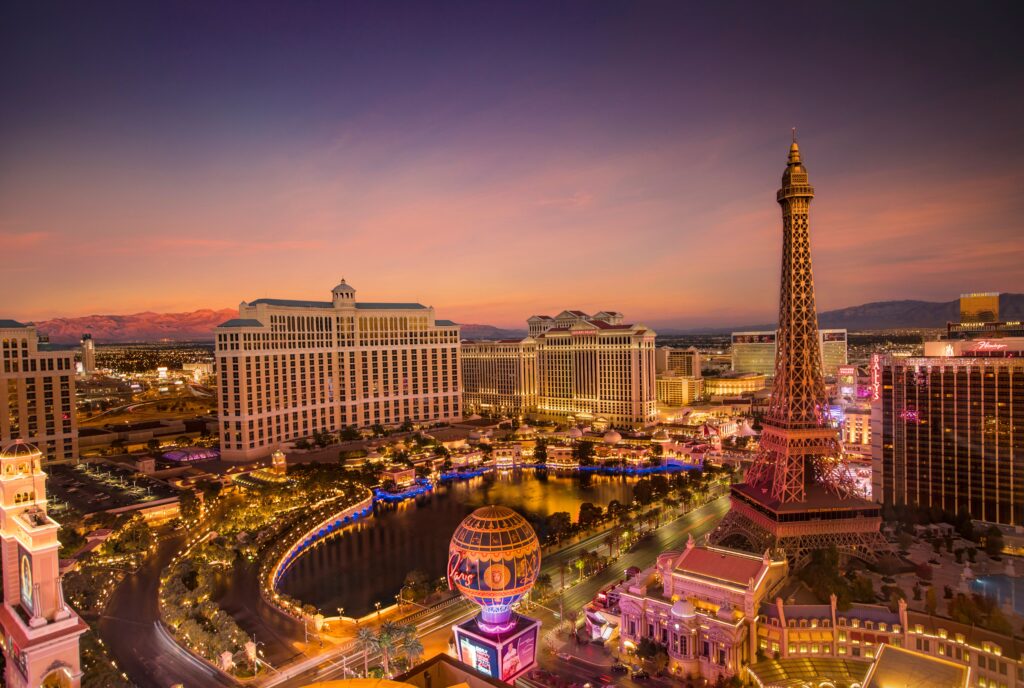
Las Vegas: The Purest Market in Private Aviation
Every other major private jet city has a reason that sounds respectable. New York has finance. Dallas has corporate relocation. Washington has government. Las Vegas has none of those explanations available to it and doesn’t need them.
Harry Reid International ranked sixth in 2025, bumped from the top five by Washington Dulles returning to relevance as the government recalled its contractors from their home offices. The margin was close enough that in any other year, Vegas is in and Dulles is out. But the more interesting point is what kind of traffic Harry Reid is actually handling.
Las Vegas private jet traffic is almost entirely leisure-driven: high-net-worth individuals, entertainment industry operators, and corporate groups attending conventions at a scale that makes the Las Vegas Convention Center one of the most significant drivers of business aviation demand in the country. CES alone generates measurable spikes in private jet movements every January. The Consumer Electronics Show, a trade event, moves more private metal than most cities see in a month. That is a specific and underappreciated fact about how convention economics translate into aviation demand.
Private aviation elsewhere runs on a corridor logic; the New York-to-Washington shuttle, the Dallas-to-Houston hop, the LA-to-San Francisco run that refuses to die despite every high-speed rail proposal. Las Vegas has no corridor. Every flight in is a destination decision, made by someone who specifically chose to be there. That makes Harry Reid the purest demand signal in American private aviation. Nobody lands in Vegas by accident or obligation.
The other cities on this list have industries. Las Vegas has a proposition. It turns out the proposition moves a lot of planes.

Los Angeles: The Market That Tells You What Happens Next
Van Nuys Airport dropped to ninth in 2025. A 12.3% decline in departures, the steepest fall among any major private aviation market that year. The reason is not a secret: the January 2025 wildfires destroyed more than eleven thousand homes across the greater Los Angeles area, displacing residents, disrupting ground transport networks, and creating operational complications that rippled through the entire regional aviation ecosystem.
This is the story the annual rankings can’t tell you. A number moving down a list looks like a market contracting. What it actually looks like, in this case, is a city absorbing a disaster and the private aviation market reacting the way any market reacts to acute disruption — by compressing.
Van Nuys has been a top-five private aviation market for most of the last two decades, driven by the entertainment industry’s specific operational demands; confidentiality, irregular scheduling, short-notice departures, and a clientele that treats ground time as a variable to be minimized. Clay Lacy Aviation has operated at VNY since 1968, long enough to have standing protocols for virtually every scenario. A wildfire displacement event was not in the standard playbook. The market adapted, rerouted some volume to Long Beach and Burbank, and is expected to recover as the region rebuilds.
What makes Los Angeles the most important private aviation market to watch is not the volume in any given year. It is the diversity of the demand. Entertainment, tech, real estate, international arrivals from Asia and the Gulf, Los Angeles private aviation is a composite of industries that don’t move together, which means the market is more resilient over time than any single-sector city. When one sector contracts, another absorbs it. The 2025 numbers are a weather event, not a trend.
The specific indicator to watch for LA’s recovery is ultra-long-range jet movements at VNY and LAX’s private terminals — the Gulfstream G700 and G800 class traffic that represents international high-net-worth arrivals from Asia and the Middle East. This segment grew nearly 70% nationally between 2019 and 2025. Los Angeles captures a disproportionate share of it. When that number recovers at VNY, the market has recovered.
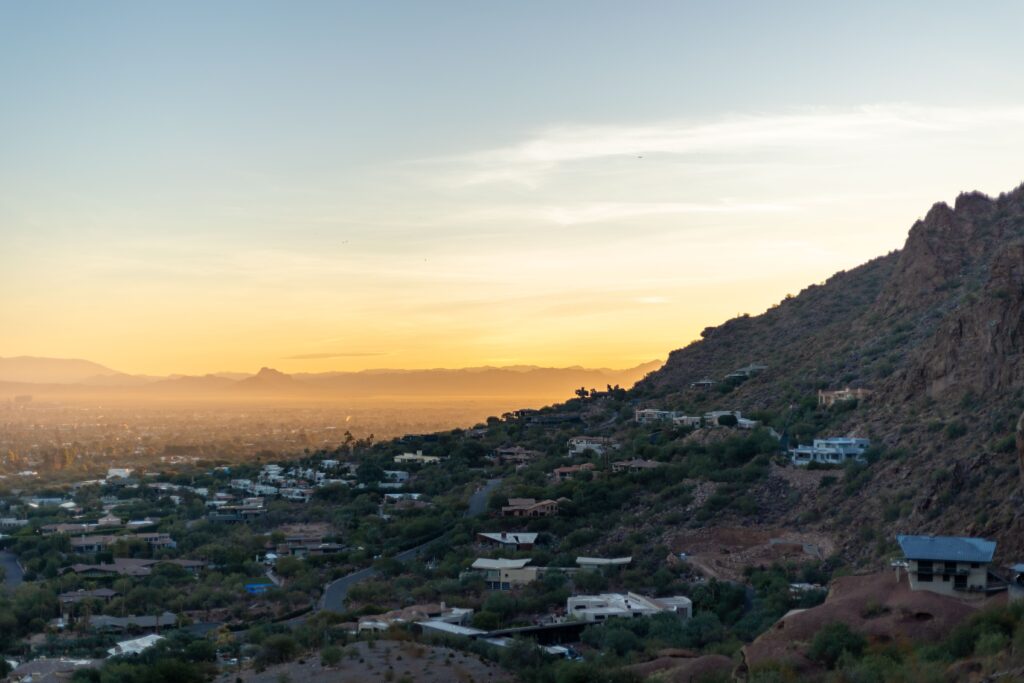
The Ones That Round Out the Story
Scottsdale ranked just outside the top ten and deserves mention not for its volume but for what it measures: seasonal wealth migration. When the Northeast gets cold, a specific demographic moves to Arizona and brings its planes. Scottsdale Airport in winter is a proxy for the migration patterns of high-net-worth retirees and second-home owners in a way no other airport in the country replicates at that scale. It is not a power corridor. It is a thermostat.
Fort Lauderdale Executive posted a 17.6% gain in 2025, the largest single-year increase of any airport in the top twenty-five. The reason is adjacent to the Palm Beach story: when presidential flight restrictions around Mar-a-Lago made Palm Beach International operationally complicated, the traffic moved south. Fort Lauderdale absorbed it because it had the ramp capacity and the FBO infrastructure to do so.
A flight restriction designed to secure one property ended up being the best marketing Fort Lauderdale Executive ever received, and nobody had to run a single ad.
What the Rankings Actually Measure
The top five private jet airports in the United States share a common characteristic: they serve markets where private aviation became infrastructure decades ago and has been self-reinforcing ever since. Teterboro exists because New York finance exists. Dallas Love Field climbed to second because Texas corporate relocation is real and accelerating. Westchester serves the northern suburbs of the most concentrated wealth market in the country.
These airports are not going to surprise you. They are going to keep doing what they do, and the departure counts are going to reflect that with minor variation year over year.
The cities worth watching are the ones where demand is being built by something new — a convention economy, a wildfire recovery, a presidential motorcade’s blast radius, a seasonal migration pattern that moves billions of dollars of net worth from one zip code to another. Those markets don’t always top the list. They’re the ones that tell you where the list is going next.
FAQ
Why isn’t Las Vegas in the top five private jet airports?
Las Vegas Harry Reid ranked sixth in 2025, just behind Washington Dulles, which returned to the top five as government and contractor activity increased in the post-pandemic period. In most years the margin is narrow enough that Vegas trades places with the fifth-ranked airport. Its volume is consistently among the highest in the country.
Why did Van Nuys Airport drop in private jet traffic?
Van Nuys posted a 12.3% decline in departures in 2025, largely attributed to the January 2025 wildfires that destroyed more than eleven thousand homes in the greater Los Angeles area. The disruption affected ground transport, displaced residents, and compressed regional aviation demand. VNY has historically ranked among the top five private jet airports in the United States and is expected to recover as the region rebuilds.
What is the fastest-growing private jet market in the US?
Fort Lauderdale Executive Airport posted the largest year-over-year gain in 2025 at 17.6%, absorbing traffic displaced from Palm Beach International when presidential flight restrictions around Mar-a-Lago complicated operations there. Nationally, the fastest-growing segment is fractional ownership, with Part 91K departures up roughly 10% in 2025 alone.