



























New data reveals 45 top destinations hit peak pollution during tourist season. Here’s how air quality travel planning can protect your health.
You booked the flight, planned the itinerary, packed the layers. What you probably didn’t check was the air.
A new analysis from Champion Traveler, built on five years of satellite-derived PM2.5 measurements across 33,474 destinations, finds that in 45 major tourist destinations, peak tourism season and peak pollution season are the same month.
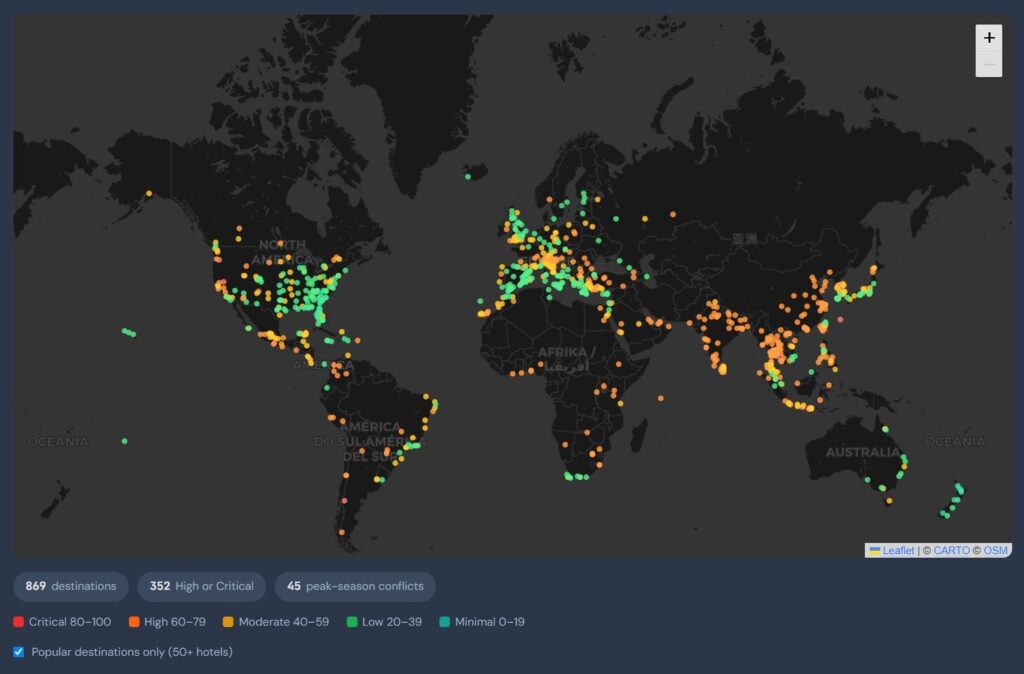
The Air Quality Travel Index — scored from Washington University’s ACAG research group data — processed 60 monthly pollution measurements per location to produce something the travel industry has never systematically offered: a month-by-month air quality picture for nearly every place on earth travelers actually go.
PM2.5 — fine particulate matter small enough to bypass the nose and throat and lodge in the lungs — is the pollutant that matters most for short-term health exposure. An AQI above 150 is classified Unhealthy for all people. Above 200, it’s Very Unhealthy. Most travelers have no idea what the number is at their destination when they land.
The Wildfire Problem Is Now a Summer Travel Problem
The American West’s air quality story has been rewritten by wildfire smoke, and summer travelers are absorbing the consequences. South Lake Tahoe — a destination whose entire identity is built around summer lake recreation — now averages an August AQI of 68, three times its April baseline of 23. Steamboat Springs, Malibu, Portland, and San Francisco follow the same pattern.
San Francisco in July is famous for fog. What’s less famous is that some of what’s making the air hazy has traveled from hundreds of miles away and isn’t marine layer.
The effect isn’t contained to mountain destinations. New York City’s worst air quality month is July, driven in part by transported wildfire smoke crossing the continent. A traveler who thinks wildfire smoke is someone else’s regional problem is mistaken about the geography of atmospheric transport.
For travelers with asthma, cardiovascular conditions, or young children in tow, the difference between an AQI of 23 and 68 isn’t academic. It’s the difference between comfortable outdoor activity and a day that triggers symptoms.
April in Tahoe: cold-clear air off the Sierra snowpack, the kind that makes distant peaks look closer than they are, that fills the lungs cleanly on a steep trail. August: a yellow-white haze sits on the water by afternoon, the mountains go soft at the edges, and the smell of smoke arrives before you see the source.
The Cool Season Trap in South Asia
The intuition that guides most South Asia trip planning — go in winter, avoid the monsoon heat — is exactly backwards from an air quality standpoint.
Agra, home of the Taj Mahal, averages a January AQI of 217. That’s Very Unhealthy by EPA classification — a level at which health authorities recommend everyone avoid prolonged outdoor exertion. January is also Agra’s busiest tourism month. Visitors who shift to July breathe air nearly three times cleaner, with an AQI of 73, despite the heat and humidity that make July feel less appealing on paper.
The mechanism is atmospheric: winter temperature inversions trap vehicle exhaust, agricultural burning residue, and industrial emissions close to the surface. The same meteorological conditions that produce the “cool season” pleasant temperatures also prevent vertical mixing that would disperse pollutants upward.
The Taj Mahal is one of the most photographed buildings on earth. In January, you may be photographing it through air that an EPA monitor would flag as a health warning.
Delhi, Kolkata, and Dhaka show the same pattern. The cool season is the pollution season, and millions of travelers are arriving during it every year.
Harmattan Season and the December West Africa Miscalculation
December holiday travel to Lagos, Accra, and Abidjan coincides with Harmattan season — the West African dry wind that carries Saharan dust south across the Gulf of Guinea. Lagos averages an AQI of 175 in December, classified Unhealthy. Shifting arrival to October cuts that figure to 64.
Harmattan air has a particular quality — a fine mineral dryness, visibility reduced to a whitish haze by midday, the sun a pale disc rather than a point of light. For travelers with respiratory sensitivities, it’s not a minor inconvenience. It’s a physiological stressor sustained across the entire visit.
Using the Data Before You Book
Of 869 destinations scored in the AQTI analysis, 352 have air quality swings significant enough that month selection makes a meaningful health difference. The full dataset — including an interactive global map and destination lookup — is available at championtraveler.com/air-quality-travel-index/.
For travelers managing asthma, COPD, cardiovascular disease, or traveling with children under five or adults over 65, consulting air quality data before booking is no longer a niche precaution. It’s basic trip planning that the travel industry has simply never built into its standard toolkit.
Clean air at altitude on a clear morning — the specific physical sensation of a breath that costs nothing, that the lungs take without complaint — is something most people only notice when it’s gone.
The research doesn’t argue against visiting any destination. It argues for knowing what month you’re choosing, and what that choice costs your respiratory system.
Mini FAQ
What is PM2.5 and why does it matter for travelers?
PM2.5 refers to fine particulate matter 2.5 micrometers or smaller in diameter — small enough to penetrate deep into lung tissue rather than being filtered by the upper airway. Short-term exposure at elevated levels can trigger respiratory symptoms, worsen asthma and cardiovascular conditions, and reduce outdoor exercise capacity. For travelers spending significant time outdoors, it’s the most relevant air quality metric to monitor before and during a trip.
Which travel destinations have the worst air quality for tourists?
According to Champion Traveler’s Air Quality Travel Index, Agra, India averages an AQI of 217 in January — classified Very Unhealthy — making it one of the highest-risk destinations for peak-season travelers. Lagos, Nigeria (AQI 175 in December) and Delhi in winter also rank among the most affected. In the US, South Lake Tahoe and San Francisco see significant summer degradation from wildfire smoke.
Should I consult a doctor before traveling to high-pollution destinations?
If you have asthma, COPD, heart disease, or are traveling with young children or elderly adults, yes — consult a qualified healthcare provider before visiting destinations with elevated seasonal AQI. They can advise on medication adjustments, N95 use, and activity modifications appropriate for your specific condition.
Conclusion/CTA
Air quality data has been publicly available for years. What Champion Traveler’s index does is make it usable — searchable by destination, comparable by month, and translated into the kind of before-you-book intelligence that weather forecasts have offered for decades. Before your next international trip, spend five minutes at the AQTI lookup tool. The month you choose may matter more than the hotel you pick.