



























From blanco to extra añejo, here’s what actually separates each tequila category — plus premium and value bottles for every budget.
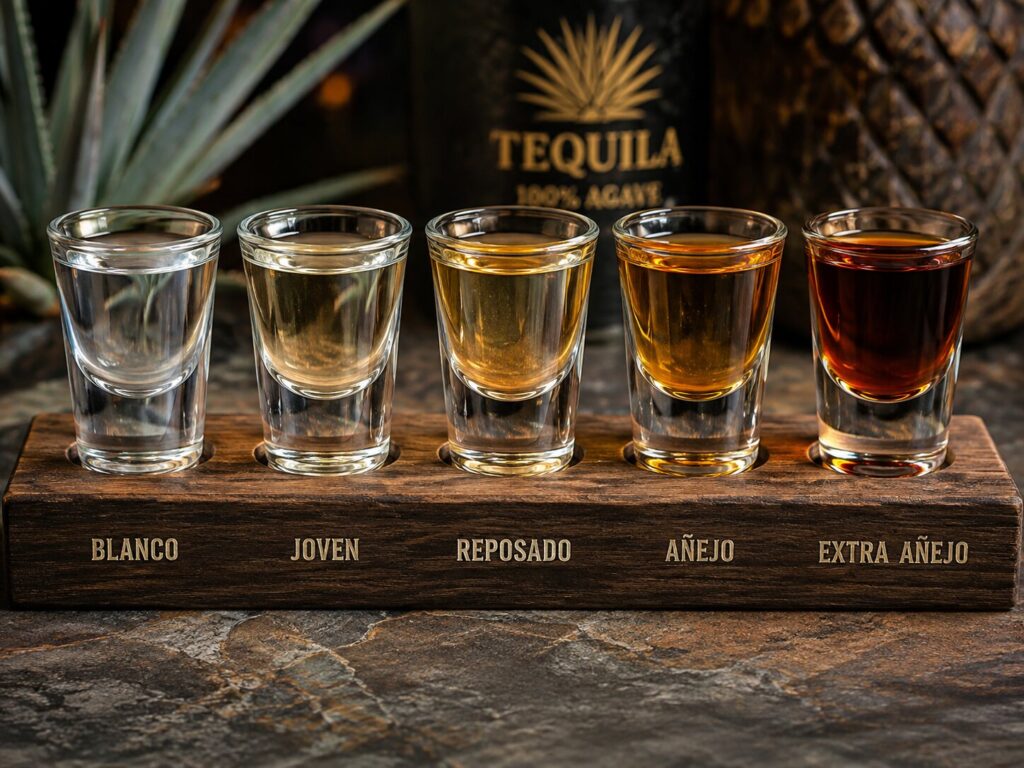
Tequila breaks down into five categories, and once you know them, the whole shelf makes a lot more sense. Blanco, joven, reposado, añejo, extra añejo. That’s the map. Everything else: cristalino, “gold,” “silver”, is a variation sitting inside one of those five, not a category of its own. Cristalino, for instance, is just an añejo or extra añejo that’s been charcoal-filtered until it forgets what color it is. Good drink. Still an añejo underneath.
The other line worth knowing, separate from aging entirely, is 100% agave versus mixto.
Mixto can be as little as 51% agave with sugar making up the rest, and it’s legally allowed to just say “Tequila” on the label with no mention of agave at all. If the bottle doesn’t say 100% agave, treat that as information, not an accusation; plenty of mixto is fine for a casual margarita. But it’s a different drink than what follows below, and worth knowing which one you’re holding.
Here’s the breakdown, category by category, with two bottles at the top of the price ladder and two that punch well above their price in each.
Blanco
Unaged, or resting under two months, almost always in stainless steel. This is agave with nowhere to hide, the category rewards producers who can’t fake quality with barrel time, because there’s no barrel time to fake it with.
Premium: Fortaleza Blanco and Tequila Ocho Plata. Both additive-free, both estate-driven, both taste like someone actually cooked the agave instead of rushing it.
Value: El Tesoro Blanco and Espolòn Blanco. Neither will embarrass you neat, and both make a margarita taste like it was built on purpose.
Joven
A blend: blanco cut with an aged component, and it’s more interesting than it usually gets credit for, because the blend ratio is a real technical decision, not a shortcut. Done at 100% agave, a good joven has genuine complexity for the price.
Premium: Casa Dragones Joven. Clean, deliberate, built for sipping rather than mixing — a good example of the category taken seriously.
Value: Jose Cuervo Tradicional. Unglamorous, but it’s been honest about what it is for a long time, and that counts for something.
Reposado
Two to twelve months in oak. This is where I point people who’ve decided they like tequila and want to know what “good” tastes like without spending añejo money. It’s flexible; neat, on a cube, or in a slightly dressed-up Old Fashioned.
Premium: Tequila Ocho Reposado, eight weeks and eight days, single-estate, additive-free, and Siete Leguas Reposado, which drinks like the barrel time was a light touch rather than a heavy hand.
Value: Herradura Reposado and Casamigos Reposado. Herradura’s been doing this since before it was fashionable. Casamigos gets underestimated for being a celebrity brand and then wins blind tastings anyway.
Añejo
One to three years in oak, and this is where tequila starts talking to whiskey. Roasted agave gives ground to caramel, baking spice, dried fruit. Done well, it reads as a genuinely different drink than a blanco, not just a darker one.
Premium: Fortaleza Añejo and El Tesoro Añejo. Both restrained — oak as a supporting instrument, not the whole band.
Value: El Jimador Añejo and Espolòn Añejo. Neither is trying to be Fortaleza, and both deliver real barrel character for a fraction of the price.
Extra Añejo
Three-plus years — a category that didn’t legally exist until 2006. At this point the agave is a whisper under layers of oak, chocolate, dried spice. These are sipping bottles, meant for a glass and a conversation rather than a shaker.
Premium: Don Fulano Imperial Extra Añejo and Tears of Llorona Extra Añejo — the latter scored 96 points at the 2025 World Spirits Championships, the highest mark any tequila received that year.
Value: El Tesoro Extra Añejo and Cazadores Extra Añejo. Both let you taste what three years in oak actually does to agave without asking you to remortgage anything.
Where to Spend
Price and quality track loosely in tequila, the same way they do in wine — mostly at the extremes, less so in the middle. The gap between a $35 bottle and a $90 bottle in the same category is often smaller than the shelf tag suggests. The gap between 100% agave and mixto is not. If you’re deciding where your money does the most work, start there.
FAQ
What’s the difference between joven and mixto? Different axes entirely. Joven describes a blend of unaged and aged tequila. Mixto describes agave content, as low as 51%. A tequila can be joven and 100% agave, or joven and mixto, check the label for “100% agave” separately from the aging category.
Is cristalino its own category? No. It’s an añejo or extra añejo that’s been charcoal-filtered to strip color. The aging underneath is identical to a standard version of that category — only the appearance changes.
Which category should I start with? Reposado, if you’re moving from casual to curious. It has enough oak character to be interesting neat, but still enough agave brightness to feel familiar if blanco is where you started.