



















California just built a certified “Non-Ultraprocessed” food seal. Here’s what it actually requires, and when it’s expected to hit shelves.
Every food label claiming to be healthy right now is doing it on the honor system.
“Natural.” “Clean.” “Wholesome.” None of it is legally defined, none of it is audited, and all of it is written by the same department that decided your cereal needed a cartoon tiger.
AB 2244 is the first real attempt to change that math — not with a ban, with a standard.
The part everyone’s skipping past
Newsom’s signature got the obligatory “historic” treatment. Fine. But the interesting mechanism isn’t the signature, it’s the architecture underneath it: California is building a third-party certification system: auditable, revocable, enforceable by the Attorney General, for a category that has never had one. That’s the actual innovation. Not the seal. The plumbing behind the seal.
Everyone chasing “clean label” claims right now is self-policing. This isn’t. A certifier has to register with the state. The state can audit them. Misuse is enforceable, not just embarrassing. That’s the difference between a marketing term and a standard, and it’s the reason USDA Organic still means something 35 years after it launched — AB 2244 was built on that exact template on purpose.
Where the optimism has to be honest
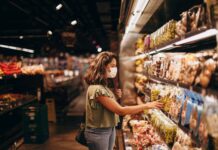
Nobody should tell you this shows up in your cart next week. The state doesn’t have to accredit certifiers until June 2029, which means the earliest certified product is years out, not months. A qualifying grocery store’s obligation, once products exist, is to clearly display a minimum of three of them: a floor, not a full-aisle overhaul.
That’s not a knock on the bill.
It’s the difference between a policy that’s real and a policy that’s rushed. USDA Organic took years to build real market share too. The value of AB 2244 isn’t Tuesday’s grocery run — it’s that California just gave manufacturers a market-based reason to reformulate: a seal worth chasing, verified by someone other than themselves.
The bigger bet
This is Gabriel’s second swing in two years, AB 1264 defined ultra-processed food for California schools in 2025; AB 2244 gives that definition a consumer-facing seal in 2026.
Alyssa Moran at Penn’s Center for Food and Nutrition Policy, who studies exactly this behavioral question, has pointed out that shoppers barely read the back of a package, a fast front-of-pack signal does more work than another paragraph of fine print. If this framework holds, it’s the first version of a “real food” standard with teeth behind it, and it’s the kind of thing other states — or eventually the FDA — tend to copy once one state proves it works.
FAQ
Is this the same as saying a food is healthy?
Not exactly — it certifies that a product avoids the additives and processing methods the state legally defines as ultra-processing. That’s a meaningfully narrower, more provable claim than “healthy,” which is precisely the point.
When will certified products actually exist?
Not before 2029 at the earliest — that’s the deadline for the state to start accrediting the third-party certifiers who evaluate products.
Why model it on USDA Organic instead of a warning label?
Because opt-in incentives change manufacturer behavior without restricting anyone’s choices — the same logic that made Organic a market category instead of a compliance headache.