





















Universal’s David O’Connor, EA’s David Tinson and Madison Wells’ Gigi Pritzker on how franchises get built, and what independent producers can borrow.
Universal says it had a 10-year plan for Jurassic’s comeback. It had no plan for Obsession.
That contrast is the most useful detail from a Financial Times Business of Entertainment Summit panel on how to build a film franchise, and it got less airtime than the usual talk about story and emotion. Universal’s David O’Connor described both cases back to back. One franchise came with research, a trilogy, animated series and theme park rides. The other arrived as a surprise hit the company had to chase. “We didn’t have a plan against it,” O’Connor said of Obsession.
For independent producers and financiers, the contrast matters more than either success. One playbook costs a studio’s balance sheet to run. The other can be partly copied, if the deal is structured correctly. And Obsession was itself an independent film.
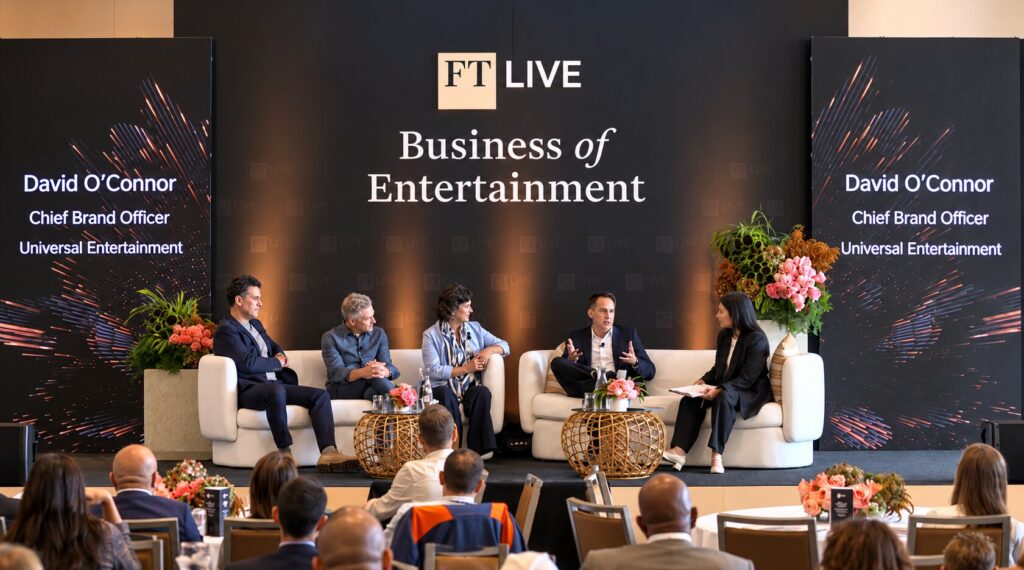
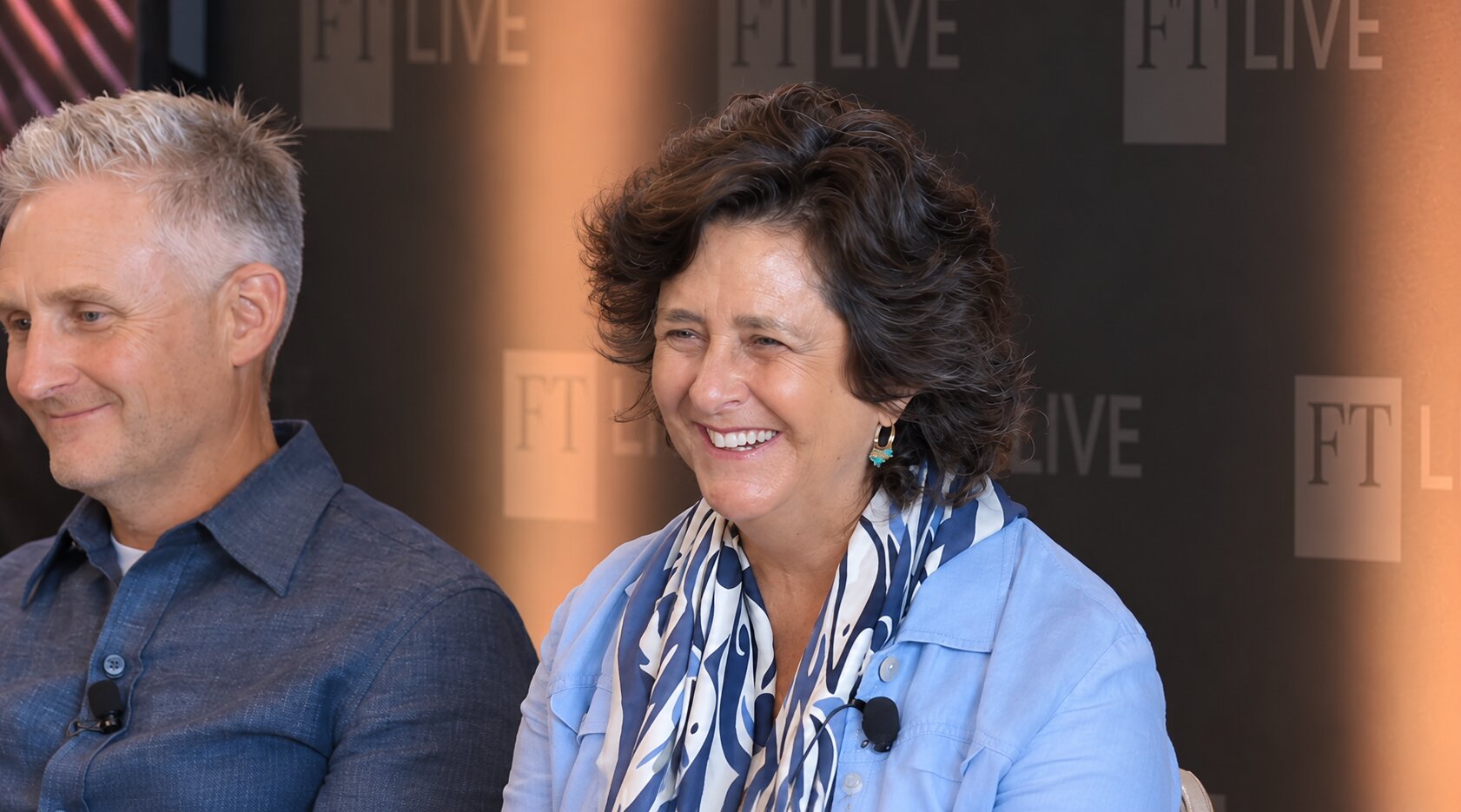
The panel ran at the Financial Times Business of Entertainment Summit on September 24, 2026, at the 1 Hotel West Hollywood, moderated by the FT’s Anna Nicolaou. It brought together David O’Connor of Universal, who oversees franchise strategy and brand development; David Tinson, President, Chief Experiences Officer at Electronic Arts; Gigi Pritzker, founder and CEO of Madison Wells; and Mark Endemaño, a partner at AlixPartners.
The planned playbook: Jurassic
O’Connor said the 2015 Jurassic relaunch was not the obvious bet it looks like now. The original was a 1990s franchise, and many younger consumers did not know it. So the first job was a good movie. It worked: Jurassic World became the third-highest-grossing film in history at that point, behind only Avatar and Titanic.
Then came the step most producers skip. By O’Connor’s account, Universal ran a global research study through its Symphony program, which he has led. Audiences wanted more content, new entry points for younger viewers and a way into the world beyond the theater. An animated series kept coming up. Universal already had a 10-year plan, O’Connor said, but the plan only mattered because the first film worked.
The rollout since reads like a checklist. A trilogy of Jurassic World films. Two animated series on Netflix between the films, Camp Cretaceous and Chaos Theory. A new era with an all-new cast in Jurassic World Rebirth, which grossed $869 million worldwide and now has a sequel moving forward. Universal’s parks had Jurassic Park rides long before, but rides themed to the new Jurassic World films arrived years after the 2015 film. And a Jurassic World event inside Roblox’s Brookhaven began September 18, six days before the panel.
Note the sequence. The research followed the hit.
The reactive playbook: Obsession
Obsession is the stranger story, and it was not Universal’s to plan. Curry Barker’s film was made independently for a reported $750,000, fully financed by Capstone. After it premiered in Toronto’s Midnight Madness section, Focus Features, a Universal company, acquired worldwide rights for a reported $14 million to $16 million. It opened May 15 and grew to more than $400 million worldwide.
O’Connor said Universal believed in the film and hoped it would connect. It did, and then some. The studio had to improvise.
It reached Peacock on July 17, 63 days after it opened. Halloween Horror Nights was next. Barker had publicly said he is a fan of the event, and Universal built a last-minute presence: Obsession’s villain, Nikki, now roams Halloween Horror Nights Hollywood, with Barker recording a new message for it. Asked whether Obsession could become a franchise, O’Connor said there is potential. “We’re now in the Curry Barker business,” he added, noting that Universal has other films with him. It does. Barker’s next film, Anything But Ghosts, is at Focus Features. His third, an untitled original horror film, landed at Universal Film Group and Blumhouse Atomic Monster in a reported eight-figure deal in June.
That is Universal’s answer to who owns what comes after: sign the filmmaker. O’Connor credited the pivot to being an interconnected company with a branded ecosystem. Put plainly, Universal could improvise because it owns the stage: a streamer and theme park events already in place. Few independents own a stage.
What an independent can borrow
Madison Wells founder Gigi Pritzker answered the money question from the other side of the table. Asked how her deal evaluation has changed in five years, she named one thing: “one of the biggest things is owning your library.” Streaming deals take all rights, she said, which makes keeping a piece of the upside hard.
Her workaround is equity in the production itself. “Having a piece of the equity during the production” means that when extensions arrive, such as reality shows, a live stage production or dinner theater, she still holds a share. Her example was Nonnas, a film built around a Staten Island restaurant. Madison Wells originated it, and Netflix won a 2024 auction for worldwide rights at a reported $20 million-plus and released it in May 2025.
That is the independent’s version of Universal’s ecosystem. You cannot build a theme park. You can keep a claim on the people who do. In the next term sheet you negotiate, read the derivative rights clause before the minimum guarantee. Obsession’s producers made a strong sale. Whether they kept any claim on what comes after is the question, and nothing in this recap answers it.
Why the world beats the plot
Electronic Arts’ David Tinson explained why game adaptations stumbled for years. The biggest game franchises are “massive online communities,” he said, where players spend hundreds of hours as the protagonist. Asking them to watch a story passively for two hours creates conflict. His fix: “You’re trying to recreate the world and then build different stories inside of that world.” He pointed to the Minecraft movie, Fallout and The Last of Us.
For a financier, the takeaway is rights clarity. A world can be licensed in more directions than a plot.
Lightning in a bottle
No hit-rate data surfaced in the discussion as recorded. Lightning in a bottle is a fine thing to own and a poor thing to underwrite. A $750,000 film that grossed more than $400 million is exactly the kind of outcome nobody underwrites.
The closing question
The panel’s closing answer was emotion, story and community. Nobody disagrees. The useful answer came earlier. Build the movie first. Keep a claim on what it can become. And if you are independent, accept that you will react faster than you plan. Before the next market, ask one question of every deal on your slate: if this works, who owns what comes after?
FAQ
Can an independent film become a franchise without a studio ecosystem?
It can, but the rights structure decides who profits. Obsession was an independent film that Focus Features bought, and Universal’s ecosystem then carried it. Pritzker’s approach is to take equity in the production so that later extensions still pay her company. That is one financier’s method, and the panel gave no data on how often it works.
Should you plan a franchise before the first film is made?
O’Connor said Universal’s Jurassic plan existed only because the first film worked, and the audience research came after the hit. Obsession had no plan at all. Plan the rights position, not the sequel slate.
Why have video game adaptations improved?
Tinson said the focus shifted from replicating a plot to building out the world.