





















National Prosecco Week 2026 wrapped with 2,200 retail accounts, an Aspen debut, and a cocktail winner from North Carolina.
There’s a moment at the Aspen Food & Wine Classic when the room tilts. You can feel it; the crowd shifts from interested to engaged, the pour that was supposed to be a welcome drink becomes the conversation itself.
This June, that pour was Prosecco DOC, and the room that tilted was one of the most influential in American culinary culture. Which is interesting, because Prosecco DOC also had a very good week at Costco.
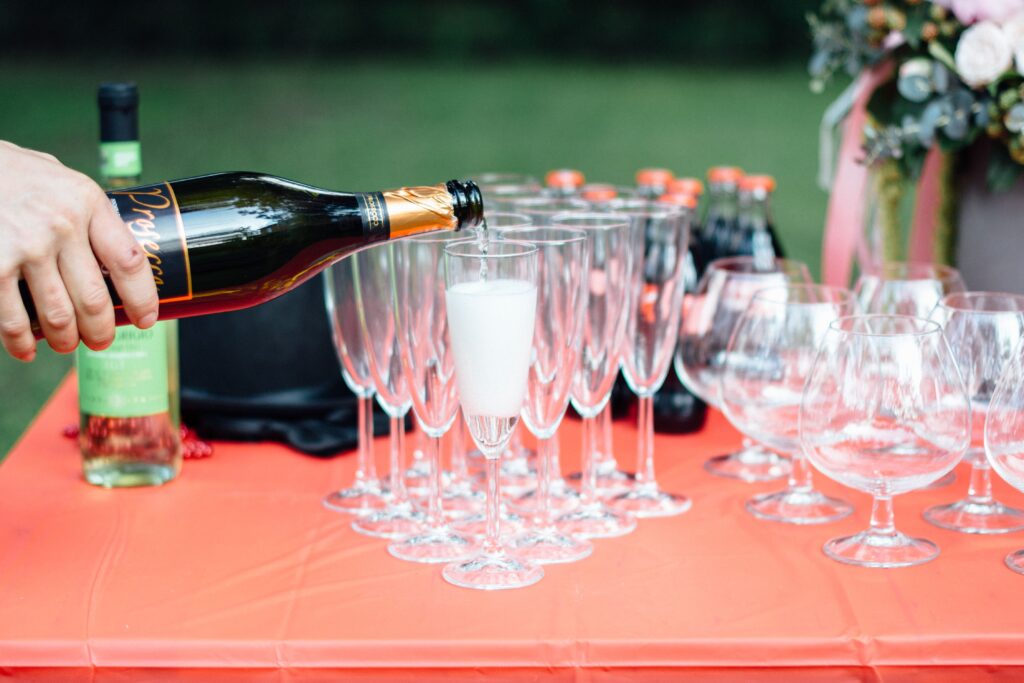
National Prosecco Week 2026, the ninth edition , wrapped its June 15–21 run with numbers that would satisfy any brand strategist: over 2,200 retail accounts activated, distributor education sessions with Southern Glazer’s Wine & Spirits reaching more than 200 sales representatives across Louisville, Baltimore, Columbia, Charleston, and Cincinnati, and a social media campaign that generated hundreds of pieces of original creator content. By any measure of reach, the campaign worked. It has always worked. That’s no longer the interesting part.
The Aperitivo Play Is Getting More Ambitious
The interesting part is Aspen.
Prosecco DOC’s presence at the Food & Wine Classic wasn’t a booth with branded napkins. It was a custom après-ski activation: winter sports gear, sought-after merchandise, a visual identity borrowed from the denomination’s partnership with the Milano Cortina 2026 Winter Olympic and Paralympic Games.
The wine that showed up in that pavilion was poured as a welcome drink for a sold-out culinary demonstration by Chef Ayesha Nurdjaja intentionally, as a statement about where Prosecco DOC belongs at the table. The fresh, orchard-forward profile of the denomination, with its characteristic fine bubbles and clean finish, is doing real work at that altitude; it reads as celebratory without demanding attention, which is exactly what a chef’s welcome pour needs to be.

That’s a different positioning argument than “America’s favorite sparkling wine at $14.99.”
Both are true. The question the Consortium is quietly asking, and not yet answering publicly, is whether they can hold both.
From New Orleans to the Nation: The Ground Game Stays Strong
Before anyone reads too much into the Aspen play, it’s worth acknowledging what the ground game produced this year, because it was considerable.
At the New Orleans Wine and Food Experience, Prosecco DOC showed up in three distinct contexts: a rosé competition, a dedicated masterclass led by Nicole Maddox, Head Sommelier for the Emeril Lagasse Group, and the Grand Tasting.
The Prosecco DOC Rosé poured at NOWFE represents a category that now accounts for 9% of the denomination’s total regional production, a figure that carries real weight when you consider how recently the Rosé designation was approved. The pairing with local southern cuisine wasn’t decorative; Prosecco’s food-friendly acidity and moderate sugar make it genuinely versatile in ways that Champagne, for all its prestige, often isn’t. You can pour it next to a char-grilled oyster and it holds.
The fact that this needed to be demonstrated at a formal masterclass in 2026, for a wine available at GoPuff, says something generous about American wine culture’s capacity for rediscovery.
The retail infrastructure supporting all of this is not small. Whole Foods tastings in Florida, displays at HEB, ABC Fine Wine & Spirits, Binny’s Beverage Depot, Super Buy-Rite — and a Southern Glazer’s training program designed specifically to build sales rep confidence in the quality story behind the DOC designation. When you’re training 200 reps across five markets, you’re not chasing trend. You’re building a floor.
The Cocktail Competition Has a Winner Worth Knowing
Now in its third year, the National Prosecco Week Cocktail Competition produced a winner that tells you something about where the category is going. Sebastian Moreno, bartending at Yokai in Greensboro, North Carolina, not New York, not Los Angeles, took the top public vote with a cocktail called Affogato di Pesca.
The name conjures something between dessert and aperitivo: stone fruit, espresso warmth, Prosecco’s effervescence cutting through richness in the way a well-made sparkling wine should. Whether it’s a revelation or a clever construction, the competition judge panel — including renowned mixologist Livio Lauro — selected 10 finalists worth watching, and VinePair amplified all of them to its audience of drinks professionals and enthusiasts. That’s an earned media partnership with genuine distribution.
Greensboro, though. Yokai. That’s the brand’s best piece of evidence that the accessibility play worked — Prosecco DOC is now the creative medium for bartenders in markets that premium wine brands rarely bother courting.
Nine years of “Sharing the Italian Way of Life” apparently means something to a bartender in North Carolina. Giancarlo Guidolin, President of the Consorzio, said it plainly in his statement: “consumers continue to embrace Prosecco DOC as an authentic expression of Italian lifestyle.” The evidence from Greensboro suggests he’s right.
What Comes After Winning
The real question National Prosecco Week 2026 raises isn’t about the campaign. It’s about the moment every successful mass-market brand eventually faces: you won the room, all the rooms, and now someone hands you a seat at the Aspen table. Do you take it? Can you hold both?
Prosecco DOC’s answer so far is yes — and their argument is the food-friendly versatility of the wine itself. An après-ski pavilion at Aspen and an in-store tasting at Whole Foods Florida aren’t contradictions if the wine genuinely belongs in both settings. That’s not marketing spin; it’s a product argument, and it’s a reasonable one.
What the denomination is building, quietly and with considerable infrastructure, is a category that doesn’t have to choose. The Rosé designation is climbing. The cocktail culture integration is real. The sommelier-led masterclasses are happening alongside the GoPuff promotions. Whether that’s sustainable positioning or an identity stretched thin is a conversation for the tenth edition.
For now, pour it cold. It earns the occasion.
Learn more about Prosecco DOC at prosecco.wine.
FAQ: Prosecco DOC
What is the difference between Prosecco DOC and regular Prosecco?
Prosecco DOC is a certified designation of origin — every bottle carries a state-issued neck label guaranteeing authenticity, grape sourcing, and production standards set by the Prosecco DOC Consortium. Not all sparkling wines labeled “Prosecco” carry the DOC certification. The designation ensures the wine was produced within a defined Italian territory using regulated methods.
What is Prosecco DOC Rosé and how popular is it?
Prosecco DOC Rosé is a category approved in 2020, produced using a blend that includes Pinot Nero alongside Glera grapes. It has grown quickly — rosé now accounts for 9% of the denomination’s total regional production, reflecting rising US consumer demand for sparkling rosé options in the accessible price tier.
Can Prosecco DOC be used in cocktails?
Yes, and increasingly it’s being built into serious cocktail programs. The wine’s fresh acidity, moderate sugar, and fine effervescence make it a strong base or modifier. The annual National Prosecco Week Cocktail Competition, now in its third year, highlights original bartender creations with Prosecco DOC as the core ingredient — the 2026 winner, Affogato di Pesca, demonstrated its range well beyond the classic Aperol Spritz.