























Perrier-Jouët is the Official Champagne of the Metropolitan Opera. Here’s what’s being poured, where, and why it matters for Champagne lovers.
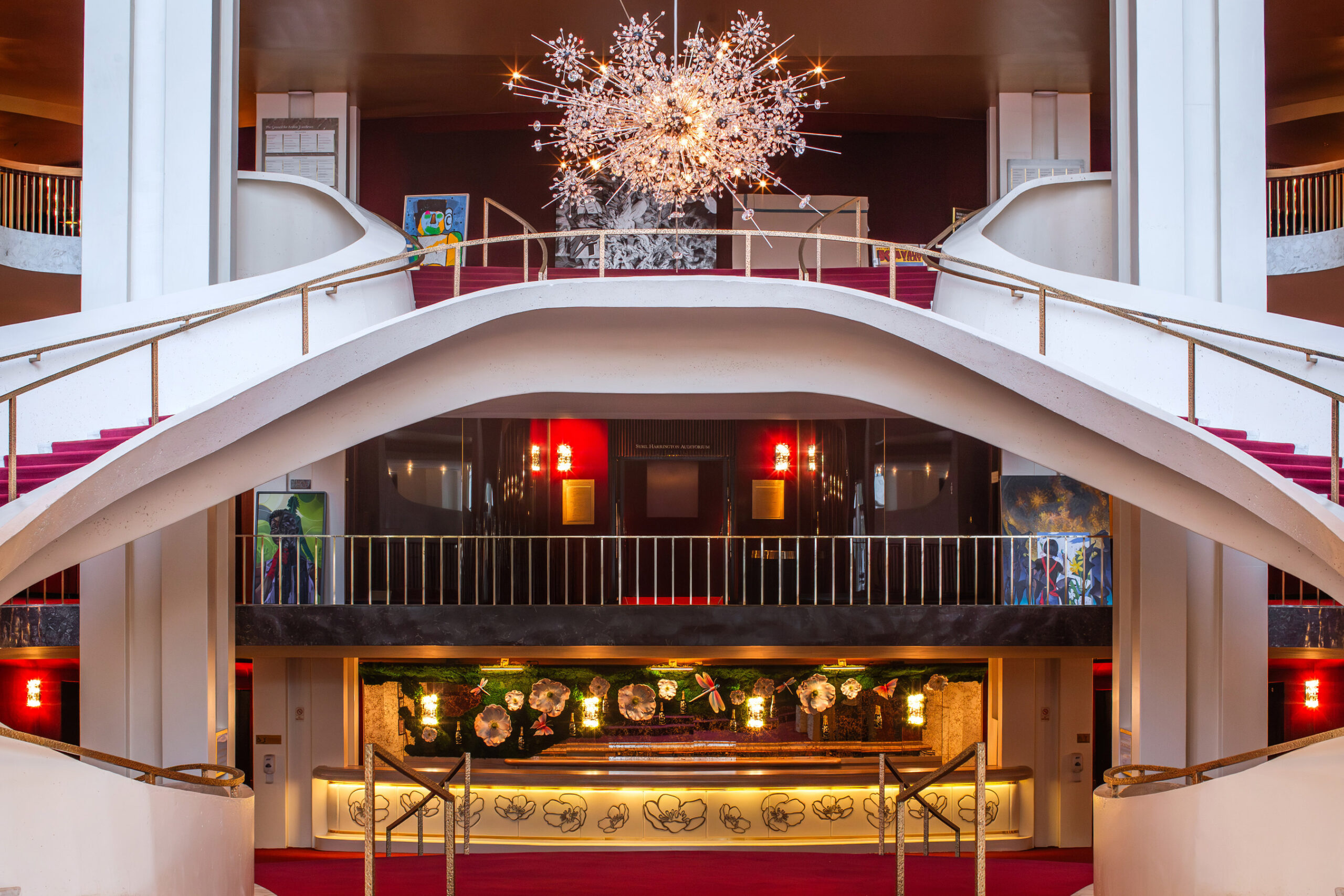
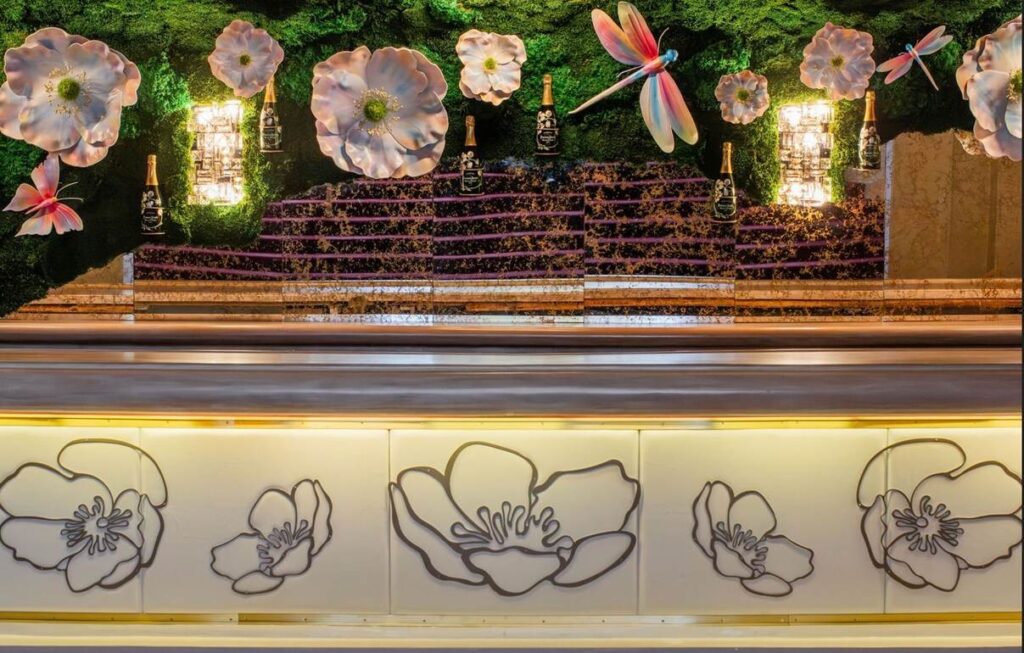
The Orchestra Bar at Lincoln Center has a gold ceiling, Swarovski chandeliers, and, as of this season, walls dressed in anemone motifs that the Champagne house Perrier-Jouët has used as its calling card since before anyone in the room was born.
This is not a pop-up. This is a five-year contract, and it starts with the bar looking like the inside of a very expensive greenhouse.
Maison Perrier-Jouët has been named the Official Champagne of the Metropolitan Opera — a partnership that puts Chardonnay-forward Champagne at the center of one of the world’s most closely observed performing arts institutions. The Met stages more than 200 performances each season. More than 650,000 people walk through those doors annually. That is a great deal of intermission.
Why Chardonnay and the Concert Hall Have Always Made Sense
Perrier-Jouët’s founding decision — made in 1811 by Pierre-Nicolas Perrier and Rose-Adélaïde Jouët — to anchor their house style in Chardonnay rather than Pinot Noir was not merely a stylistic preference. It was a declaration.
Chardonnay-dominant Champagne reads differently in the glass: the acidity is crisper, the mousse finer, the aromatics pulled toward white flowers, green apple, and fresh brioche rather than the red fruit weight of Pinot-forward blends. The finish is long and dry without being austere. It is the kind of wine you can drink slowly while paying attention to something else — which, in a theatre, is the point.
The Belle Époque cuvée, which will be available through the Met’s private Parterre Box concierge service, represents the house’s prestige expression: a blanc de blancs-style Champagne drawing on premier cru and grand cru Chardonnay parcels from Épernay and Cramant. Served to patrons seated in the Met’s most exclusive boxes, it is a pairing of circumstance that requires very little explanation.
The anemone, Perrier-Jouët’s floral emblem, is technically a wildflower associated with wind and impermanence. The Met’s chandeliers are made of Swarovski crystal and weigh considerably more than a wildflower. The design team has, against reasonable odds, made this work.
What the Partnership Actually Delivers
Beyond aesthetics, the hospitality structure is specific. Patrons can pre-order a glass of Perrier-Jouët Grand Brut before the performance, collecting it from the Grand Tier, Orchestra, or Family Circle bars without queuing. For VIP patrons, curated Champagne tastings can be arranged at the Grand Tier Restaurant in partnership with Patina Restaurant Group, one of the more serious food-and-beverage operators in New York’s institutional dining landscape.
The Grand Brut — Perrier-Jouët’s entry-level non-vintage — is a drier, more restrained pour than the category average. The Chardonnay signature shows as citrus blossom and white peach on the nose, moving toward a chalky minerality on the finish that keeps it from feeling sweet or heavy. It is exactly the Champagne you want before two and a half hours of Verdi: present enough to register, disciplined enough to get out of the way.
“We are proud to keep Perrier-Jouët’s centuries of dedication to artistic collaboration and wine-making alive…”
“We are proud to keep Perrier-Jouët’s centuries of dedication to artistic collaboration and wine-making alive by aligning with partners who share our vision for honoring heritage while leading the future for arts,” says Kristen Colonna, Vice President of Aged Spirits & Prestige Brand Portfolio at Pernod Ricard USA.
The partnership also extends to the Met’s Young Associates program, covering patrons between 21 and 45 with events, backstage access, and pre-performance receptions. This is where the business logic becomes interesting. Opera’s demographic challenge is well-documented. Aligning a Champagne house with the institutional program specifically designed to close that age gap suggests someone at Pernod Ricard is thinking past the current season.
For those pairing the Belle Époque at home alongside a pre-opera dinner, the wine’s Chardonnay weight and fine mousse hold particularly well against raw oysters, white asparagus, or a clean fish preparation. It does not want butter. It does not need it.
143 Years In, the Met Is Still Setting the Table
Gilly Brierley, the Met’s Assistant General Manager for Marketing and Communications, describes the partnership as offering audiences “an elevated way to celebrate the performing arts.” This is the kind of language that press releases generate naturally and automatically. What the statement actually means is more useful: the Met has formalized a luxury Champagne presence across four distinct service points within the building, from the lowest-priced Family Circle down to the Parterre Box tier. That is not a gesture. That is infrastructure.
The Metropolitan Opera was founded in 1883. Perrier-Jouët was founded in 1811. Between them, they have been operating continuously through two world wars, multiple recessions, and the invention of recorded music — which, at various points, was supposed to end both the Champagne trade and live opera. Neither appears to have suffered materially.
“Our organizations share a deep-rooted commitment to artistry, craftsmanship, and creating unforgettable experiences”
“Our organizations share a deep-rooted commitment to artistry, craftsmanship, and creating unforgettable experiences,” said Brierley. “This partnership enhances the magic of an evening at the Met, offering audiences an elevated way to celebrate the performing arts.”
For those wanting to understand the house’s floral philosophy in more depth, the Champagne Bureau USA provides independent context on house styles, Chardonnay terroir, and the appellation rules that govern what Perrier-Jouët — and every other producer — can and cannot put in the bottle.
FAQ
What Champagne is served at the Metropolitan Opera? Perrier-Jouët is now the Official Champagne of the Metropolitan Opera, as of the 2025-26 season. Patrons can order the Grand Brut at multiple bars throughout the house or access the Belle Époque cuvée through the private Parterre Box concierge service. Pre-ordering is available to avoid intermission queues.
What makes Perrier-Jouët different from other Champagne houses? Perrier-Jouët built its house style on Chardonnay from the outset, giving its wines a floral, mineral character distinct from Pinot Noir-dominant blends. The signature anemone label has been associated with the house since the Art Nouveau period and remains the primary visual identity across all tiers of the range.
Is Belle Époque available at the Met? Yes. Belle Époque is part of the Private Parterre Champagne Service, available through the Met’s VIP concierge offering for patrons with Parterre Box reservations. Curated tastings featuring the Belle Époque range can also be arranged at the Grand Tier Restaurant.
A Curtain Worth Raising a Glass To
The Met’s 143rd season now opens with Perrier-Jouët in hand. For first-time visitors, the Grand Brut is the practical choice: widely available at the bars, fairly priced for Lincoln Center, and composed enough not to distract. For those with a Parterre Box and the occasion to use it, the Belle Époque is worth requesting specifically. The 2012 vintage, if it surfaces at the Grand Tier, is particularly worth your attention.