


























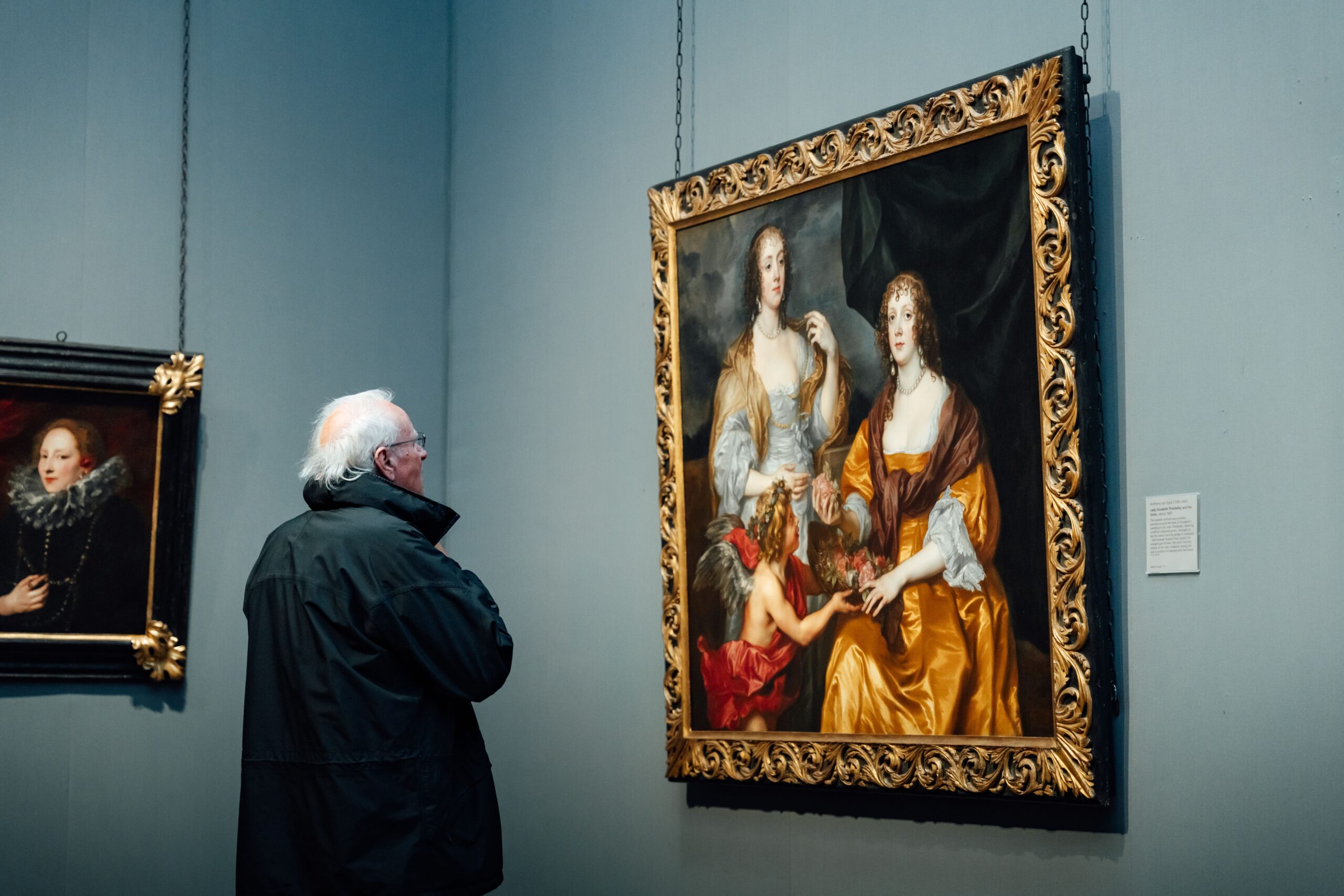
As Art Basel Miami Beach 2026 prepares to welcome the world’s most discerning collectors, we explore how extraordinary works of art become sources of capital, financial flexibility and generational wealth.
On December 4, Art Basel Miami Beach opens its doors to an international gathering of collectors, entrepreneurs, gallery owners and cultural tastemakers.
Across the Miami Beach Convention Center, 272 exhibitors from more than 40 countries and territories will showcase works ranging from emerging contemporary artists to museum-quality masterpieces.
For some visitors, the experience is about discovery. For others, it is about acquiring a piece of cultural history.
But another conversation takes place away from the exhibition floor, in private banking offices and family office boardrooms.
It’s a conversation about capital.
How much wealth is tied up in a collection? Can that wealth be put to work without selling a painting? How should ownership be structured? And what happens when the next generation inherits a collection worth considerably more than the family originally paid?
These questions are becoming increasingly relevant.
The 2026 Art Basel and UBS Survey of Global Collecting found that 19% of surveyed high-net-worth collectors intend to use artwork as loan collateral within the next 12 months. Among American respondents, that figure rises to 30%.
For a growing number of collectors, fine art is no longer simply something to admire.
It is becoming part of the architecture of private wealth.
The $190 Million Painting That Spent Half a Century With One Family
On November 18, 2026, Sotheby’s made auction history in New York.
Vincent van Gogh’s Châtaigniers en fleurs (Blossoming Chestnut Trees) sold for $190.4 million, establishing a new auction record for the artist.
Painted during the final months of Van Gogh’s life in 1890, the work had belonged to Argentina’s Blaquier-Arrieta family since 1975.
The collection was assembled by Nelly Arrieta de Blaquier and her husband, Carlos Pedro Blaquier, whose business interests included Argentina’s sugar industry.
Their collection illustrates a fascinating crossover between entrepreneurial success, cultural appreciation and the preservation of private wealth.
Capital generated through industry was transformed into extraordinary cultural assets. Those assets remained in the family’s possession for decades before returning to the international marketplace.
The November auction of 12 Impressionist and modern masterpieces from the collection generated approximately $412 million.
Yet the story contains an important distinction.
The Van Gogh’s record-breaking sale does not tell us what the family’s investment return was. Without knowing its acquisition cost, expenses and other financial arrangements, we cannot calculate its profitability.
What it does demonstrate is how a privately held cultural asset can represent an extraordinary concentration of wealth.
And how dramatically that wealth can become visible when a collection finally returns to market.
Why Private Banks Are Paying More Attention to Fine Art
In 2026, Bank of America introduced an art consulting service, expanding its existing capabilities in collection financing, consignment, estate planning and philanthropy.
The bank also reported that its art lending business had continued to grow between 8% and 10% annually despite higher interest rates and a more selective art market in recent years.
J.P. Morgan Private Bank offers specialized fine art financing. UBS maintains dedicated art advisory services and commissions extensive research into global collecting trends.
These financial institutions recognize something important about their wealthy clients. A substantial portion of personal wealth may exist outside conventional investment portfolios.
It may be hanging on the walls of a residence in Beverly Hills, displayed in a New York penthouse or traveling between international museum exhibitions.
Unlike publicly traded securities, these assets cannot necessarily be converted into cash on short notice.
But that does not mean their financial potential must remain dormant.
How to Access $10 Million Without Selling a Single Painting
Consider an entrepreneur who has spent 25 years assembling an impressive art collection.
Today, independent appraisers value the collection at $20 million. Several works have appreciated substantially, and the owner has developed a deep personal attachment to them.
Meanwhile, an opportunity emerges to acquire a commercial property, expand a business or participate in a private investment.
Selling part of the collection could generate the necessary capital. But doing so would mean surrendering ownership, potentially triggering capital gains taxes and accepting whatever price the market is willing to offer at that moment.
There is another possibility: art-backed lending.
Through a specialized financing arrangement, qualifying artwork can serve as collateral for a loan. Depending on the lender and contractual terms, collectors may even retain physical possession of their paintings.
J.P. Morgan Private Bank’s fine art financing services, for example, are designed to provide liquidity while allowing eligible clients to maintain ownership and possession of their collections.
A hypothetical arrangement might look like this:
| Art-backed financing | Financial details |
|---|---|
| Appraised collection value | $20 million |
| Assumed loan-to-value ratio | 50% |
| Available loan proceeds | $10 million |
| Illustrative annual interest rate | 6% |
| Annual interest expense | $600,000 |
Figures are hypothetical and do not represent an actual lending offer.
The collector now has access to $10 million in capital without immediately selling the artwork or realizing a capital gain from its sale.
However, this is borrowed money. The collector’s net worth has not increased by $10 million.
The financial strategy depends on what happens next. If the borrowed capital produces sufficient returns to justify its cost, the arrangement may prove valuable. If the investment performs poorly, the collector still owes the debt.
This is where a private banker looks at a collection differently from a gallery owner.
The gallery owner sees the artistic and commercial value of the painting. The banker considers its collateral value, the borrower’s ability to repay and how the transaction fits within the client’s broader financial life.
When the Art Market Turns Against You
What happens if that same $20 million collection falls in value?
A collection that once comfortably supported a $10 million loan may no longer satisfy the lender’s collateral requirements.
| Collection valuation | Outstanding loan | Loan-to-value ratio |
|---|---|---|
| $20 million | $10 million | 50% |
| $18 million | $10 million | 55.6% |
| $15 million | $10 million | 66.7% |
| $12 million | $10 million | 83.3% |
Depending on the lending agreement, the borrower could be required to provide additional collateral or repay a portion of the loan.
If the borrower cannot meet those requirements, the collection could ultimately face a forced sale.
There may also be exposure beyond the artwork itself. Bank of America notes that its art lending arrangements are generally structured as recourse loans, meaning the lender considers the client’s overall financial position in addition to the pledged collection.
A beautiful collection can provide financial flexibility. But excessive borrowing against it can create the very liquidity problem the collector hoped to solve.
The Multibillion-Dollar Business of Lending Against Art
Art-backed financing has become a substantial industry in its own right.
The 2025 Deloitte Private and ArtTactic Art & Finance Report estimated that the global market for art-secured loans could reach between $33.9 billion and $40 billion by the end of 2025.
Sotheby’s Financial Services offers loans ranging from $1 million to more than $250 million against qualifying collections.
The appeal extends beyond financing new art purchases.
For entrepreneurs, whose personal wealth may already be heavily concentrated in their businesses, a substantial art collection represents another potential source of liquidity.
For multigenerational families, financing may provide additional flexibility during estate settlements, business transitions or periods of market uncertainty.
The growth of this industry reflects a broader change in private wealth management. Financial institutions are increasingly looking beyond traditional portfolios to understand the full range of assets their clients own.
Inside the Private Vaults of Switzerland
Not every masterpiece is displayed in a beautiful residence.
Some spend considerable periods in specialized storage facilities, including the internationally recognized freeports of Switzerland.
Geneva’s freeport has long attracted collectors, galleries and dealers seeking secure storage for valuable cultural assets.
These facilities offer more than protection. Under Swiss customs regulations, qualifying goods can remain in designated warehouses without the immediate payment of certain import taxes.
For internationally active collectors, this can provide flexibility when artwork travels between exhibitions, galleries and prospective buyers.
Consider a collector with residences in London, Los Angeles and Paris. An internationally managed collection may require complex arrangements involving transportation, insurance, customs and taxation.
The location of a painting becomes a financial consideration as well as a personal preference.
However, tax deferral is not tax exemption. Moving artwork into a country for domestic use can create obligations that did not exist while it remained in customs storage.
What Happened to Swiss Financial Secrecy?
For decades, Swiss private banking was synonymous with financial discretion.
That reputation underwent a significant transformation in February 2009, when UBS entered into an agreement with the U.S. Department of Justice concerning its role in helping American clients conceal offshore accounts.
The Swiss banking institution agreed to pay $780 million in penalties, interest and restitution.
In 2010, the United States enacted the Foreign Account Tax Compliance Act, better known as FATCA. The legislation expanded international reporting requirements for certain financial accounts and offshore holdings.
But artwork occupies a different legal category.
According to the Internal Revenue Service, directly owned physical artwork, antiques, jewelry and other tangible collectibles are generally not considered foreign financial assets requiring disclosure on Form 8938.
Ownership through foreign corporations, trusts or other entities can create separate reporting obligations.
This distinction illustrates why substantial collections often require expertise from international tax attorneys, private bankers and estate planning professionals.
The difference between owning a painting and owning an interest in a foreign entity that holds a painting can have meaningful legal and financial consequences.
The Tax Consequences of Bringing a Masterpiece Home
For California collectors attending Art Basel Miami Beach, purchasing an exceptional work may be only the beginning of the transaction.
The California Department of Tax and Fee Administration specifically identifies artwork among the goods purchased outside the country that may be subject to California use tax when brought into the state.
Purchases from other states can also create California use tax obligations.
Consider a hypothetical $5 million acquisition:
| Purchase price | Illustrative tax rate | Potential tax expense |
|---|---|---|
| $5 million | 8% | $400,000 |
| $5 million | 9% | $450,000 |
| $5 million | 10% | $500,000 |
Actual tax obligations depend on the transaction, jurisdiction, applicable exemptions and any eligible credits for taxes previously paid.
The point is not that collectors should avoid bringing artwork home. It is that the purchase price alone does not necessarily represent the total cost of an acquisition.
Federal taxation also deserves attention. Long-term gains from the sale of qualifying collectibles, including fine art, can be subject to a maximum federal capital gains tax rate of 28%.
Additional federal or state taxes may apply.
For a substantial collection, decisions about when to sell, where to display artwork and how to transfer ownership can carry significant financial consequences.
Why Collectors Are Becoming More Selective
The international art market appears to be recovering, but not every artist or category is benefiting equally.
The Art Basel and UBS Global Art Market Report 2026 estimated that worldwide art sales increased by 4% to $59.6 billion in 2025, following two consecutive years of declining sales.
More revealing is how collectors are changing their behavior.
The 2026 global collecting survey found that the percentage of respondents purchasing work by a newly discovered artist fell from 66% in the previous survey to 45%.
It was the lowest level recorded in five years.
The findings suggest greater caution among surveyed collectors, with established artists potentially benefiting from a preference for recognized names.
There is a familiar parallel with other investment markets.
During periods of uncertainty, investors may place greater emphasis on established businesses, proven management teams and assets with a documented history of demand.
In fine art, that history might include major museum exhibitions, distinguished previous owners and decades of auction transactions.
None of those qualities guarantees future appreciation. But they can provide more information for evaluating an acquisition.
A $190 Million Lesson in Due Diligence
Even a masterpiece by one of history’s most celebrated artists can come with considerable legal complexity.
One day before the record-breaking Van Gogh auction in November, Sotheby’s announced an agreement between the Blaquier-Arrieta family and descendants of Hedwig and Samuel Fischer, who had sold the painting in 1936.
The agreement addressed claims surrounding the work’s Nazi-era ownership history.
The episode illustrates why provenance, the documented history of an artwork’s ownership, matters so much.
For an experienced collector, acquiring a painting can involve several layers of investigation:
Authenticity and attribution.
Historical ownership records.
Potential restitution claims.
Existing liens or financial obligations.
Condition and restoration history.
Cultural property and export restrictions.
A work can be authentic, extraordinarily beautiful and internationally celebrated while still carrying legal or financial risks.
In private equity, sophisticated investors investigate a company’s financial history before acquiring it. In commercial real estate, buyers examine title records, existing debt and property conditions.
Fine art deserves comparable scrutiny.
The value of a masterpiece depends partly on the ability to establish legitimate ownership and eventually transfer that ownership to another buyer.
When Your Children Inherit the Collection
One of the most consequential conversations surrounding fine art is taking place between collectors and their families.
The 2025 Deloitte Private and ArtTactic Art & Finance Report estimates that approximately $992 billion in art and collectibles could transfer between generations over the next decade.
For wealthy families, that transfer presents questions that go far beyond the financial value of individual works.
What if one child wants to preserve the collection while another would prefer to sell it?
What if a painting represents a substantial portion of the family’s estate, but the heirs have limited available cash?
What if the collector wants certain works to remain together or eventually enter a museum?
Unlike a portfolio of publicly traded shares, a painting cannot easily be divided among several beneficiaries.
A $20 million collection may represent $20 million in appraised wealth, but it does not necessarily provide the cash required to settle estate expenses.
For American collectors, inherited artwork may generally receive a tax basis tied to its fair market value at the owner’s death, subject to applicable exceptions. This can have significant implications for future capital gains.
Estate planning may also involve trusts, charitable donations, museum partnerships and arrangements governing the future sale or preservation of individual works.
Ultimately, a collection assembled over decades deserves more than a line item in a will.
Expensive Art Is Not Necessarily a Good Investment
The excitement surrounding a record-breaking auction can obscure the realities of ownership.
Fine art generally produces no recurring income simply by being owned. Unlike rental real estate or a dividend-paying business, a painting may require ongoing expenditure while generating no cash flow.
Insurance, conservation, transportation, storage and transaction expenses can accumulate considerably over time.
Consider a hypothetical painting purchased at auction and sold five years later.
| Transaction | Amount |
|---|---|
| Original hammer price | $1,000,000 |
| Illustrative buyer’s premium | $250,000 |
| Five years of ownership expenses | $50,000 |
| Total acquisition and ownership costs | $1,300,000 |
| Future hammer price | $1,500,000 |
| Illustrative selling expenses | $150,000 |
| Net sale proceeds | $1,350,000 |
| Profit before taxes | $50,000 |
The painting appreciated by 50% based on its hammer prices.
The collector’s actual profit, however, was approximately 3.85% of the total acquisition and ownership costs over five years, before taxes and inflation.
There is also an opportunity cost. The capital committed to the painting could have been invested elsewhere.
The distinction matters across nearly every category of luxury assets, from rare wine and collectible watches to vintage automobiles.
An appreciating asset is not necessarily a profitable investment.
Art Basel Miami Beach 2026: A Different Perspective
When Art Basel Miami Beach opens in December, visitors will encounter extraordinary works from some of the world’s most respected galleries.
Collectors will discover new artists, reconnect with trusted advisers and consider acquisitions that may remain in their families for generations.
But perhaps the most interesting conversations will extend beyond the asking price.
How established is the artist’s market? What is the painting’s ownership history? Could it qualify as collateral? What will it cost to maintain? How easily could it be sold if circumstances change?
These are the questions that connect cultural appreciation with financial intelligence.
Art Basel Miami Beach 2026
Public exhibition: December 4–6, 2026
VIP previews: December 2–3, 2026
Location: Miami Beach Convention Center
Exhibitors: 272
Official website: ArtBasel.com
The Art of Owning Wealth
A remarkable collection can represent a lifetime of curiosity, travel, relationships and personal achievement.
Its financial value may eventually become extraordinary. It may provide access to capital, support philanthropic ambitions or become a meaningful part of a family’s legacy.
But the most sophisticated collectors understand that ownership creates responsibilities as well as opportunities.
They distinguish appreciation from profitability, valuation from liquidity, and financial leverage from genuine wealth creation.
Perhaps that is the most valuable insight a private banker can share about fine art.
The masterpiece itself is only one part of the story.
The other is everything its owner can do with it.
What Your Private Banker Hasn’t Told You is a Daily Ovation editorial series exploring the intersection of luxury, capital, ownership and generational wealth.
Frequently Asked Questions
Can wealthy collectors borrow money against fine art?
Yes. Private banks, auction houses and specialty finance companies offer loans secured by eligible artwork. Borrowing capacity depends on appraised value, ownership history, market demand and the lender’s requirements.
How large is the art-backed lending market?
Deloitte Private and ArtTactic estimated that the global art-secured lending market could reach between $33.9 billion and $40 billion in 2025.
Why do wealthy collectors store artwork in Switzerland?
Swiss freeports and specialized storage facilities provide security, preservation services and customs arrangements that can defer certain import taxes. They do not provide a blanket exemption from tax or reporting obligations.
Is fine art subject to capital gains tax?
Yes. In the United States, qualifying long-term capital gains from collectibles, including fine art, can be subject to a maximum federal rate of 28%. Additional taxes may apply.
Does fine art have to be reported under FATCA?
Directly owned physical artwork is generally not reportable on Form 8938. However, interests in foreign entities that hold artwork and other related arrangements may create reporting obligations.
Can fine art be transferred as generational wealth?
Yes. Collections can be inherited, gifted, held through appropriate ownership structures or donated to cultural institutions. Each approach carries different legal, financial and tax considerations.
When is Art Basel Miami Beach 2026?
Art Basel Miami Beach takes place December 4–6, 2026, with VIP previews on December 2 and 3 at the Miami Beach Convention Center.