


























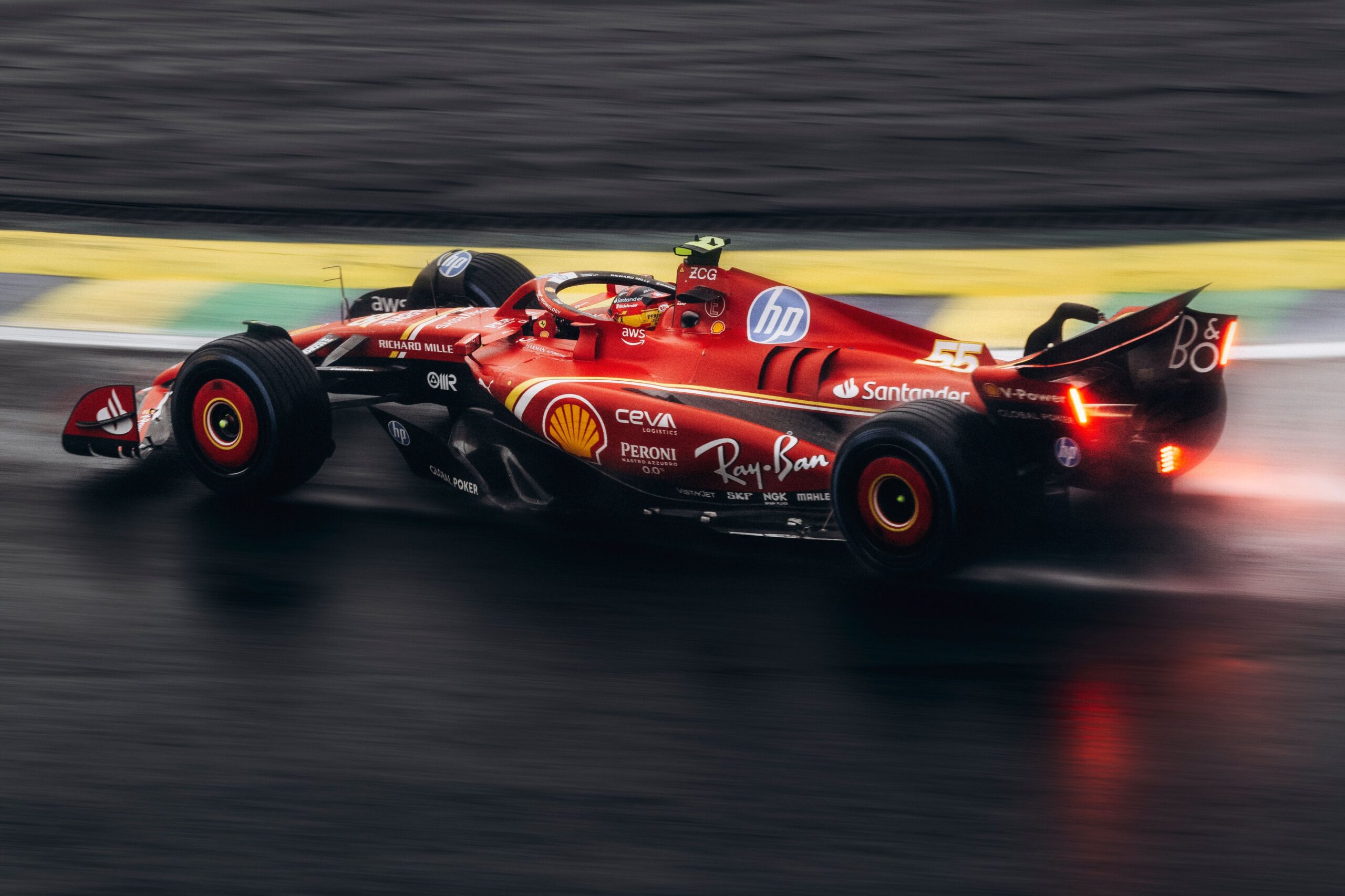
Ferrari leads at $9.5 billion, Mercedes is closing in, and even smaller Formula 1 teams are attracting extraordinary valuations. Behind the numbers is a remarkable transformation in sports, luxury branding and private investment.
Formula 1 has always been associated with fast cars, Champagne celebrations and glamorous destinations like Monaco, Miami and Las Vegas.
Now there’s another reason the sport is attracting attention.
Money. Enormous amounts of it.
Ferrari’s Formula 1 team is worth an estimated $9.5 billion. Mercedes follows at $9.2 billion. McLaren, another iconic racing name, has reached $7.6 billion.
Even Haas, one of the smaller teams on the grid, is valued at $2.8 billion.
Those figures come from Forbes’ latest ranking of the world’s most valuable Formula 1 teams, published November 20, 2026.
And they reveal something extraordinary.
Formula 1 is no longer simply an expensive sport funded by wealthy owners and automotive manufacturers. It has become one of the most desirable businesses in professional sports.
As the Las Vegas Grand Prix takes over the Strip this weekend, the financial transformation happening behind the scenes may be just as fascinating as the racing.
Formula 1 Teams Are Worth an Average of $5.2 Billion
According to Forbes, the 11 teams competing in Formula 1 during 2026 have an average estimated enterprise value of $5.2 billion.
That’s 47% higher than the previous year’s average of approximately $3.6 billion.
Removing Cadillac, which joined the championship this season and wasn’t included in the previous ranking, produces an even more remarkable comparison.
The 10 established teams increased in value by an average of 53%.
For context, these aren’t increases in ticket sales or merchandise revenue.
We’re talking about the estimated value of owning the businesses themselves.
The Most Valuable Formula 1 Teams in 2026
According to Forbes’ November 2026 estimates:
| Team | Estimated Value | Annual Growth |
|---|---|---|
| Ferrari | $9.5 billion | 46% |
| Mercedes | $9.2 billion | 53% |
| McLaren | $7.6 billion | 73% |
| Red Bull Racing | $6.6 billion | 52% |
| Aston Martin | $4.75 billion | 48% |
| Audi | $3.8 billion | 58% |
| Williams | $3.5 billion | 40% |
| Alpine | $3.4 billion | 39% |
| Racing Bulls | $3.3 billion | 43% |
| Cadillac | $3 billion | New team |
| Haas | $2.8 billion | 87% |
These are enterprise-value estimates, which include equity and net debt. They are not publicly traded stock prices or guaranteed sale values.
Ferrari remains the most valuable team, but the dramatic growth elsewhere on the grid is arguably the bigger story.
Haas experienced the largest percentage increase, rising 87% in one year.
McLaren climbed 73%.
And Mercedes gained roughly $3.2 billion in estimated value in just 12 months.
To understand why investors are willing to assign such enormous prices to Formula 1 teams, we need to look beyond the racetrack.
The $215 Million Rule That Changed Formula 1’s Business
For decades, Formula 1 had a financial problem.
Winning required extraordinary spending.
The wealthiest teams could pour hundreds of millions of dollars into engineering, research, manufacturing and technical development. Smaller competitors struggled to keep pace.
Success often depended on how much money an owner or automotive manufacturer was willing to lose.
That began changing in 2021, when Formula 1 introduced a spending cap.
For 2026, the FIA established a baseline cost cap of $215 million per team, subject to certain adjustments.
The cap limits many expenses involved in designing, developing and racing the cars.
It does not cover everything. Certain marketing expenses, personnel costs and other categories fall outside the regulated limit.
But the financial consequences are significant.
Teams now face limits on major categories of technical spending, making it harder to gain an overwhelming advantage simply by spending more.
For investors, the new structure also provides something valuable: greater predictability.
When operating expenses become more controlled while sponsorship and commercial revenue continue growing, a team has a better chance of generating meaningful profits.
And profitable sports businesses command very different valuations from businesses that continually require cash injections.
Mercedes Shows How Profitable Formula 1 Can Become
Consider Mercedes.
Forbes estimates that the team generated $855 million in Formula 1 revenue during 2025, with operating profit of approximately $225 million.
That represents an operating margin of roughly 26%.
In practical terms, Mercedes earned about 26 cents in operating profit for every dollar of revenue.
That’s an impressive result for a business that must continuously develop some of the most advanced racing technology in the world.
Ferrari generated an estimated $850 million in Formula 1 revenue and $160 million in operating profit during the same period.
Across the sport, the financial outlook is improving.
Forbes estimates that six Formula 1 teams were profitable in 2025. Others continued to operate at a loss, and profitability remains uneven.
McLaren, for example, reported an estimated operating loss in Forbes’ analysis, influenced by a significant long-term executive incentive payment.
The broader point is not that every Formula 1 team is suddenly a guaranteed money-making business.
It’s that the sport has moved much closer to a sustainable financial model.
Mercedes and McLaren are even projecting that their annual revenues could exceed $1 billion in 2026.
If achieved, that would place them in a particularly exclusive group of sports franchises generating ten-figure annual revenue.
Why Gucci, AI Companies and Financial Firms Want Formula 1
The transformation isn’t being driven by racing fans alone.
Some of the world’s largest technology, financial services and luxury companies are pouring marketing resources into Formula 1.
And their motivations are increasingly sophisticated.
Consider Gucci.
Beginning in 2027, the Italian luxury fashion house will become the title partner of Alpine, with the team competing under the name Gucci Racing Alpine Formula One Team.
The partnership represents a significant development in the relationship between high fashion and professional motorsports.
For decades, Formula 1 has attracted luxury brands through watches, automotive partnerships and hospitality.
Gucci’s involvement takes that relationship further by placing a major fashion house directly into a team’s identity.
The opportunity is obvious.
Formula 1 travels through some of the world’s most desirable cities, attracting international audiences, affluent travelers, corporate executives and celebrities.
For a luxury brand, that creates a platform extending far beyond traditional advertising.
A hospitality suite at Monaco, Miami or Las Vegas can become a place to entertain clients, introduce products and build valuable business relationships.
Formula 1 offers a rare combination of global exposure and exclusive access.
Technology Companies Are Joining the Race
Luxury brands aren’t the only ones paying attention.
Williams has attracted several prominent technology partners, including Atlassian, Anthropic’s Claude, Airia and Brillio.
These companies are using Formula 1 to demonstrate their relationships with innovation, artificial intelligence and sophisticated data systems.
For enterprise technology firms, sponsorship may be particularly valuable because Formula 1 provides opportunities to engage potential corporate customers.
An executive attending a Grand Prix can experience a brand partnership in ways that conventional digital advertising cannot match.
Mercedes has also attracted financial services partners including Nu and Stripe.
And Aston Martin has expanded beyond traditional automotive sponsorships into beauty and skincare through its relationship with Elemis.
Together, these partnerships illustrate how Formula 1 is positioning itself as a platform for technology, finance, luxury retail and lifestyle brands.
The Real Business Behind Formula 1’s $9.5 Billion Ferrari Valuation
One of the most revealing figures in the Forbes analysis isn’t the value of Ferrari or Mercedes.
It’s the amount investors are willing to pay relative to annual revenue.
This is called a revenue multiple.
It’s a common way investors compare the valuations of different businesses.
Imagine a company generating $100 million in annual revenue.
If investors value that company at $500 million, it trades at five times its annual revenue.
A company valued at $1 billion on the same revenue trades at ten times revenue.
The higher multiple suggests that investors anticipate stronger growth, more valuable assets, greater scarcity or some combination of those factors.
In 2019, Forbes valued Formula 1 teams at an average of approximately 2.3 times annual revenue.
By 2025, that multiple had climbed to 8.3.
In the latest 2026 ranking, the 10 established teams average approximately 10.3 times their 2025 revenue.
That’s a dramatic increase in what investors are willing to pay for each dollar of business generated.
It also places Formula 1 closer to some of the most valuable professional sports leagues in the world.
According to Forbes, the NFL averages approximately 13.4 times revenue, while the NBA averages 12.9.
Formula 1 has moved ahead of the comparable averages Forbes reports for Major League Baseball, the NHL and leading European soccer clubs.
That doesn’t mean Formula 1 is bigger than those sports in every financial measure.
It means investors are increasingly assigning a substantial premium to owning a Formula 1 team.
Why Wealthy Investors Are Buying Into Formula 1
For investors interested in private markets and alternative assets, Formula 1 presents an unusual proposition.
There are only 11 teams.
Unlike traditional businesses, where competitors can enter an industry by raising capital and opening new locations, acquiring a Formula 1 team is extraordinarily difficult.
A prospective investor cannot simply start a team and expect a place on the grid.
Entry requires approval, substantial financing, technical infrastructure and a commercial agreement with the sport.
Cadillac’s arrival in 2026 demonstrates that expansion is possible, but it remains exceptional.
This scarcity creates competition among potential buyers.
In August, New York Jets owner Woody Johnson acquired a minority stake in Aston Martin’s Formula 1 operation.
Forbes reported that the transaction valued the team at approximately $4.75 billion, citing people familiar with the deal.
The transaction is an important signal.
An investor with experience owning an NFL franchise now sees Formula 1 as an attractive addition to a portfolio of sports assets.
Other investors may see opportunities to benefit from increased media rights revenue, sponsorship income, global audience growth and the long-term scarcity of team ownership.
But there’s another motivation that shouldn’t be ignored.
Prestige.
Owning a Formula 1 team provides access to an international world of influential corporate leaders, luxury brands, government officials and wealthy individuals.
That network can have strategic value well beyond the team’s financial statements.
Are Formula 1 Teams Becoming Too Expensive?
Here’s where the investment story becomes more complicated.
Rising valuations don’t automatically mean investors are making good investments.
In fact, dramatic increases can create new risks.
Consider Haas.
Forbes estimates its value at $2.8 billion, compared with approximately $199 million in 2025 revenue.
That’s roughly 14 times annual revenue.
For a team generating an estimated $13 million in operating profit, the valuation requires considerable confidence in future growth.
Investors paying these prices are not simply buying today’s earnings.
They’re paying for expectations of bigger sponsorship deals, expanding commercial revenues, growing profitability and future resale value.
Those expectations may prove correct.
But if revenue growth slows or investor demand weakens, teams valued at aggressive multiples could face pressure.
The same principle applies to real estate, private equity, fine art and other alternative investments.
A scarce asset can be highly desirable without being attractively priced.
And although the cost cap has changed Formula 1’s economics, teams still face substantial expenses outside the regulated categories.
Their financial performance also depends on sponsorship relationships, competitive results and the broader commercial health of the championship.
For sophisticated investors, the distinction between a wonderful asset and a wonderful investment remains essential.
Las Vegas Shows Why Formula 1 Has Become a Luxury Business
The Las Vegas Grand Prix provides a compelling example of the sport’s broader commercial appeal.
For one weekend, the Strip becomes a showcase for international motorsports, luxury hospitality, celebrity entertainment and corporate relationships.
Hotels offer premium viewing packages.
Restaurants introduce special menus and wine experiences.
Luxury brands entertain clients.
And companies use the event to build relationships with executives and potential customers.
The value isn’t limited to the price of a ticket.
It’s the attention, access and spending that surround the event.
That helps explain why sponsorships have become so attractive.
A Formula 1 partnership can connect a brand to an international audience through television, streaming, social media and in-person experiences.
For businesses trying to reach affluent and internationally connected consumers, there are relatively few comparable platforms.
The 2026 Las Vegas Grand Prix also arrives as Formula 1 continues expanding its American commercial presence.
The championship moved its U.S. broadcast rights to Apple TV this year, further connecting motorsports with the broader entertainment and technology industries.
The appeal now extends beyond the traditional racing audience.
Formula 1 has become part of fashion, hospitality, business networking and premium travel.
And those relationships are helping drive the sport’s financial transformation.
Could the First $10 Billion Formula 1 Team Be Next?
Ferrari’s estimated $9.5 billion valuation places it within striking distance of an extraordinary milestone.
Mercedes isn’t far behind at $9.2 billion.
If investor demand remains strong, Formula 1 could soon have its first team valued at $10 billion.
That would have seemed remarkable only a few years ago.
But the most important question is no longer whether Formula 1 teams can become extraordinarily valuable.
They already have.
The question is whether their earnings can grow fast enough to justify what investors are willing to pay.
The sport now benefits from a combination of controlled technical spending, global media exposure, powerful sponsorship relationships and limited opportunities for ownership.
It’s a business model that investors increasingly understand.
And it’s one that luxury brands are eager to join.
For fans enjoying Champagne along the Las Vegas Strip, Formula 1 remains a celebration of speed, engineering and competition.
For the investors behind the teams, it’s becoming something else entirely.
One of the most exclusive investment opportunities in global sports.
Frequently Asked Questions About Formula 1 Team Values
What is the most valuable Formula 1 team in 2026?
Ferrari ranks first in Forbes’ November 2026 valuation analysis at an estimated $9.5 billion. Mercedes follows at $9.2 billion, with McLaren third at $7.6 billion.
How much is an average Formula 1 team worth?
Forbes estimates that the 11 Formula 1 teams are worth approximately $5.2 billion each on average in 2026. The figures represent enterprise values, not guaranteed sale prices.
Why have Formula 1 team valuations increased so much?
Major factors include spending restrictions introduced in 2021, growing sponsorship revenue, increased commercial opportunities, global media exposure and the limited number of teams available for investment.
What is the Formula 1 cost cap in 2026?
The FIA established a baseline cost cap of $215 million for 2026, subject to specified adjustments. It covers many expenses related to developing and operating the racing cars, but excludes certain costs, including some marketing and personnel expenses.
Are Formula 1 teams profitable?
Some are. Forbes estimates that Mercedes generated $225 million in operating profit in 2025, while Ferrari earned approximately $160 million. Several other teams remained unprofitable, so profitability is not guaranteed across the championship.
Can private investors buy ownership stakes in Formula 1 teams?
Yes, although opportunities are limited. Formula 1 teams have attracted private investment firms, wealthy individuals and owners of other professional sports franchises. Most ownership transactions are privately negotiated.
Which luxury brands are sponsoring Formula 1 teams?
Formula 1 has longstanding relationships with luxury brands in watches, fashion, hospitality and automotive products. Gucci will become Alpine’s title partner in 2027, while Aston Martin has partnered with skincare brand Elemis.
Formula 1’s Most Valuable Race Is Happening Off the Track
The next time a Formula 1 car races down the Las Vegas Strip, consider what’s happening behind the spectacular machinery.
The teams are no longer simply competing for championships and sponsorship trophies.
They’re competing as sophisticated global businesses.
Ferrari, Mercedes and McLaren now carry valuations comparable to some of the world’s best-known sports franchises.
Fashion houses, technology companies and financial institutions are investing in relationships with the sport.
And investors are paying extraordinary premiums for the opportunity to own a piece of it.
The drivers compete for fractions of a second.
The owners are playing a much longer game.
Source note: Financial valuations, estimated revenues and operating profits are based on Forbes’ November 20, 2026 analysis by Brett Knight. Cost-cap information is based on the FIA’s 2026 Financial Regulations. Sponsorship information is supported by Formula 1 and relevant team announcements. All valuations are estimates and may differ from actual transaction prices.