




















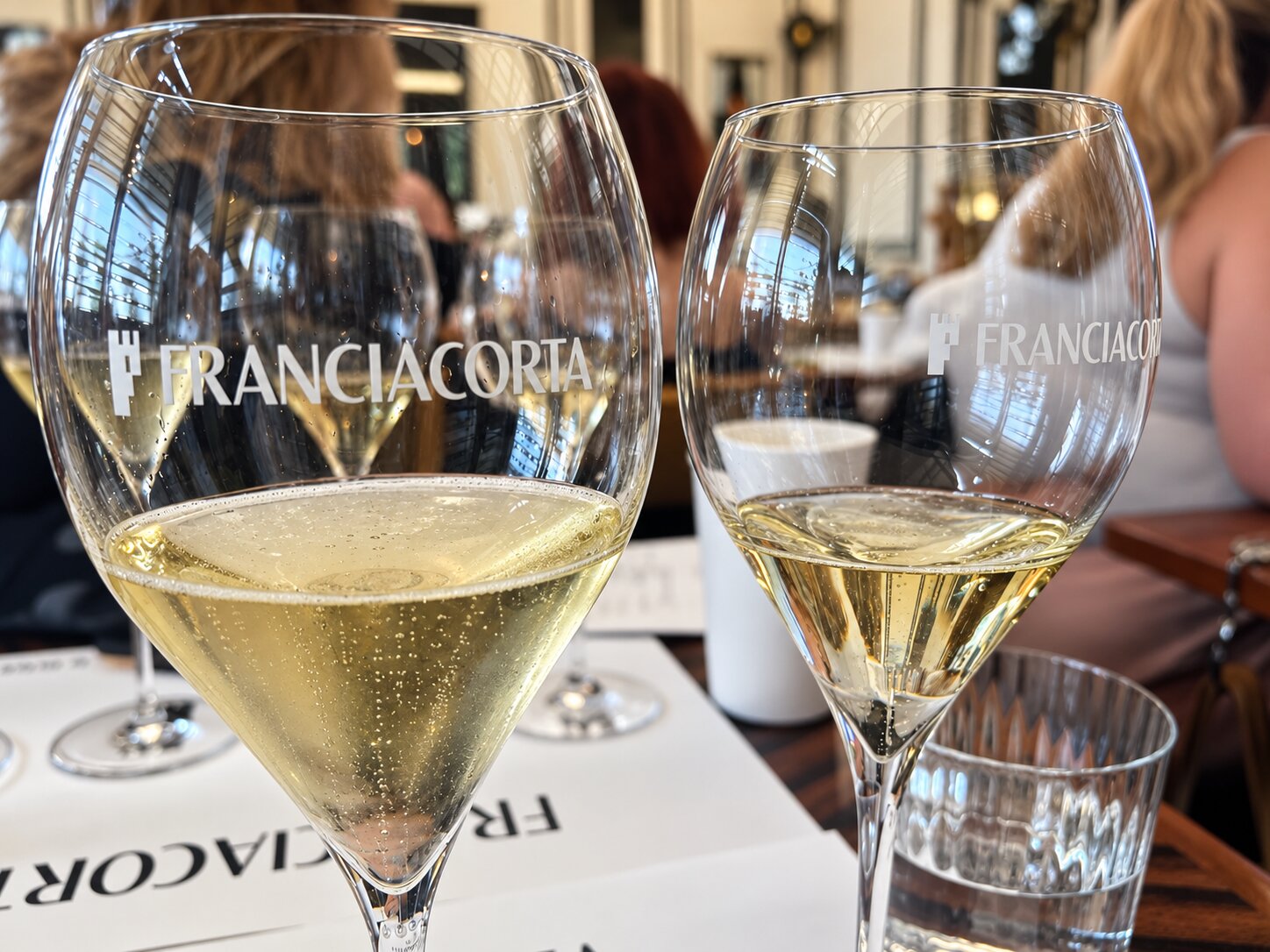
Inside May Matta-Aliah’s Franciacorta masterclass at Catch WeHo: the maps, the grapes, and the case for Italy’s quietest sparkling wine region.
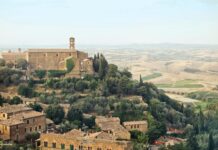
Franciacorta, Italy’s DOCG sparkling wine region tucked into the morainic hills south of Lake Iseo, has spent decades being introduced by comparison to other areas.
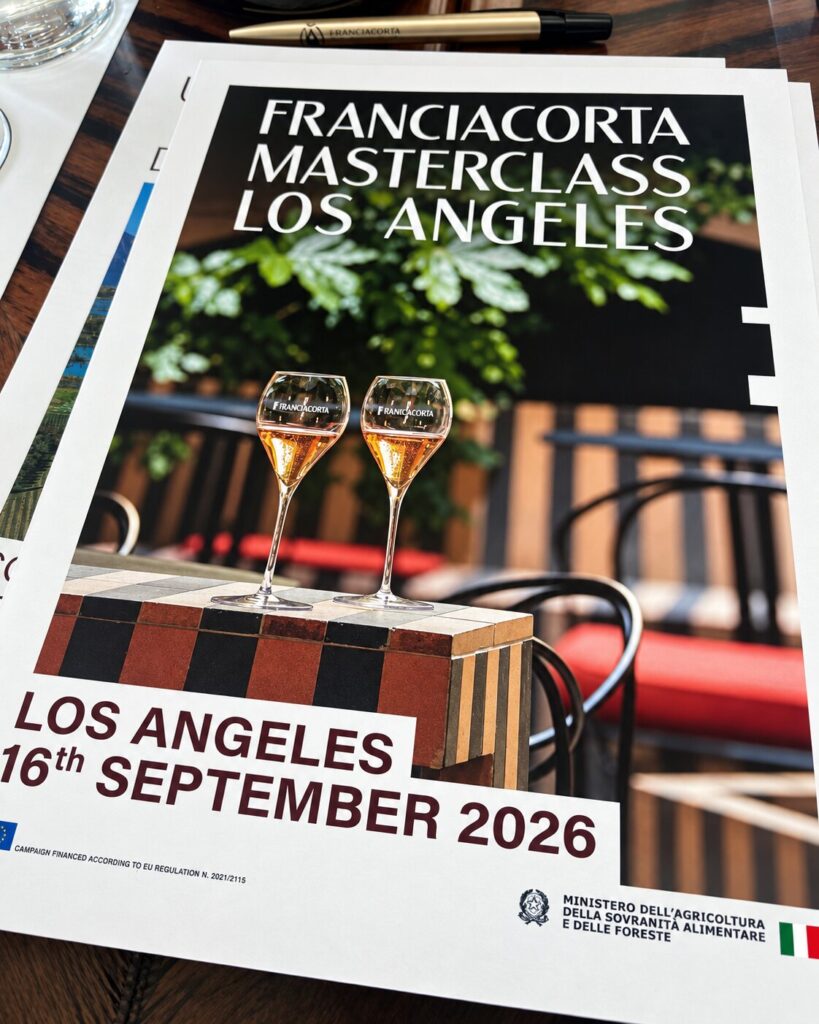
At our September 16 masterclass led by May Matta-Aliah, DWS, the region’s educational brand ambassador, the pitch was different: Franciacorta on its own terms, poured across two flights for a room of LA restaurant buyers and sommeliers who, by informal show of hands, already knew this category better than most American markets do.
A Region That Finally Mapped Itself
In 2024, after three years of work, Alessandro Masnaghetti, the cartographer behind the definitive zoning studies of Barolo and Barbaresco, completed a new vineyard and zone survey of Franciacorta.
It replaced a six-zone soil study from 1992 with 134 distinct zones, cross-referenced against Napoleonic-era vineyard records. It’s the legal and geological groundwork a region lays before it starts putting single-vineyard names on labels, the same move already underway in Chianti Classico and Barolo. Judge enough regions and you learn to recognize the moment one stops selling a category and starts arguing for a place.
The Discipline Behind the Glass
The regulatory detail that actually explains what’s in the glass: Satèn, the region’s trademarked Blanc de Blancs style, caps out at five atmospheres of bottle pressure against the roughly six atmospheres typical of standard sparkling wine. Half an atmosphere doesn’t sound like much on paper; on the palate it’s the entire difference between “sparkling” and “silky.” Clarabella’s Satèn Brut carried that texture at 24 to 30 months on the lees, acidity still holding at 7 g/l — bright enough that the softness never tips into flat.
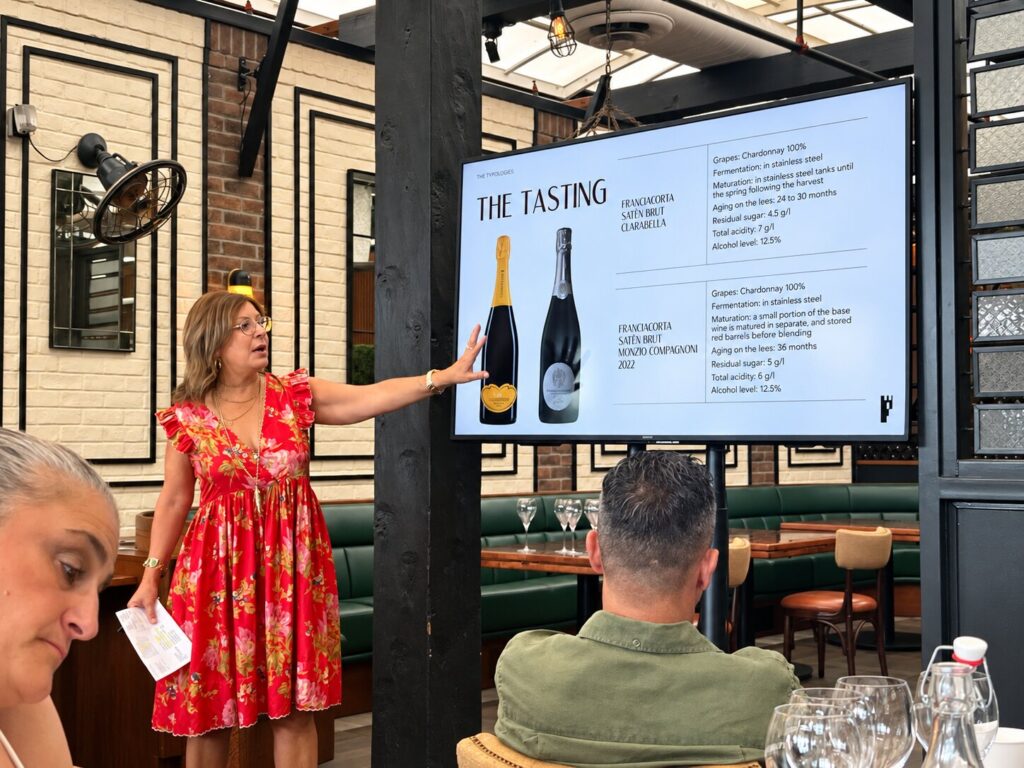
At the other extreme, Barone Pizzini’s Riserva Zero Dosage Bagnadore 2016 spent 72 months on the lees with residual sugar under 1 g/l, the kind of patience that rewards a taster.
Franciacorta produces roughly $20 million a year against Champagne’s $300 million and Prosecco’s climb toward a billion;
Moët & Chandon alone outproduces the entire DOCG. A region that’s made peace with being outsold but not with being ignored is betting, correctly I think, that scarcity reads as intention rather than limitation once you’ve actually tasted the difference.
Erbamat, or Betting on a Grape the Region Almost Let Die
The most forward-looking material in the room wasn’t a finished wine — it was Erbamat, a native grape reintroduced to the rulebook in 2017 after roughly 400 years out of favor. It ripens late, holds high acid, and won’t climb past about 10% potential alcohol no matter how long it hangs on the vine — exactly the profile a region needs as harvest dates creep from mid-August into late July. Only 15 to 20 producers currently plant it, capped at 10% of any blend, and none of the eight wines poured that afternoon contained it.
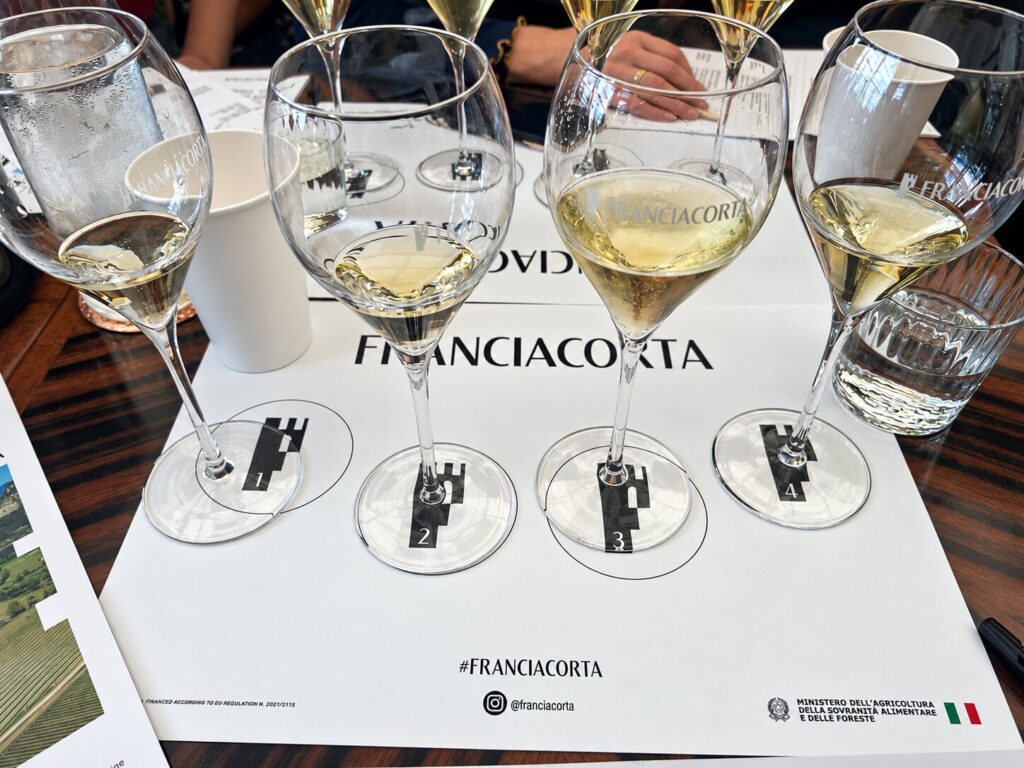
Flight 1: Chardonnay-led, Brut and Satèn
Ferghettina Franciacorta Brut
85% Chardonnay / 15% Pinot Nero | 24 months on lees | 4 g/L dosage
Appearance: Pale lemon, persistent fine mousse, fine bead.
Nose: Medium intensity. Green apple, lemon zest, pear, white peach and white flowers, moving into almond, light brioche and fresh bread dough.
Palate: Dry, high acidity, medium body, medium alcohol, fine persistent mousse. Crisp citrus and orchard fruit lead, with a subtle creamy autolytic character and a distinctly savory, saline finish. Medium-plus length.
Balanced, precise and fresh, with enough lees character to add complexity without masking the Chardonnay fruit. A strong benchmark introductory Franciacorta style.
Production: Whole bunches are gently pneumatic-pressed, with the highest-quality free-run portion reserved for Franciacorta. Fermentation is in stainless steel, followed by secondary fermentation in bottle and approximately 24 months on the lees. Ferghettina blends fruit from numerous vineyard sites across Franciacorta.
Food pairings: Fried calamari, prosciutto, burrata with olive oil, grilled prawns, linguine alle vongole. The acidity and bubbles work particularly well with fried or salty foods.
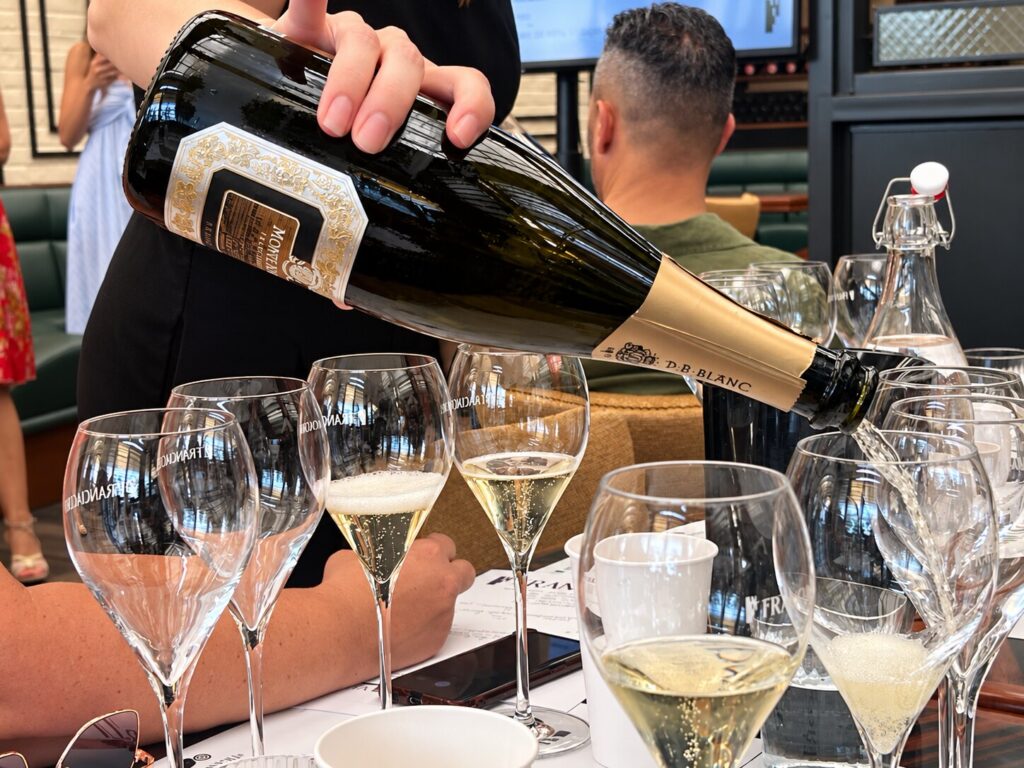
Monte Rossa P.R. Blanc Brut
100% Chardonnay | 35% reserve wines | minimum 24 months on lees
Appearance: Pale-to-medium lemon, fine persistent bubbles.
Nose: Medium-plus intensity. Yellow apple, ripe pear, lemon curd and white peach, with hazelnut, toast, pastry and subtle vanilla.
Palate: Dry, high acidity, medium-plus body, creamy mousse. More breadth and richness than the Ferghettina, with ripe orchard fruit, citrus, almond and noticeable lees-derived pastry notes. Savory, structured finish with medium-plus to long persistence.
The important note here is not simply Chardonnay, but the 35% reserve-wine component, which gives greater depth, texture and complexity.
Production: Chardonnay parcels are vinified separately, using both stainless steel and oak. The final cuvée combines roughly 65% current wines with 35% reserve wines before bottle fermentation and at least 24 months of lees aging.
Food pairings: Lobster risotto, roast chicken, veal Milanese, aged Parmigiano-Reggiano, mushroom risotto. It has enough body for dishes beyond the standard aperitivo category.
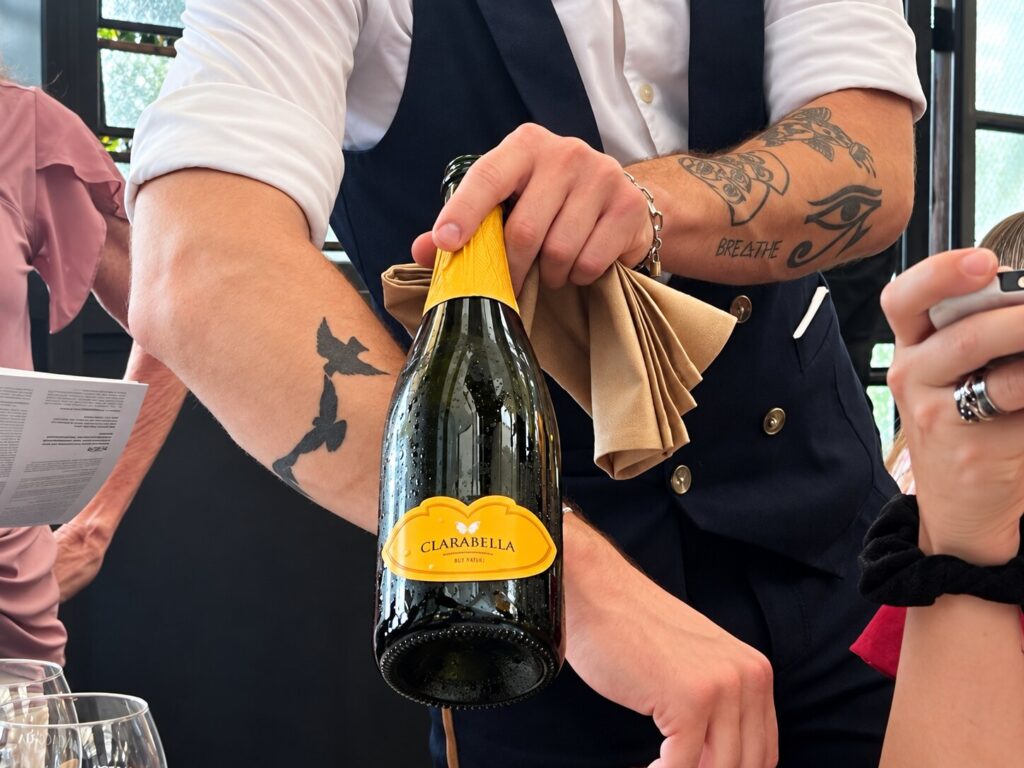
Clarabella Franciacorta Satèn Brut
100% Chardonnay | 24–30 months on lees
Appearance: Pale lemon-gold, fine persistent mousse.
Nose: Medium intensity. Lemon, yellow apple, pear and white peach with acacia blossom, almond, subtle tropical fruit and light pastry.
Palate: Dry, high acidity, medium body, with the notably soft, creamy mousse expected of Satèn. Apple, citrus and stone fruit are balanced by gentle lees notes and a mineral, lightly saline finish. Medium-plus length.
Its strengths are balance, silkiness and freshness rather than power. Satèn is less about aggressive effervescence and more about texture.
Production: The wine is 100% Chardonnay and organically produced. Approximately 90% is fermented in stainless steel and 10% in barrique, followed by secondary bottle fermentation and 24–30 months on lees; it rests further after disgorgement before release.
Food pairings: Oysters, hamachi crudo, salmon tartare, seafood risotto, sole meunière, fresh goat cheese. Excellent with dishes where a full-pressure sparkling wine might feel too aggressive.
Monzio Compagnoni Satèn Brut Millesimato 2022
100% Chardonnay | approximately 36 months on lees per your bottle information
Appearance: Medium lemon-gold, generous but very fine mousse.
Nose: Medium-plus intensity. Ripe yellow apple, pear, peach and citrus alongside biscuit, vanilla, toasted hazelnut, anise and light sweet spice.
Palate: Dry, high acidity, medium-plus body, creamy mousse. This is a richer, broader Satèn style, showing ripe apple and stone fruit, biscuit, toasted nuts and vanilla. Generous texture but kept fresh by firm acidity. Long, savory finish.
More muscular and gastronomic than the Clarabella. It pushes Satèn toward richness and concentration while preserving the category’s soft mousse.
Production: Monzio Compagnoni makes this entirely from Chardonnay using traditional-method bottle refermentation.
Food pairings: Seared scallops, butter-poached lobster, chicken with mushroom cream sauce, risotto Milanese, truffle pasta, Taleggio.
The Flight 1 progression makes sense: Ferghettina shows freshness → Monte Rossa adds reserve-wine complexity → Clarabella shifts toward Satèn texture → Monzio Compagnoni shows the richest, most vinous Chardonnay expression.
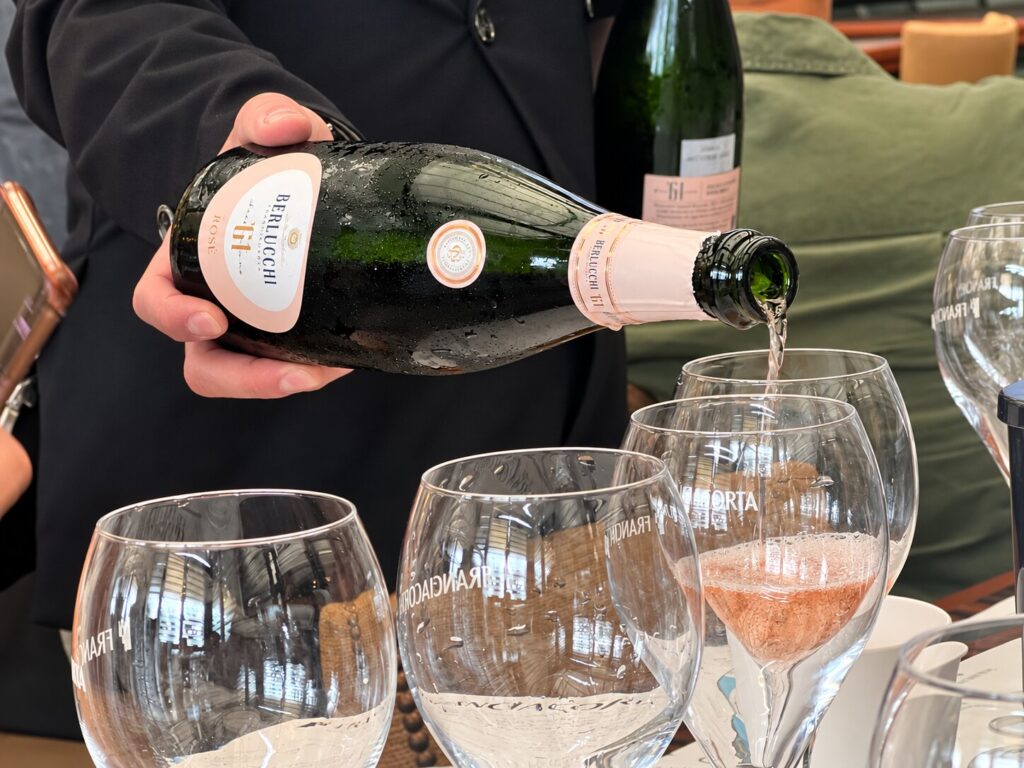
Flight 2: Rosé and higher-end bottlings
Berlucchi ’61 Rosé Brut
70% Pinot Nero / 30% Chardonnay | minimum 24 months on lees | 6.5 g/L
Appearance: Medium salmon-pink, persistent fine bead.
Nose: Medium-plus intensity. Strawberry, raspberry, red cherry and blood orange with hibiscus, rose, bread crust and subtle baking spice.
Palate: Dry, high acidity, medium body, persistent mousse. Red berries and cherry are balanced by citrus freshness, subtle bread dough and a chalky, savory character. Medium-plus finish.
Pinot Noir gives it substantially more fruit weight and structure than a Chardonnay-led Franciacorta, while Chardonnay keeps the wine lifted.
Production: Pinot Nero receives a short period of skin maceration to extract color and aromatic character before fermentation in stainless steel. About 5% reserve wine is incorporated, followed by bottle fermentation and at least 24 months on lees, plus post-disgorgement aging.
Food pairings: Tuna tartare, salmon, prosciutto, mortadella, duck breast, tomato-based pasta, grilled prawns. Excellent with charcuterie.
Castello Bonomi Rosé Brut Millesimato 2022
100% Pinot Nero | minimum 30 months on lees
Appearance: Medium pink to salmon, fine persistent bead.
Nose: Medium-plus intensity. Wild strawberry, raspberry, red cherry, blood orange and pomegranate, with dried rose, light toast and subtle spice.
Palate: Dry, high acidity, medium-plus body and more evident structure than the Berlucchi. Red fruit, citrus peel and savory mineral notes lead into subtle autolytic complexity. Firm, persistent finish.
The 100% Pinot Nero composition provides greater vinosity, structure and gastronomic potential than a more conventional blended rosé.
Production: The Pinot Nero receives a short skin maceration for color before temperature-controlled fermentation in stainless steel. The base wine matures for roughly seven months prior to tirage, followed by at least 30 months on lees.
Food pairings: Baked turbot, grilled salmon, lobster, tuna tataki, duck, pork tenderloin, mushroom dishes. This can handle genuinely substantial food.
Rosé comparison
Berlucchi = brighter, more immediately fruity and accessible.
Castello Bonomi = more structured, vinous and Pinot-driven.
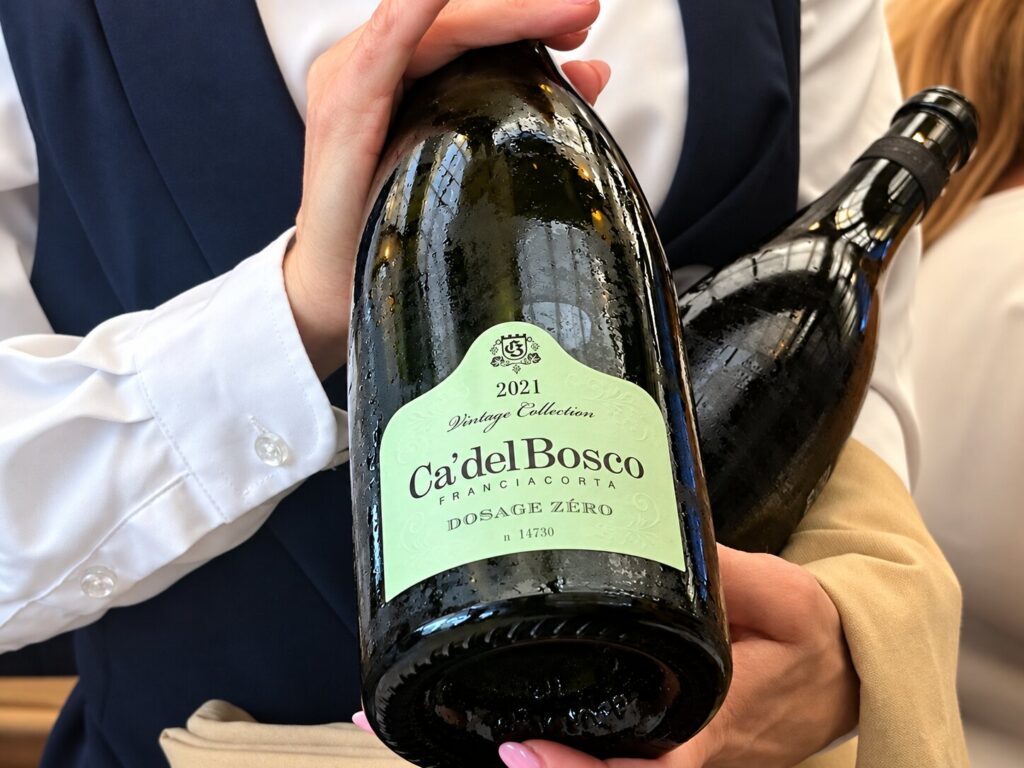
Ca’ del Bosco Vintage Collection Dosage Zéro 2021
81% Chardonnay / 16% Pinot Nero / 3% Pinot Bianco | average 53 months on lees | zero dosage
Appearance: Medium lemon-gold, extremely fine persistent mousse.
Nose: Medium-plus to pronounced. Lemon peel, grapefruit, green apple, pear and white peach developing into toast, brioche, hazelnut, almond, chalk and subtle oak spice.
Palate: Bone dry, high acidity, medium-plus body, extremely fine mousse. Concentrated citrus and orchard fruit with toasted nuts, bread, subtle oak and pronounced saline/mineral character. The absence of dosage exposes the wine’s acidity and structure. Long finish.
Concentration, precision, textural sophistication and long lees aging provide substantial complexity. Zero dosage means there is very little sweetness available to soften structural edges, so balance must come from fruit quality and maturation.
Production: Fruit comes from 44 certified-organic vineyards. Ca’ del Bosco washes and dries individual bunches, ferments the wines for approximately five months in small oak casks, then carries out secondary bottle fermentation with an average of 53 months on lees. No dosage is added at disgorgement.
Food pairings: Oysters, caviar, raw scallops, branzino, grilled langoustines, sushi, Parmesan, roast chicken. Particularly strong with saline foods and high-quality raw seafood.
Barone Pizzini Bagnadore Riserva Dosaggio Zero 2016
60% Chardonnay / 40% Pinot Nero | 72 months on lees | zero dosage
Appearance: Medium lemon-gold, very fine persistent bead.
Nose: Pronounced and highly developed. Lemon peel, preserved citrus, baked apple and yellow plum alongside brioche, toast, hazelnut, almond, mushroom, dried flowers and subtle French-oak spice.
Palate: Bone dry, high acidity, medium-plus to full body, very fine mousse. Dense and layered, with citrus, ripe orchard fruit, toasted nuts, bread crust and savory autolytic tones. Pinot Nero adds structural breadth, while zero dosage creates a taut, mineral finish. Long to very long persistence.
This is the most evolved and structurally complex wine in the lineup. Long lees aging, extended base-wine élevage, Pinot Nero content and zero dosage create considerably more depth than the entry-level wines.
Production: Fruit comes from the organically farmed single Roccolo vineyard. The juice is gently pressed and fermented primarily in French barriques, followed by approximately eight months of base-wine maturation and a minimum 72 months on the lees before release.
Food pairings: Roasted turbot, porcini risotto, roast chicken with herbs, veal, aged Comté, Parmigiano-Reggiano, truffle dishes. This is a sparkling wine that can comfortably carry an entrée.
There is a smart stylistic progression here.
Flight 1 teaches texture and Chardonnay. Ferghettina starts with freshness and purity. Monte Rossa adds reserve-wine depth. Clarabella shows classic Satèn softness. Monzio pushes Satèn toward greater richness and power.
Flight 2 increasingly becomes about structure. Berlucchi introduces Pinot Nero through fruit. Castello Bonomi goes to 100% Pinot Nero and becomes more vinous. Ca’ del Bosco strips away dosage and adds long lees aging. Bagnadore then takes the idea furthest with 72 months on lees, barrel-aged base wine, significant Pinot Nero and zero dosage.
What “Consortium” Actually Means Here
The Consorzio Franciacorta wasn’t imposed by regulation. It was 29 producers voluntarily organizing in March 1990, a model that now covers 120 wineries and 98% of the region’s output. That level of buy-in is what makes a 55%-organic-farming figure mean something on a tasting sheet, rather than reading like a line item from a press kit.
Mini FAQ
What’s the difference between Franciacorta and Champagne?
Both use the traditional method — second fermentation in the bottle — but Franciacorta is Chardonnay-dominant (79% of plantings), farmed on glacially formed morainic soil around Lake Iseo, and produced at a fraction of Champagne’s volume, with only 12% of it ever leaving Italy.
What does Satèn mean on a Franciacorta label?
It’s a trademarked term for a Blanc de Blancs style capped at five atmospheres of pressure instead of the standard six, producing a noticeably softer, silkier mouthfeel.
Is Franciacorta easy to find in Los Angeles?
Not yet at scale — export volume is small industry-wide — but the turnout for this masterclass suggests LA’s restaurant and sommelier community is ready before the distribution catches up.
Judging from their Early Pour
Franciacorta isn’t trying to out-produce Champagne or out-hype Prosecco, and that restraint is the actual story worth tasting. A region that spends three years remapping its own dirt, reintroduces a nearly extinct grape as a hedge against climate, and caps its own bottle pressure by regulation isn’t chasing volume; it’s building a case for specificity.
West Hollywood got an early pour of that case last week. The rest of the market will catch up once the wine does the talking.








Oysters with Saten, lobster risotto with Monte Rossa, and truffle pasta with Monzio? Yum. Did they serve any of this?
I always find rules more interesting when they actually explain the experience in the glass. Like Saten does
So basically Champagne gets all the fame and Franciacorta gets to quietly be delicious?
2 months on lees for the Bagnadore 2016 is pretty intense.
The Saten detail is fascinating. Five atmospheres instead of six sounds tiny. But it’s that texture? That softer mousse is exactly what makes the style memorable