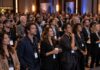

















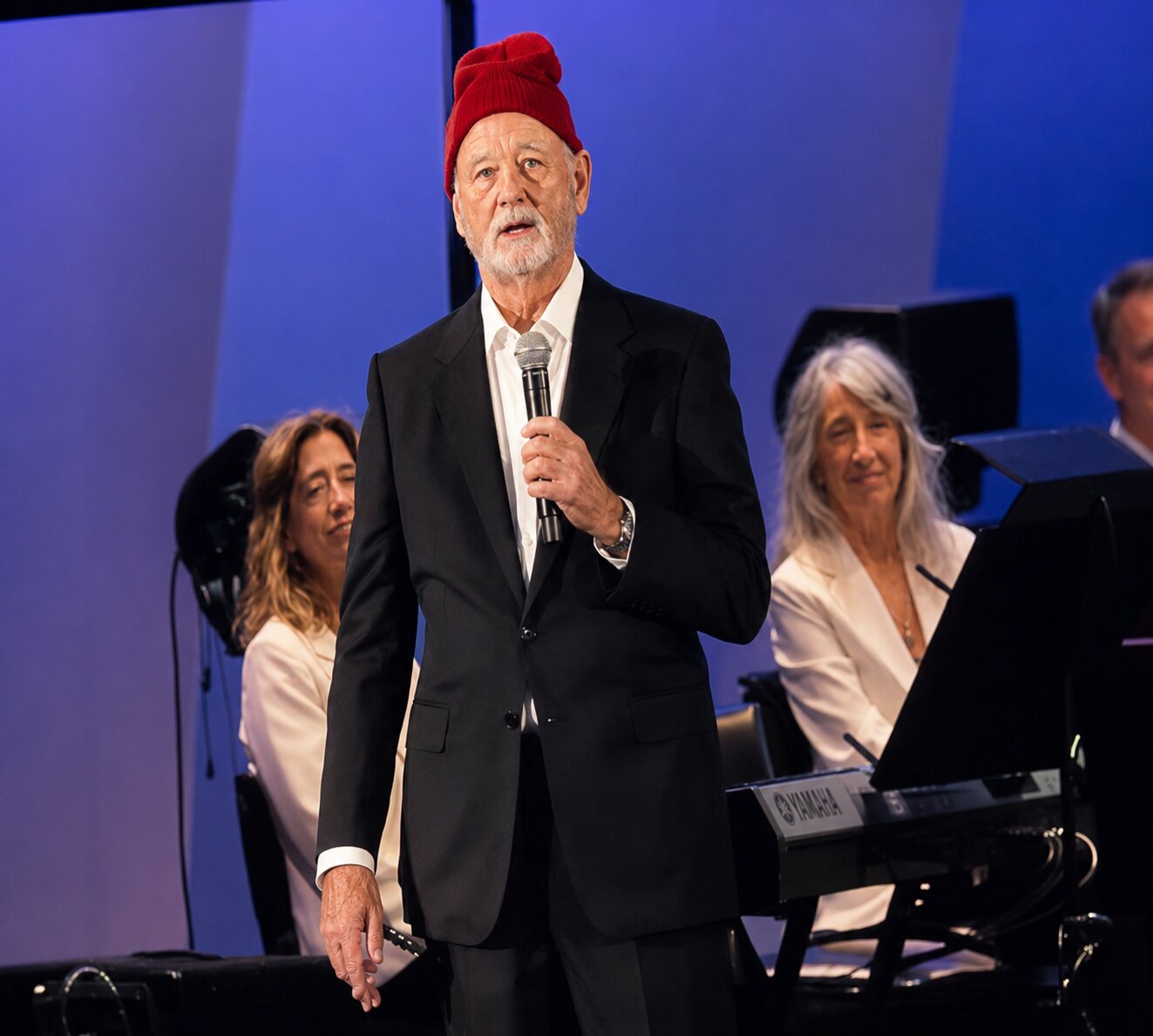
The L.A. Phil’s three-night Wes Anderson tribute proved the director’s soundtracks are the architecture of his films. A review of Friday night 1.
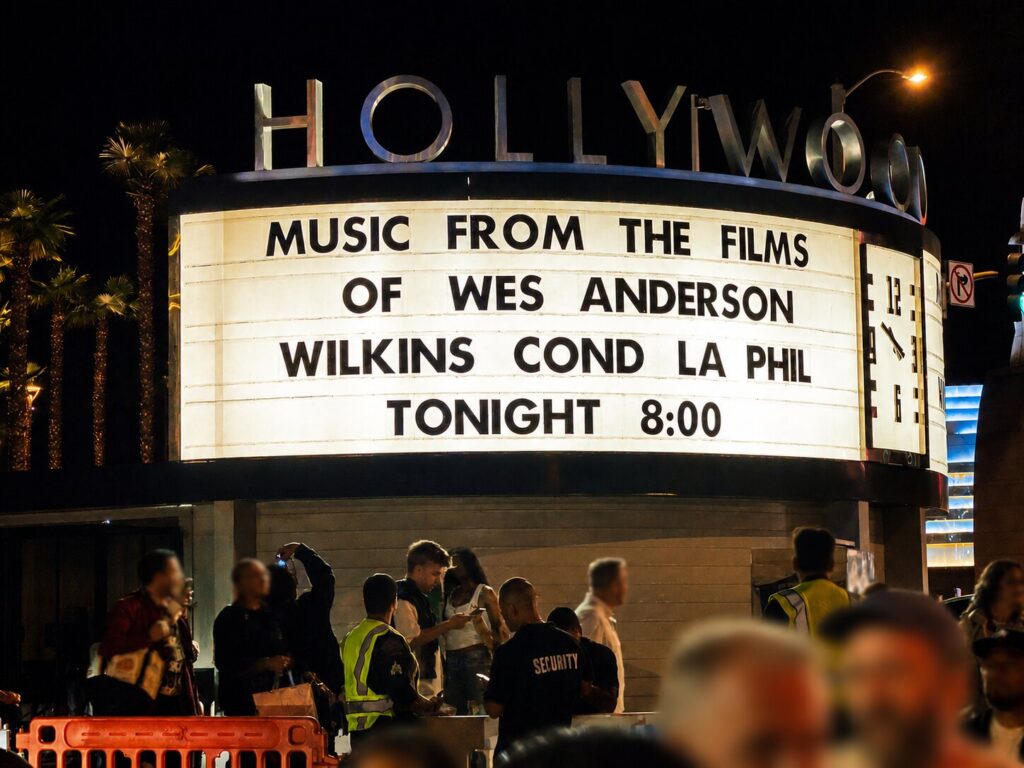
Jason Schwartzman pulled a cassette tape from his pocket on Friday night at the Hollywood Bowl. Not for effect. Not as a prop. He’d found it at his mother’s house, “Rushmore songs,” handwritten on the label, and while sharing the story, he threw it into the crowd. A piece of film history, launched into the dark. To an excited fan.
The cassette existed because Anderson played Schwartzman the entire “Rushmore” soundtrack before a frame of the movie was shot, narrating the film through the songs in sequence. The music wasn’t added to the movie. The movie was built around it. Friday’s concert, the first night of a three-night Hollywood Bowl produced by the L.A. Phil, made that argument loud and clear, then delivered a night good enough to back it up.
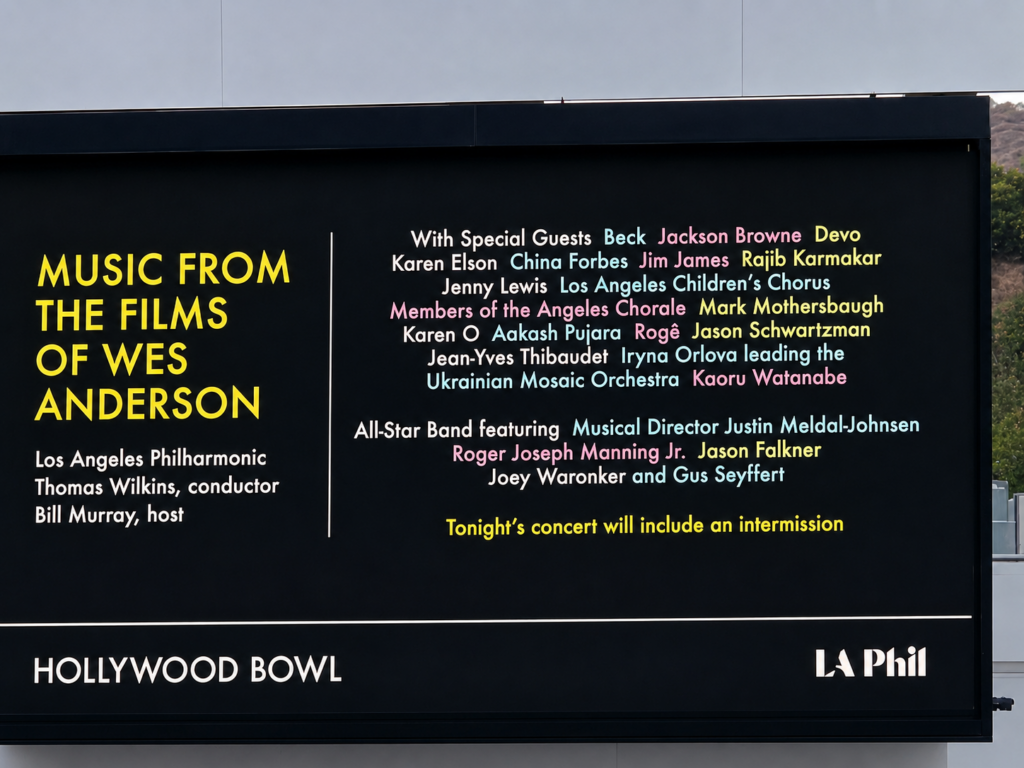
Bill Murray, a $9 Desk Bell, and the Case for Looseness
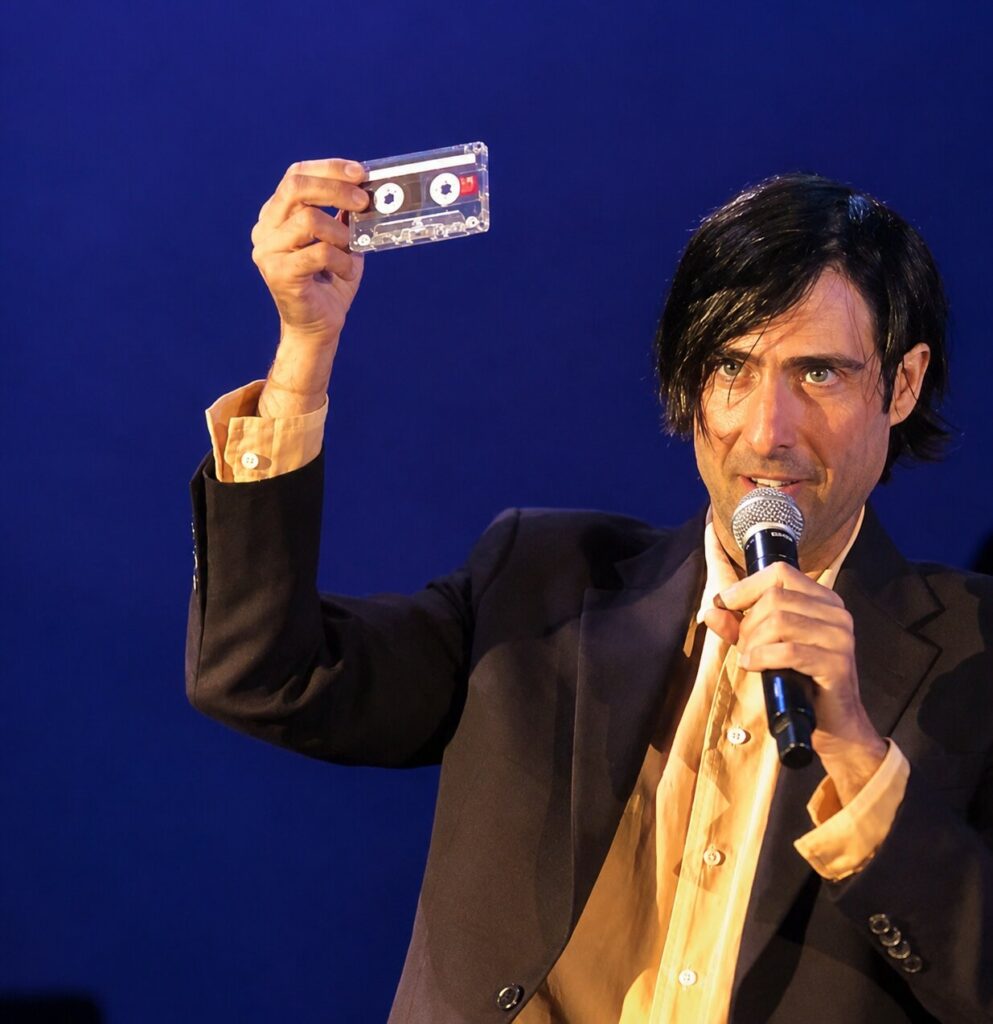
Bill Murray was the night’s host, which is the kind of casting that only works if the room trusts it, and this room did. They loved it, among other reasons, because Bill Murray is a long-standing Wes Anderson must-have. It just made sense.
Murray has appeared in every Anderson feature since “Rushmore” in 1998, making him both the right narrator for this story and, functionally, a Wes Anderson instrument himself.
His riffing was genial without being self-indulgent. He got out of the way when the music started. And he produced, at Anderson’s specific request, a $9 desk bell, apparently sourced at a Staples hours before showtime, to cap the night’s final number.
Beck had to specifically ask the sound crew to make sure the bell was audible through the Bowl’s PA. It was. Murray hit it with genuine commitment.
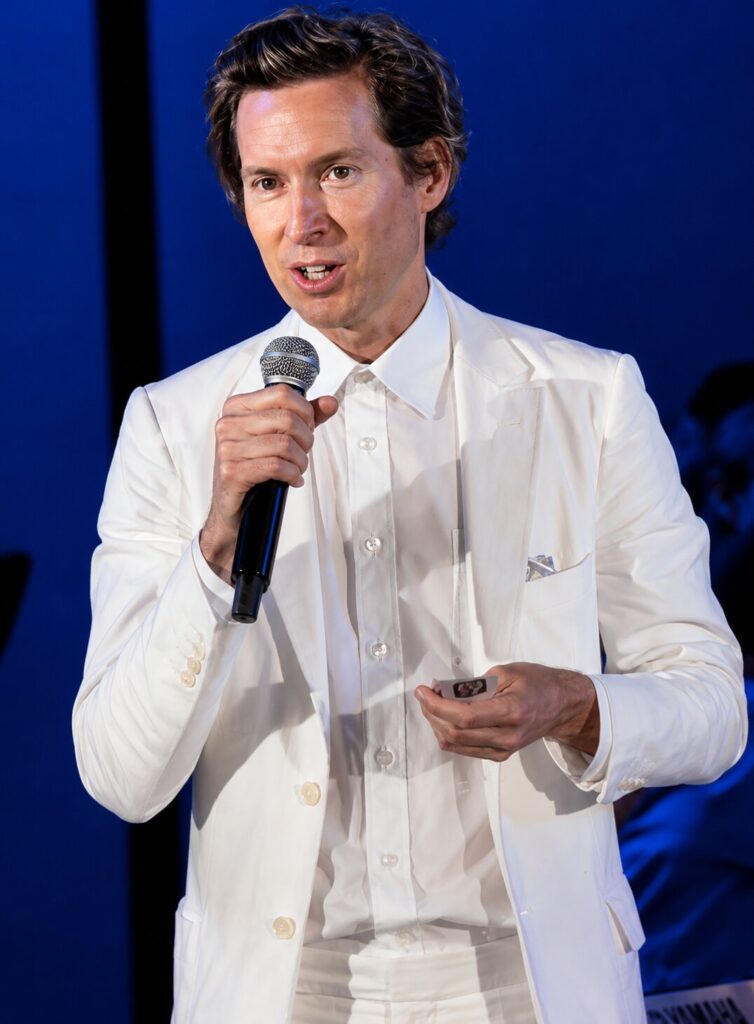
Anderson himself made a brief appearance to both welcome the audience, share a bit of enthusiasm and gratitude for the night and express wonder about what he has created.
What Justin Meldal-Johnsen Actually Built
The critical undersung work of the evening was musical director Justin Meldal-Johnsen’s. The assignment, arrange and perform music from every Anderson film, 1996 to present, in a single night, is not a casual project.
That’s nearly three decades of needle drops, original scores, and one-off collaborations spanning Devo’s Mark Mothersbaugh, Alexandre Desplat, and a rotating cast of obscure 1960s international pop singles.
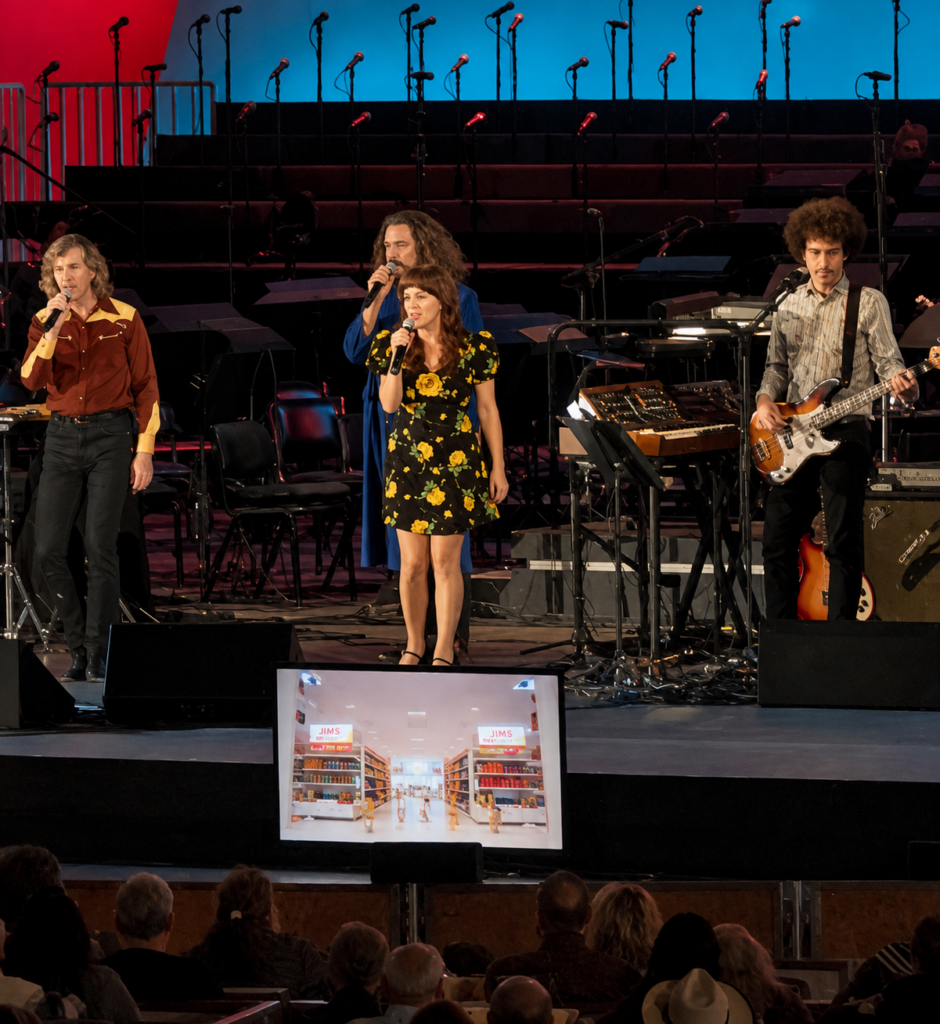
The band Meldal-Johnsen assembled: Roger Joseph Manning Jr., Jason Falkner, Joey Waronker, and Gus Seyffert, executed with the precision of people who have actually played on records you own. The L.A. Phil took a more restrained role: rigorous, pointed appearances from Desplat’s “Canto at Gabelmeister’s Peak” and “Mr. Fox in The Fields,” and the Mothersbaugh-penned “Ping Island” from “The Life Aquatic.”
The Covers Were the Surprise
The guest vocalists were where the night earned its keep.
Jackson Browne, in what he noted was a career first, finally performed “Fairest of the Seasons” and “These Days”, songs he wrote as a teenager, later covered by Nico for the Velvet Underground-adjacent art-rock orbit, then famously repurposed by Anderson in “The Royal Tenenbaums.” The fact that Browne had never performed them publicly before Friday, despite having written them roughly 55 years ago, is either an oversight or a deliberate long game. Either way: finally.
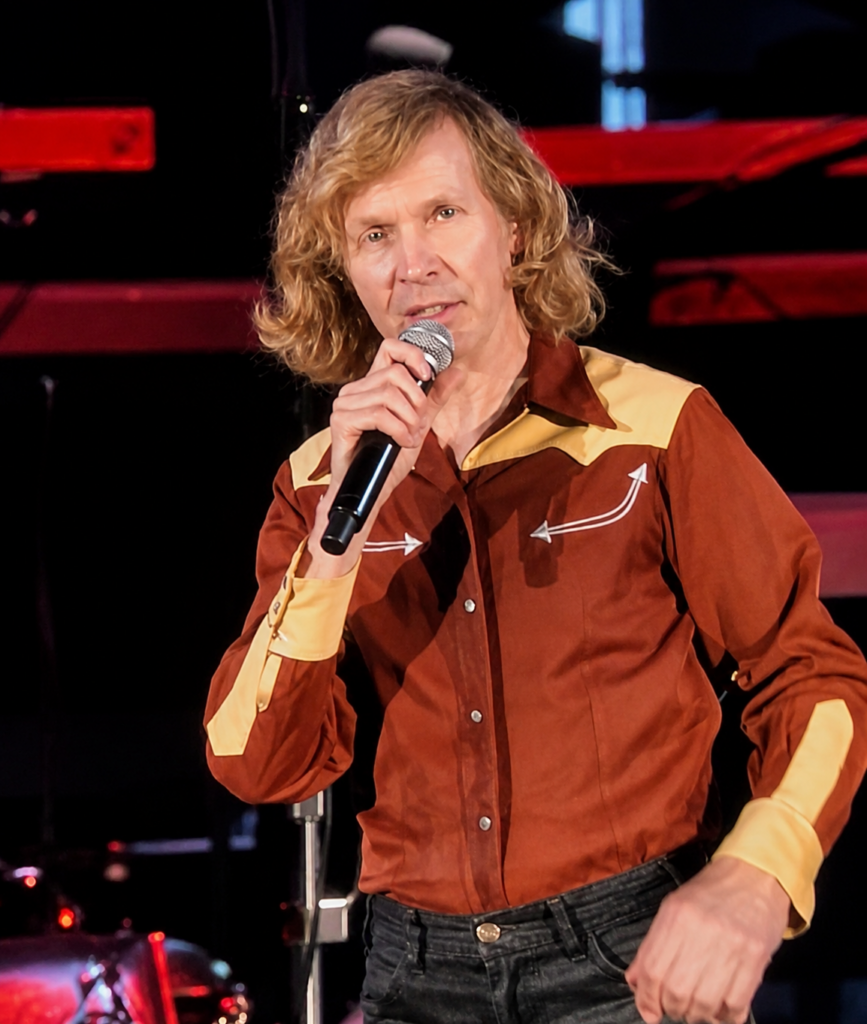
Beck covered Elliott Smith’s “Needle in the Hay”, a song so specific to its Anderson moment that any other context collapses under the weight of it. He got through it. Later, he handled Love’s “Alone Again, Or” with more room to breathe. Karen O simmered through the Rolling Stones’ “Play With Fire” from “The Darjeeling Limited” — the right song, the right register, the right amount of held-back tension.
Karen Elson’s cover of Françoise Hardy’s “Les Temps De L’amour” from “Moonrise Kingdom” was the evening’s quietest moment and one of its best.
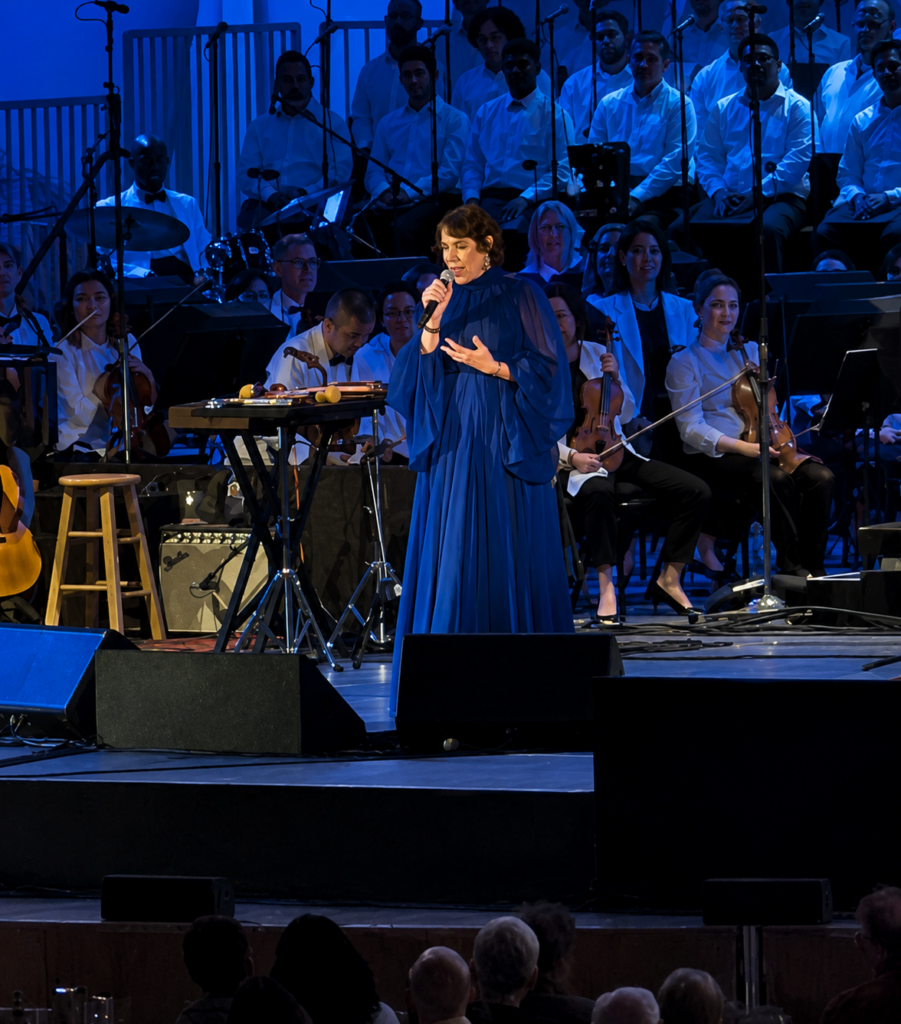
Jenny Lewis and Rogê’s run through “Zorro Is Back” had the shaggy warmth of a house party someone accidentally got right.
Pianist Jean-Yves Thibaudet took a solo turn on “Moses Rosenthaler” from “The French Dispatch.” Rajib Karmakar and Aakash Pujara played sitar and flute drones from “The Darjeeling Limited” that grounded the room after some of the louder moments.
Taiko drummer Kaoru Watanabe on “Shinto Shrine” from “Isle of Dogs” was the loudest thing anyone played all night and possibly the most fun to watch.
Watanabe nearly overloaded the Bowl’s speaker system; which, for a venue that seats nearly 18,000 people, is not a small achievement.
Why This Works as a Concert Series
Anderson’s soundtracks are peculiar in that they function as standalone listening experiences more naturally than almost any other contemporary director’s work. The songs don’t feel like cues — they feel like arguments. “These Days” in the opening sequence of “The Royal Tenenbaums” doesn’t underscore the scene; it creates the scene. The concert worked because the music can hold its own weight without the images. That’s not true of most film scores. It’s not even true of most great ones.
The L.A. Phil had the discipline not to overplay their hand. The night was structured more like a festival set than a classical event, and that looseness was exactly right. The Bowl crowd — who were, let’s be clear, Anderson fans first and concert patrons second — responded accordingly. By the time the band closed with the Faces’ “Ooh La La” and Murray was whacking that desk bell in the background, the night had delivered what it promised: not a museum piece, but a reunion with old friends. Affection earned, not assumed.
FAQ
What was performed at the Wes Anderson Hollywood Bowl tribute?
The L.A. Phil’s three-night tribute featured music from every Wes Anderson film from “Bottle Rocket” (1996) through his most recent work. The program included original scores by Alexandre Desplat and Mark Mothersbaugh performed by the Phil, plus guest vocalists covering Anderson’s signature needle drops — among them Jackson Browne performing songs he wrote as a teenager, Beck covering Elliott Smith, and Karen O on a Rolling Stones track from “The Darjeeling Limited.”
Who was the MC at the Wes Anderson Hollywood Bowl concert?
Bill Murray served as master of ceremonies across the three-night run, consistent with his role as a core Anderson collaborator since “Rushmore” in 1998. His hosting was informal and genuinely funny, culminating in him striking a $9 desk bell — requested specifically by Anderson — during the final number.
Who was the musical director for the Wes Anderson Hollywood Bowl tribute?
Justin Meldal-Johnsen served as musical director, leading a backing band of session veterans including Roger Joseph Manning Jr., Jason Falkner, Joey Waronker, and Gus Seyffert. Meldal-Johnsen arranged music spanning nearly three decades of Anderson films for the production.
The second and third nights of the L.A. Phil’s Wes Anderson tribute run through the weekend at the Hollywood Bowl. If Friday was the opening argument, the case is strong.