























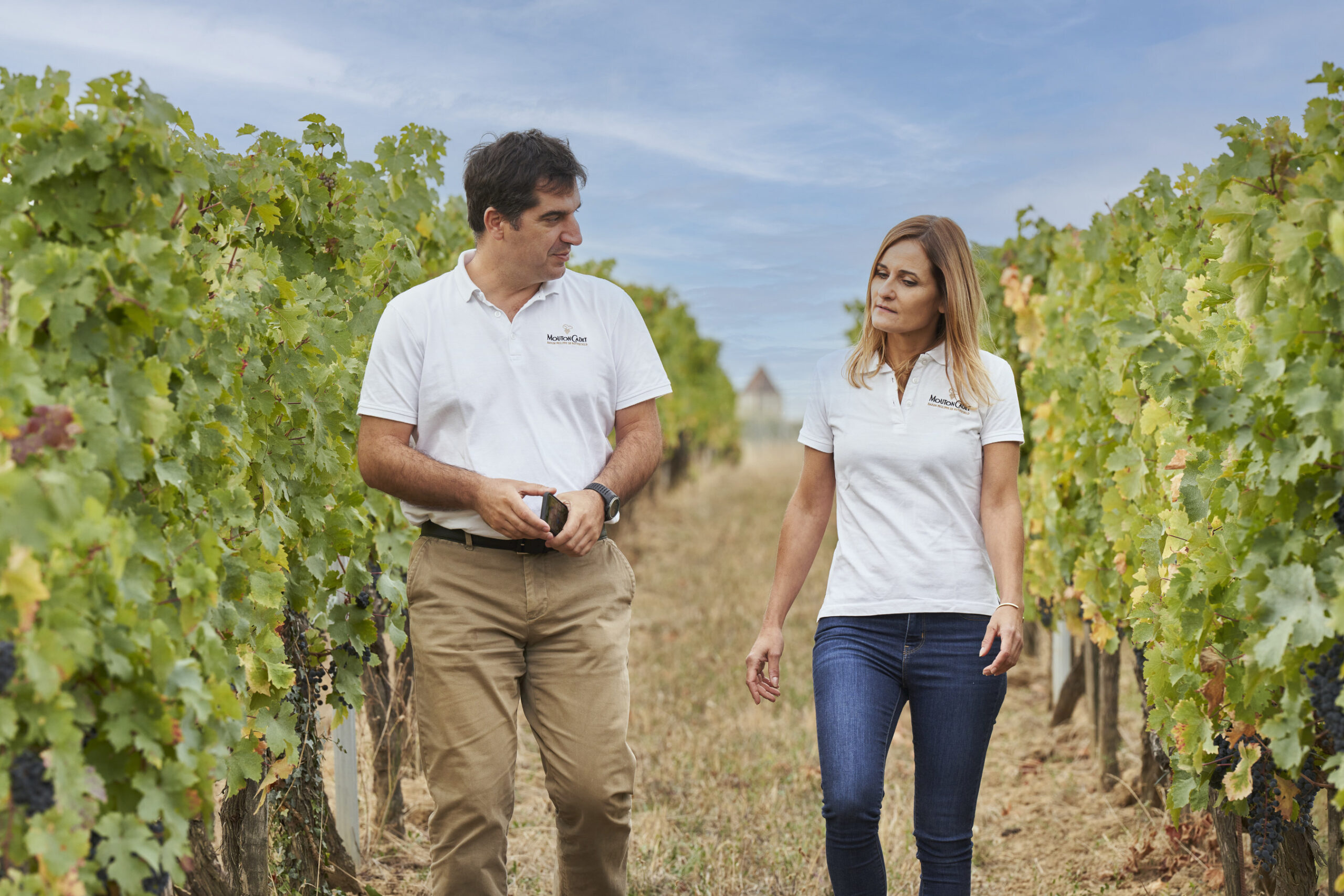
Mouton Cadet’s Fair for Life certified Bordeaux moved 2.5M bottles by paying growers above market rate. Here’s the model behind the numbers.
There’s a version of “sustainable wine” that lives entirely on the label. A certification badge, some language about the earth, a higher price point. You’ve seen it. You’ve probably been skeptical of it.
Mouton Cadet is trying to be something different; and the numbers are starting to back that up.
The world’s best-selling Bordeaux AOC brand has spent the last few years rebuilding its relationship with the 90 winegrowers who actually make the wine. Not through marketing language, but through contract structure. Multi-year agreements. Purchase prices set above market average. A development fund financed by 1% of all sales, governed by the growers themselves, who vote on where the money goes.
In 2025, that fund generated nearly $260,000. The projects it supported weren’t chosen by a corporate sustainability committee. They were chosen by the people farming 1,200 hectares across Bordeaux: tools to cut production costs, trials of climate-resistant grape varieties, programs to pass expertise to younger vignerons entering the trade.
That’s a different kind of wine company.
The brand earned its Fair for Life certification with the 2022 vintage — a third-party standard that audits social responsibility and fair trade practices across the full supply chain. But the certification didn’t create the model. It recognized one that was already being built.
And the market is responding. In France, where wine consumption has been declining for years, Mouton Cadet has grown its share to nearly 19% of the Bordeaux AOC category. In Canada, the certified cuvée is driving a return to double-digit growth. These aren’t niche numbers. Mouton Cadet moved 2.5 million bottles in 2025 across just two markets.
Founded in 1930 by Baron Philippe de Rothschild , the same Rothschild family behind Château Mouton Rothschild, the brand was always built around accessibility. Good Bordeaux for the table, not the cellar. Nearly a century later, the question it’s asking is whether accessible can also mean accountable.
The 2024 vintage arrives in Canada before year’s end. A 2025 vintage carrying the same certification follows. The audits, the brand says, will get stricter.
For a category that has spent decades arguing that quality and conscience are in tension, Mouton Cadet is making the opposite case — one contract, one grower vote, one bottle at a time.
FAQ #1
Q: What does Fair for Life certified mean on a wine bottle?
A: Fair for Life is a third-party social responsibility and fair trade certification that audits the full supply chain — from grower contracts to environmental practices. For Mouton Cadet, it means growers receive multi-year contracts and prices above market average, with 1% of sales directed to a grower-controlled development fund.
FAQ #2
Q: Is Mouton Cadet a good Bordeaux wine?
A: Mouton Cadet is the world’s largest-selling Bordeaux AOC brand by volume. Its Rouge holds nearly 19% market share in France and is seeing double-digit growth in Canada. It’s built for the table, not the cellar — an accessible Bordeaux from the Baron Philippe de Rothschild family with serious distribution behind it.
FAQ #3
Q: Where can I buy Mouton Cadet Rouge Fair for Life certified?
A: Mouton Cadet Rouge is widely available across France and Canada, with the 2024 vintage arriving in Canadian markets by year-end 2026. Check well-stocked wine retailers or French import specialists for availability in your market.