


























Why lower budgets, smarter tax incentives, and realistic sales estimates are changing how Hollywood finances independent movies.
A producer walks into a financing meeting with a $7 million movie.
The script is strong. A recognizable actor is interested. International sales estimates look promising. And a state tax incentive could cover a meaningful part of the budget.
There’s just one problem.
None of those numbers guarantees the investors will get their money back.
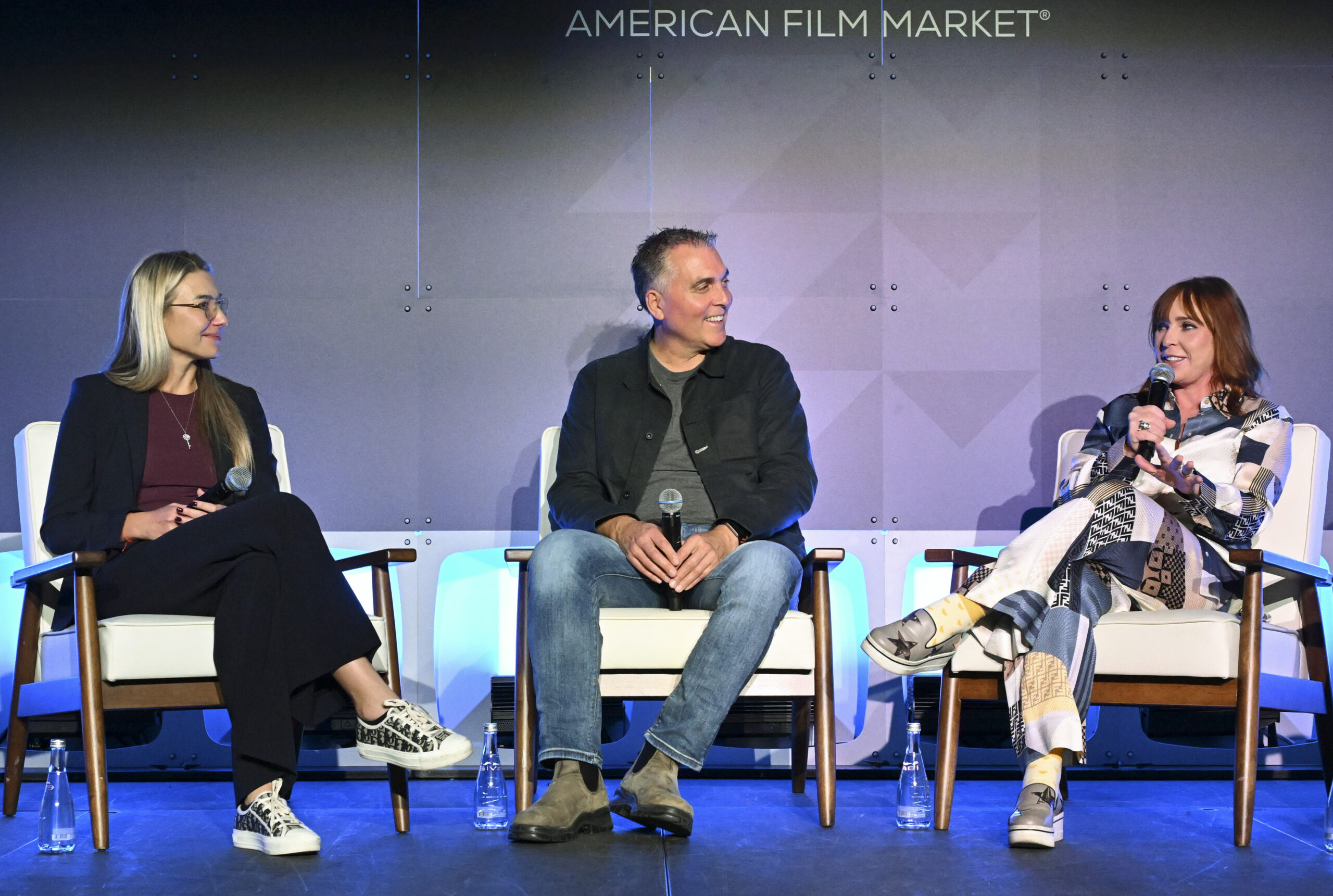
At the 2026 American Film Market (AFM) in Los Angeles, some of the industry’s leading financiers and independent producers offered a closer look at how the economics of filmmaking are changing.
The panel, Finance II: The New Math of Independent Film, brought together four executives who approach film financing from different sides of the business.
Moderated by John McGrath, an agent with United Talent Agency’s Independent Film Group, the discussion featured Juliana Lubin, Senior Vice President of Investments at Ashland Hill Media Finance; Ryan Broussard, Vice President of Sales and Production Incentives at Wrapbook; Paul Scanlan, co-founder and CEO of Legion M; and Miranda Bailey, producer and founder of Cold Iron Pictures.
Their conversation covered everything from tax incentives and international sales to production budgets, audience demand, and investor returns.
The takeaway was clear.
Hollywood still needs great stories. But getting those stories financed now requires a much tougher look at the numbers.
The Film Might Be Worth Less Than You Think
Juliana Lubin knows what happens when a film’s projected value doesn’t match what buyers are willing to pay.
At Ashland Hill Media Finance, her team provides financing against international presales, tax incentives, and other assets. The company also evaluates gap financing, which relies on the anticipated value of film rights that haven’t been sold.
That last category has become especially challenging.
Before the pandemic, financiers could generally estimate what an underperforming film might still generate in international markets.
Today, Lubin says that downside value is far less predictable.
“It could be as much as zero,” she told the audience.
That’s a serious concern for lenders and equity investors.
A producer might present $3 million in projected international sales. But those numbers are estimates, not signed contracts.
If buyers don’t materialize, the anticipated revenue can disappear.
Lubin says her company has become more conservative when evaluating these projections. It’s also accounting for another challenge: delayed collections.
Depending on the project, Ashland Hill is now building approximately six additional months into its interest reserves.
That means producers may need more money to cover financing costs while waiting for revenue to arrive.
For investors, the problem is not simply whether a movie sells.
It’s how much money ultimately comes back, and how long it takes.
A 30% Tax Incentive Doesn’t Mean You’ll Save 30%
Production tax incentives have become an essential part of independent film financing.
But Ryan Broussard of Wrapbook sees producers making costly mistakes when calculating their actual value.
A state may advertise a 30% incentive. That doesn’t necessarily mean a production receives 30% of its total budget.
Certain expenses may not qualify. Some states impose caps on above-the-line compensation. Transferable tax credits may need to be sold at a discount.
Then there are the expenses producers frequently overlook.
Production accountants. Audits. Travel. Housing. Per diem. Interest on loans secured against the incentive.
And what happens when the local crew isn’t available?
Broussard described productions selecting locations for attractive incentives, only to discover that another major production had already hired much of the available workforce.
Suddenly, the producers need to bring in crew from another state.
Those additional costs can erase much of the anticipated savings.
Broussard said he frequently reviews budgets that need roughly 20% more to account for missing expenses or other shortfalls.
He also warned that producers need to understand when incentive payments will arrive.
A credit worth $500,000 that takes several years to collect has a different financial value than one collected within six months, especially if the production needs to borrow money while waiting.
Some state programs also have annual funding caps. Once that money has been allocated, a qualifying production may still be unable to secure an incentive.
The lesson is simple.
The best tax incentive isn’t always the one with the highest percentage. It’s the one that produces the strongest financial result after costs, restrictions, and timing are considered.
And while the industry continues discussing a potential federal production incentive, producers should be careful about including proposed benefits in financing plans before legislation is enacted.
Does Your $7 Million Movie Really Need $7 Million?
Miranda Bailey has built a career producing films that don’t always fit Hollywood’s commercial formulas.
Her credits include Swiss Army Man, the unconventional 2016 film starring Paul Dano and Daniel Radcliffe.
Bailey told the panel that the film was produced for approximately $3 million.
Financing that same movie today could be considerably harder.
Independent dramas, in particular, are facing a difficult marketplace.
But Bailey also believes producers need to challenge their own budgets.
“We need $7 million for this. It’s like, no, you don’t. You need three.”
Her point wasn’t that every movie can be made for $3 million.
It was that producers sometimes build financing plans around budgets the marketplace can no longer support.
She pointed to By Design, starring Juliette Lewis, which was made for approximately $750,000.
Bailey suggested a comparable production might have cost roughly $2 million just a few years earlier.
That’s an enormous difference in the amount of capital at risk.
Consider two independent films.
One costs $7 million. The other costs $3 million.
Both face uncertain distribution prospects, sales fees, marketing expenses, and possible delays in revenue collection.
The smaller movie doesn’t automatically become profitable.
But it starts with a much lower amount to recover.
And for investors, that matters.
Can Fans Help Finance the Next Generation of Independent Films?
Paul Scanlan sees another possible solution to Hollywood’s financing challenges.
His company, Legion M, has built a business around fan participation.
Rather than relying entirely on a handful of wealthy investors, Legion M allows entertainment fans to invest in the company and participate in selected projects.
Scanlan said Legion M has raised nearly $40 million, with an average investment of approximately $500.
His long-term ambition is to unite one million investors around a fan-owned entertainment company.
He pointed to Coyote vs. Acme as an example of how an engaged audience can become a financial asset.
After the film faced an uncertain future, Legion M helped support its theatrical distribution alongside other partners.
Scanlan said the company’s community quickly funded its investment opportunity, and participating investors received their capital and the maximum contracted return within six months.
That reported outcome applies to the specific offering he described, not to every Legion M investment.
The larger idea deserves attention.
What if a filmmaker begins building an audience before production?
What if that audience helps demonstrate demand, spread awareness, and reduce the cost of reaching moviegoers?
And what if some of those fans are also willing to become investors?
That doesn’t eliminate the risks of filmmaking.
Scanlan acknowledged that many films fail to return their invested capital.
But it creates another possible source of financing and distribution support.
For independent producers who spend years trying to persuade a few wealthy individuals to finance a film, that’s worth considering.
Selling Your Film Doesn’t Mean You’re Getting Paid
One of the panel’s most revealing discussions involved distribution.
An audience member asked how producers can determine whether a distributor will provide accurate financial reporting.
Bailey’s response was quick.
“Assume they’re not.”
The comment drew laughs, but the discussion that followed was serious.
A producer may secure a streaming sale and assume substantial revenue is coming.
But the money can move through several companies before reaching the production.
There may be sales agent commissions, distribution fees, marketing expenses, financing charges, and other contractual deductions.
Then there are reporting schedules.
A streaming platform might pay a distributor months before the distributor is required to report and remit proceeds to the producer.
And even after the money arrives, it must be distributed according to the film’s recoupment waterfall.
That determines which lenders, investors, and other participants receive payment, and in what order.
Scanlan suggested that some industry accounting practices still reflect an earlier era when distributors regularly paid substantial minimum guarantees.
Today, those upfront payments may be much smaller or nonexistent, yet the lengthy accounting and payment schedules remain.
For an equity investor, those details can make the difference between an attractive financial projection and a disappointing outcome.
A $2 million distribution deal does not necessarily mean $2 million is available to repay investors.
And money expected in six months may not arrive for another year or more.
Those risks belong in the financing model from the beginning.
The Industry Still Has Opportunities. But Investors Need Better Answers.
Despite the financial challenges, the AFM panel wasn’t entirely pessimistic.
Lubin identified action, romantic comedies, and elevated horror among the genres attracting interest.
Bailey argued that producers shouldn’t simply chase whatever genre recently produced a breakout hit.
For every successful horror movie, many others struggle to find distribution.
A recognizable star isn’t necessarily enough, either.
Bailey explained that an actor’s commercial value can vary considerably between streaming platforms and international markets.
When asked whether she would prioritize a strong director or a more commercially valuable actor, her answer was immediate.
The director.
For producers, the challenge is finding the right balance between creative ambition and commercial reality.
For investors, it’s understanding how those choices affect the film’s financial prospects.
A strong package still matters.
So does a credible sales estimate, an experienced production team, a realistic budget, and a distribution strategy.
But none should be accepted without scrutiny.
And perhaps the most important question is the one producers sometimes avoid.
What happens if the movie performs below expectations?
Can the financing structure absorb delayed tax incentives?
What happens if international sales are half the original estimate?
How much revenue must the film generate before equity investors recover their initial investment?
Those aren’t questions designed to discourage filmmaking.
They’re the questions that make responsible financing possible.
The Bottom Line
Independent filmmaking has always involved risk.
Sometimes a $750,000 film finds an enormous audience. Sometimes a $10 million production struggles to secure a meaningful distribution deal.
The industry can’t eliminate that uncertainty.
But producers can become much better at understanding it.
At AFM 2026, the message from the financing panel wasn’t that filmmakers should stop taking creative chances.
It was that those chances need to be supported by more disciplined financial decisions.
Lower the budget where possible. Maximize incentives without exaggerating their value. Challenge international sales estimates. Understand distribution fees and payment schedules.
And build financing plans that account for what happens when things go wrong.
Because raising enough money to make a movie is only the beginning.
Making a movie that has a credible chance of returning that money is the real challenge.
Daily Ovation covers entertainment, business, investment, and the people shaping the industries behind them.
Frequently Asked Questions
What is gap financing in independent film?
Gap financing is funding based on the estimated future value of distribution rights that have not yet been sold. It is generally riskier than financing secured against contracted presales.
How do film tax incentives affect production financing?
Film tax incentives can reduce the net cost of production by providing rebates or tax credits on qualifying expenses. Their actual value depends on eligible spending, program restrictions, fees, financing costs, and payment timing.
Why are independent film budgets getting smaller?
Uncertain distribution revenue, lower international sales estimates, and more cautious financing are pushing producers to reduce budgets and limit the amount of investor capital at risk.
What is a film recoupment waterfall?
A recoupment waterfall establishes the order in which film revenues are paid to lenders, investors, producers, and other participants after applicable fees and expenses.