



























Film financiers and sports investors compare notes on scarcity, storytelling, and structured deals reshaping both entertainment categories.
Sports investing gets the headlines. Film finance built the playbook.
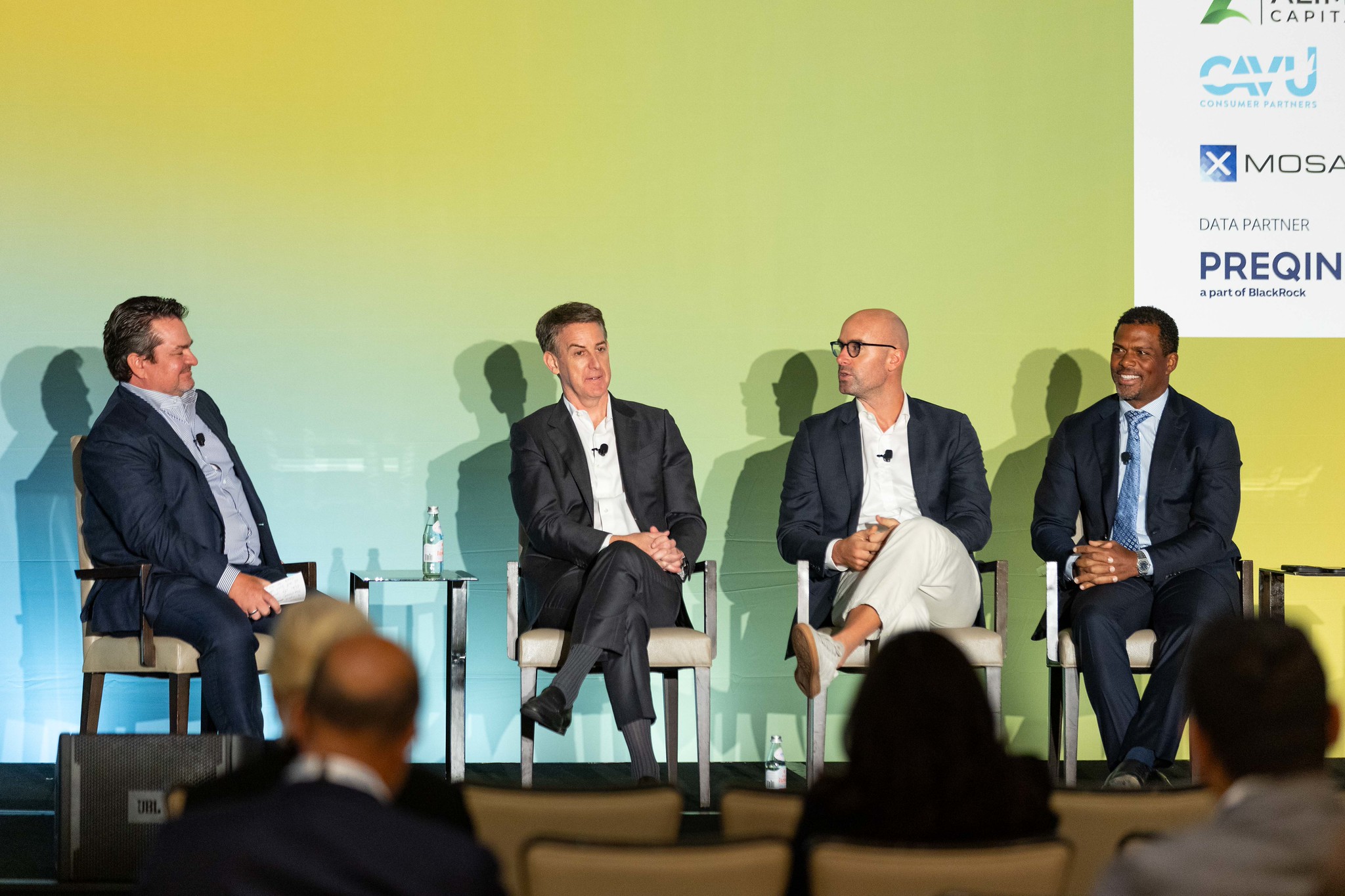
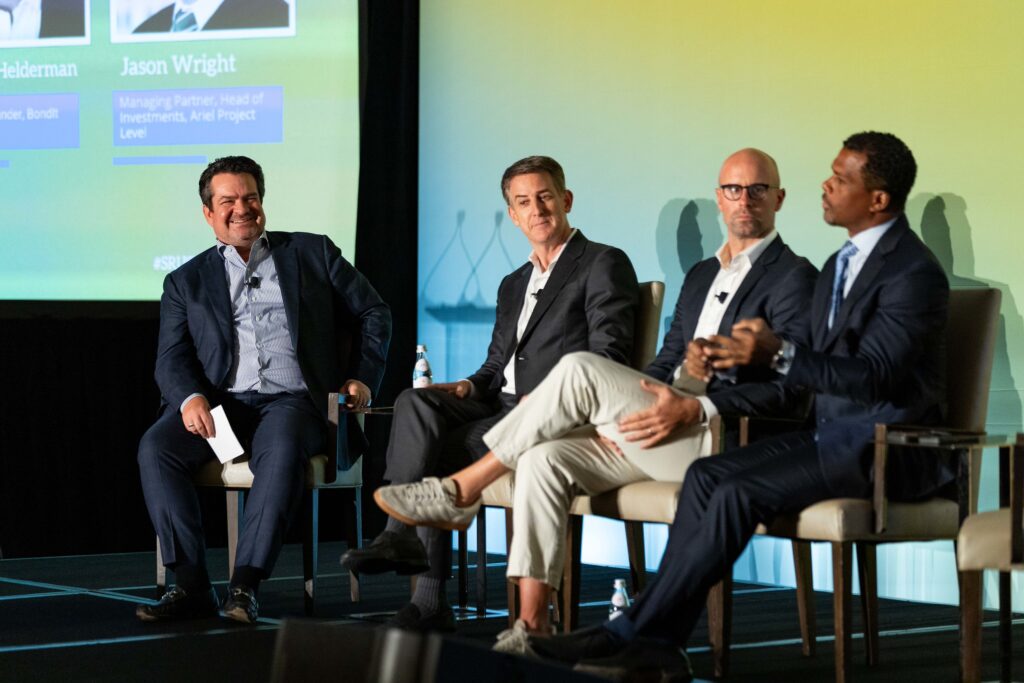
At SuperReturn US West, a panel moderated by Jon Oram, head of sports at Davis Polk, put both disciplines on the same stage and let the seams show. The panelists were Andrew Howard, Co-President of Shamrock Capital, a Los Angeles firm managing roughly $7.4 billion across media, entertainment, content, and sports; Matthew Helderman, CEO and Co-Founder of BondIt Media Capital, which has financed more than $500 million across 500-plus film, TV, and live-event projects; and Jason Wright, Managing Partner and Head of Investments at Project Level, the women’s sports fund inside Ariel Investments, a $14.3 billion asset manager, who previously served as president of the Washington Commanders through the team’s sale to Josh Harris.
The Financing Model Film Built, Sports Is Borrowing
Helderman’s firm was built entirely on film and television capital before sports ever entered the conversation, and that lineage matters more than it sounds.
BondIt’s approach treats a live event the way a film financier treats a production: identify every discrete revenue layer, finance each one separately, and let the aggregate cash flow do the work no single deal could do alone.
The clearest example on stage was a Netflix and Amazon spectacle production partner BondIt backs, the same infrastructure behind events like an NFL game staged in Australia or a heavyweight fight originally slated for the Sphere before the economics of building inside it turned upside down after the deposit was already paid.
That single anecdote, a $100 million single-day event where the venue itself became the balance-sheet risk, is a film-finance lesson wearing a sports costume: the production partner, the streaming platform building live-stream infrastructure in real time, and the hospitality layer around the event are three separate financeable pieces, not one.
BondIt is currently financing a Notre Dame–Villanova basketball game staged outside the Vatican, a Fox Sports and On Location partnership with a VIP hospitality component built around a papal appearance. It’s a sports event financed with the same segmented logic BondIt applies to a film release: production, distribution infrastructure, and ancillary experience economics, each underwritten on its own terms.
Where Sports Diverges: Scarcity Without a Script
Where film finance runs on hit-or-miss economics, sports offers something film almost never does, guaranteed dramatic structure with a scarcity premium attached to the underlying asset.
Wright’s fund doesn’t finance content around a team. It buys the team, on the logic that a league franchise is a flagship holding that pulls an entire portfolio of ancillary businesses into its orbit.
The Denver Summit FC expansion fee, $110 million in January 2025, priced under this logic before the market caught up. Ten months later, Atlanta’s fee reset the record at $165 million. By this spring, Columbus reset it again at $205 million. That’s not comparable to any film valuation curve, because a film’s value decays from release day forward while a scarce franchise’s value compounds as fewer are ever created.
Howard’s firm sits between these two models. Shamrock’s content strategy has run for over two decades across sports agencies, sports betting, mobility infrastructure around venues, and long-form sports storytelling, treating the category the way BondIt treats film: as an ecosystem of financeable adjacencies rather than a single asset class.
The Convergence Point: Storytelling Infrastructure
Every panelist independently landed on the same forward-looking bet: the value in both categories is migrating toward the storytelling layer built around the underlying asset, not the asset itself.
Helderman pointed to unscripted production companies building athlete-humanization series for leagues like the NFL, the same content model that made a documentary series work for film subjects, now being applied to athletes as a distinct financeable category.
Wright made the same argument from the demand side: fan attention in emerging sports categories is becoming the richest available data set on younger consumer behavior, precisely because those audiences are otherwise unreachable outside a screen. Both are describing the same trade. The content wrapped around the asset is becoming more investable than the asset was on its own.
FAQ
How does financing a sports event differ from financing a film, structurally?
A film’s financing is typically front-loaded against a single release with hit-or-miss box office risk. A live sports event can be segmented into separately financeable layers, production, streaming distribution infrastructure, and hospitality or VIP experience, each carrying its own risk and return profile.
Why do sports franchises command a scarcity premium that film assets generally don’t?
League ownership slots are structurally limited, controlled by leagues that approve new entrants, while film production has no equivalent cap on how much content can be made. That scarcity is what let NWSL expansion fees nearly double from $110 million to $205 million in roughly fourteen months.
Is the same investor likely to work across both film and sports financing?
Increasingly yes. The panel’s consensus was that storytelling infrastructure, unscripted content, athlete-focused series, and digital-first sports media, is becoming the convergence point where film-finance underwriting skills and sports scarcity value meet in the same deal.