



























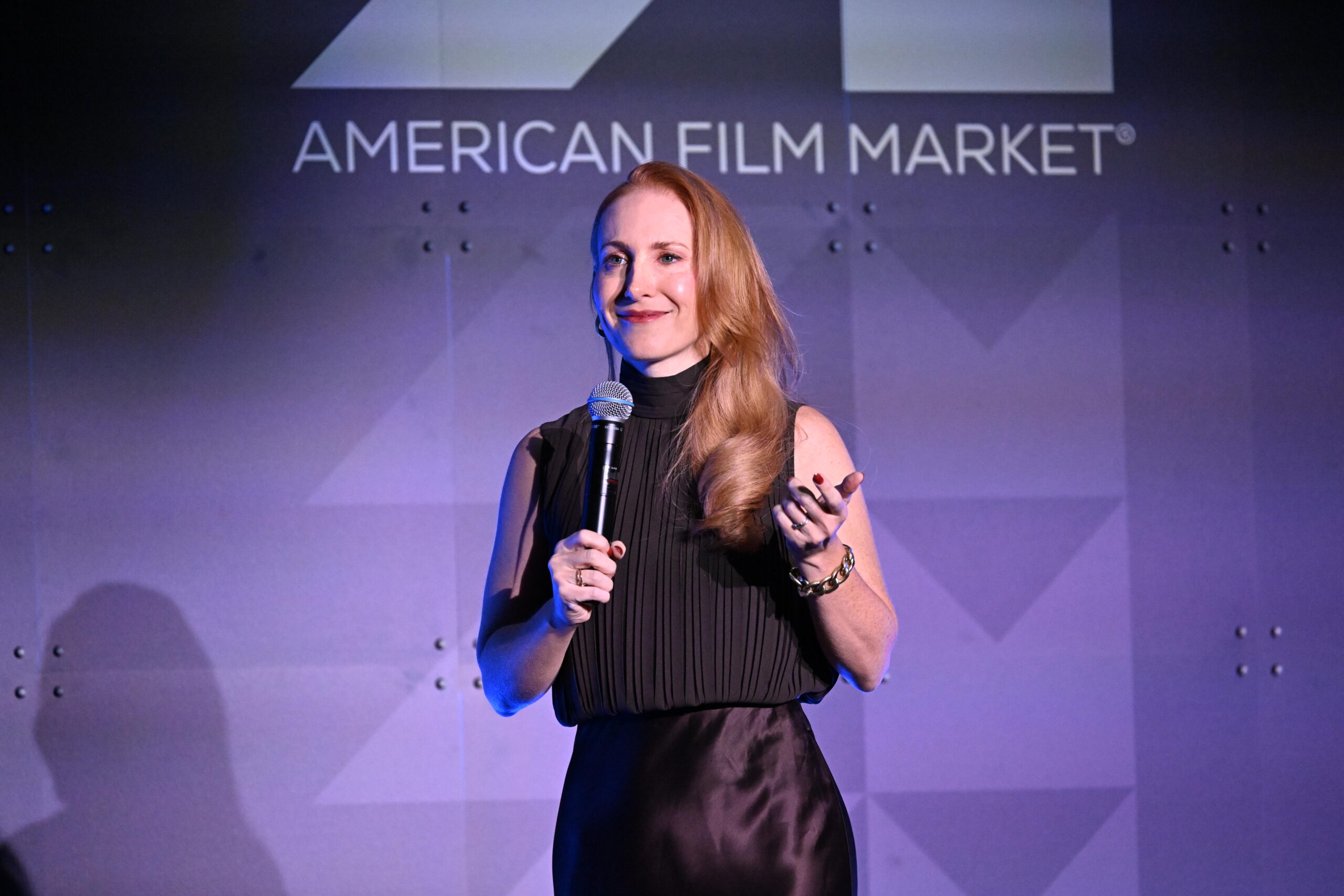
At AFM 2026, IFTA CEO Jackie Brenneman explains how audience data, new distribution models, and smarter financing could reshape independent film.
At the American Film Market, the new IFTA chief argues that independent film has more audience demand than Hollywood knows how to serve. For filmmakers and investors, the opportunity may be bigger than another surprise box-office hit.
A YouTuber makes a horror movie for roughly $3 million. It opens in more than 3,000 theaters. It goes on to earn over $50 million worldwide.

No major studio. No traditional Hollywood marketing machine. Just a filmmaker who understood his audience, and an audience that wanted to see his movie.
That sounds like the independent film success story Hollywood has been searching for.
But Jackie Brenneman sees something more interesting.
At the opening of the 2026 American Film Market (AFM), the new president and CEO of the Independent Film & Television Alliance (IFTA) used the success of Iron Lung to challenge the way Hollywood finances, markets, and distributes independent movies.
Her argument? Audiences are out there. Technology is making them easier to find. Yet the film business still operates as though demand is something to discover after the movie is finished.
And that raises a much bigger question.
What if filmmakers could prove who wants to see their movie before asking investors to finance it?
Jackie Brenneman Brings a Different Perspective to AFM 2026
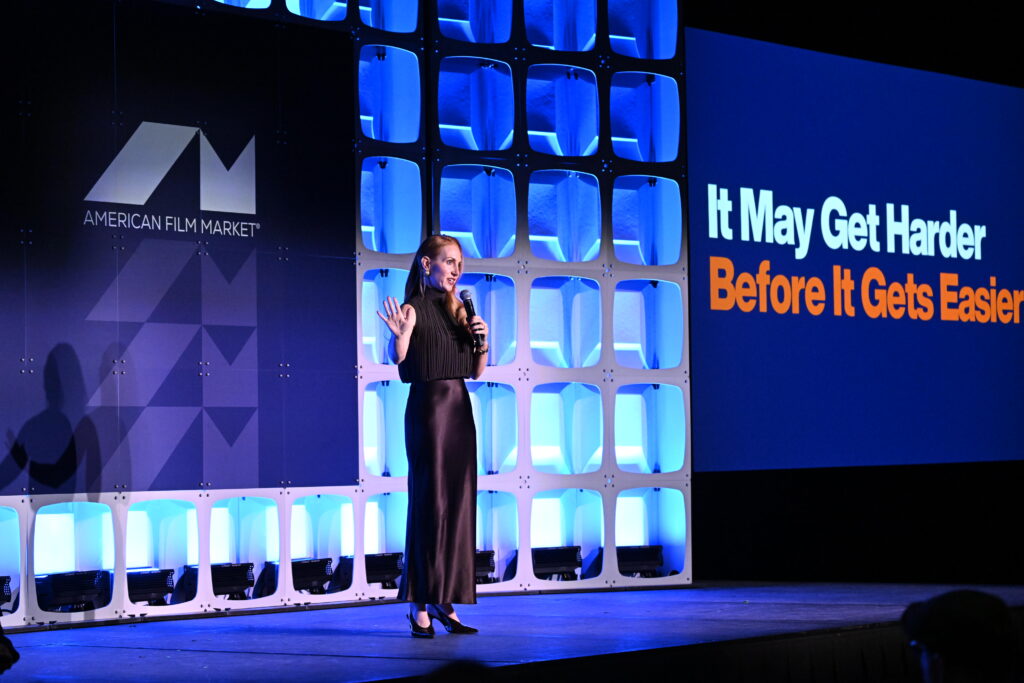
Brenneman delivered her keynote on November 10 at AFM’s inaugural New Global Screen Economy Summit, held at the Fairmont Century Plaza in Los Angeles.
This was her first AFM as the leader of IFTA, the trade organization behind the American Film Market.

Her experience is worth understanding. Before joining IFTA, Brenneman worked on the exhibition side of the industry, including senior leadership at the National Association of Theatre Owners and as founding president of The Cinema Foundation. She also helped develop new approaches to getting independent films into theaters.
In other words, she has spent years looking at the business from the audience’s side of the screen.
That’s important because the traditional film-financing conversation usually starts somewhere else.
Producers discuss scripts, budgets, recognizable actors, foreign sales estimates, tax incentives, and distribution possibilities.
Those are all legitimate concerns.
But what happens when the person writing the check asks a simpler question?
Who is actually going to buy a ticket?
Brenneman believes the industry is getting closer to answering that question with real evidence rather than educated guesses.
The Audience Is Showing Up. The System Isn’t Always Ready.
Let’s return to Iron Lung.
Created by YouTuber Mark Fischbach, better known as Markiplier, the film opened in January 2026 and earned approximately $51.2 million worldwide against a reported $3 million production budget.
That is roughly 17 times its production cost in box-office revenue.
It’s an extraordinary achievement.
But it is not a 17-times return for investors. More on that shortly.
Brenneman highlighted the role Markiplier’s enormous online following played in getting the film into theaters. His fans wanted screenings, and their enthusiasm helped demonstrate demand.
There’s a catch.
Markiplier already had tens of millions of YouTube subscribers. The film arrived during a period when theaters had room to accommodate it.
Most independent filmmakers have neither advantage.
The real opportunity, Brenneman suggested, is not to recreate another Markiplier. It’s to build a system that allows smaller filmmakers to find and reach their own audiences.
And there is reason for optimism.
According to The Numbers, films released by independent distributors, including specialty divisions such as Focus Features and Searchlight, represented 17.7% of the domestic box office through late October 2026. That was the strongest share in 11 years under that definition.
Brenneman cited a narrower 12.9% figure for independent distributors in her keynote. The distinction matters because different definitions of independent film produce different market-share results.
Still, the larger trend is encouraging.
Consider Obsession, a low-budget horror film directed by Curry Barker, or Backrooms, the Kane Parsons film that reportedly cost about $10 million and became a major global success.
These films did not follow the traditional formula of expensive stars, established franchises, and massive studio budgets.
They found audiences through different routes.
Yet that doesn’t mean every filmmaker should rush to make a horror movie.
Brenneman’s more interesting observation was about the economics behind the genre.
Horror films can often be produced at relatively modest budgets, with strong concepts and unknown actors. The industry makes enough of them to learn what audiences respond to, while accepting that many will not become hits.
Other genres may not receive the same opportunity.
A romantic comedy that requires a major star, a much larger production budget, and an expensive marketing campaign faces an entirely different financial test.
Perhaps some genres aren’t dead.
Perhaps the business simply hasn’t figured out how to produce and distribute them at budgets their audiences can support.
What Happens When You Know Where the Audience Is?
This was the most compelling part of Brenneman’s keynote.
She described working on the release of a small film called Two Sleepy People.
According to her account, the team identified 28 theaters with audiences likely to respond to the film. They scheduled one Friday screening at each location.
Some showtimes sold out without paid marketing.
At one New York theater, Brenneman said, that single screening ranked fourth for the entire week, ahead of numerous films playing multiple daily showtimes.
For a small independent production, those are remarkable results.
But when the team attempted to expand, she said exhibitors focused on the marketing budget instead of the demonstrated ticket sales.
Think about that.
A film reportedly sells out carefully targeted screenings. Yet the system still evaluates it using the traditional measure of how much money is available to advertise.
Brenneman’s experience is a useful example, although the individual theater results have not been independently verified.
The underlying problem is familiar to anyone who has tried to launch a product.
Imagine a company demonstrating strong customer demand in three cities but being denied additional retail distribution because it lacks a national advertising campaign.
That wouldn’t automatically mean the product deserves nationwide placement. But it would be a compelling reason to test additional markets.
Film distribution should be capable of similar experiments.
Instead of spending millions to create broad awareness and hoping moviegoers respond, a distributor could begin with communities that have already demonstrated interest.
That could mean targeted screenings, fan-club partnerships, regional releases, or testing demand before committing to a wider theatrical campaign.
The goal isn’t to eliminate marketing.
It’s to spend marketing dollars where the evidence suggests they have a better chance of working.
AFM itself is experimenting with the idea.
For 2026, the market partnered with AMC A-List and the fan-driven B-List Movie Club, giving select productions access to a Los Angeles community of more than 5,000 frequent moviegoers.
Those members can participate in screenings and provide feedback.
It is not proof of a new financial model. But it is a practical attempt to connect filmmakers, distributors, exhibitors, and audiences earlier in the process.
For an industry that frequently struggles to understand who will attend a movie, that is meaningful progress.
Could Better Audience Data Make Film Investing Less Risky?
Here is where the conversation gets particularly interesting for investors.
Traditional film finance relies heavily on comparable titles, or comps.
A sales agent or producer may examine how similar films performed in domestic theaters, international territories, and streaming markets. Those estimates help determine whether a proposed budget makes financial sense.
The weakness is obvious.
A comparable film tells you what happened to another movie, with another cast, at another time, under different market conditions.
Useful? Absolutely.
A guarantee? Not remotely.
Audience data adds another layer.
Imagine a $2 million independent thriller seeking financing.
The producers have identified a specific audience through legitimate market research. They can show measurable engagement, geographic concentrations of potential ticket buyers, and evidence that those viewers respond to the concept.
Perhaps they have run small paid campaigns and measured interest. Perhaps a related creator or established community is already involved.
That information could help determine where to release the film, how much to spend reaching its audience, and whether the production budget is reasonable.
For a financier, it provides evidence worth examining rather than another optimistic slide in a pitch deck.
But there’s an important distinction.
Audience interest is not the same thing as audience spending. And ticket sales are not the same thing as investment returns.
Let’s use Iron Lung again.
A $3 million movie earning $51 million sounds like an incredible return.
But movie theaters retain a share of ticket revenue. Distribution expenses, marketing costs, contractual fees, and other obligations can reduce the amount ultimately available to the production.
The actual financial outcome depends on who paid for those expenses, who owns the rights, and how revenue is divided.
For investors, the relevant questions are less glamorous than box-office headlines.
How much capital was raised? How much was spent on marketing? Which parties receive payment first? When does the original investment begin to recoup? What happens if the film performs at only a fraction of its forecast?
And, critically, how reliable is the audience data being presented?
A million social-media followers are not a million paying customers.
A trailer receiving millions of views does not establish how many viewers will purchase a ticket.
A sold-out screening in one city does not guarantee demand in 100 more.
What matters is whether that interest can be converted into revenue at a cost that supports the investment.
That is the business opportunity hiding inside Brenneman’s optimism.
Better data may improve the assumptions behind financing, distribution, and marketing decisions.
It cannot eliminate risk.
But it may help the industry make smarter bets.
The Next Breakthrough May Be a Better Business Model
Brenneman’s keynote also raised a broader question about the future of independent film.
If the industry can identify audiences earlier, could it also reconsider what a film should cost?
A filmmaker with evidence of a passionate but limited audience may be better served by a $750,000 production than a $5 million version of the same story.
That’s not a creative failure.
It may be responsible producing.
And there are policy implications. A bipartisan federal film-production incentive introduced in September 2026 proposes a credit for qualifying U.S. productions, but the bill as introduced requires total production costs to exceed $1 million.
That means some microbudget films would be excluded even if they otherwise satisfied the requirements.
Brenneman argues that incentives should serve truly independent productions across different budget levels, not simply the largest productions capable of qualifying.
The proposal is not yet law. Its eligibility rules could change.
But the principle deserves attention.
If smaller films can demonstrate demand, control production costs, and create economic activity, policies designed to support the film industry should consider their place in the market.
The same thinking applies to private capital.
For years, independent-film investors have been asked to believe in stories, talent, and potential.
Those elements still matter. Great storytelling will always involve judgment that cannot be reduced to a spreadsheet.
But the financial case should become more sophisticated.
Producers should be able to explain not only why their film deserves to exist, but also who will pay to watch it, how those viewers can be reached, and what revenue is realistically available after expenses.
That is a more useful conversation for filmmakers and investors alike.
Brenneman’s vision is optimistic. And given the 2026 success stories, there is genuine reason to pay attention.
But the next great achievement for independent cinema may not be another $3 million movie earning $50 million.
It may be the development of repeatable models that help many more modest productions reach their audiences, cover their costs, and return capital.
Because a successful independent film industry cannot depend entirely on exceptional outcomes.
It needs a business that works when the movie is good, the audience is real, and the box office is merely reasonable.
That’s a future worth building.