

























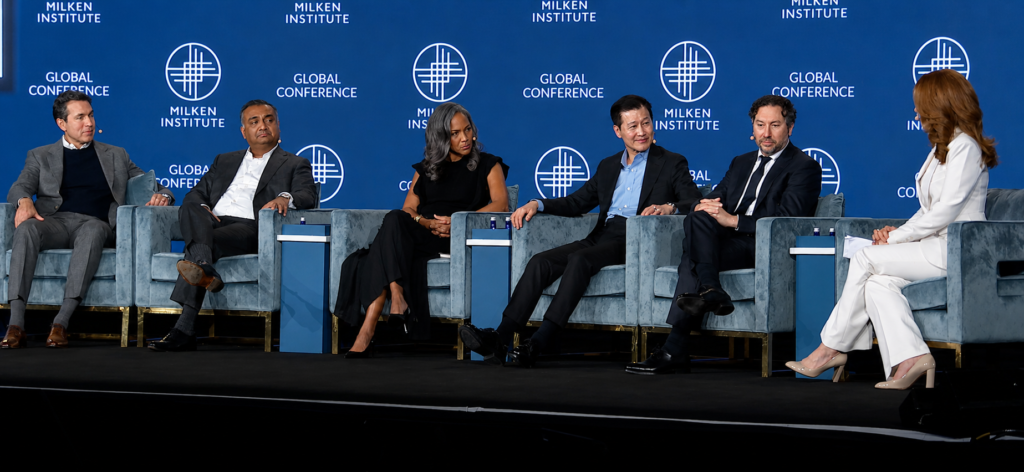
Sony, Black Bear, and Tubi’s CEOs revealed the real threat to independent film distribution at Milken 2026 — and it’s not AI.
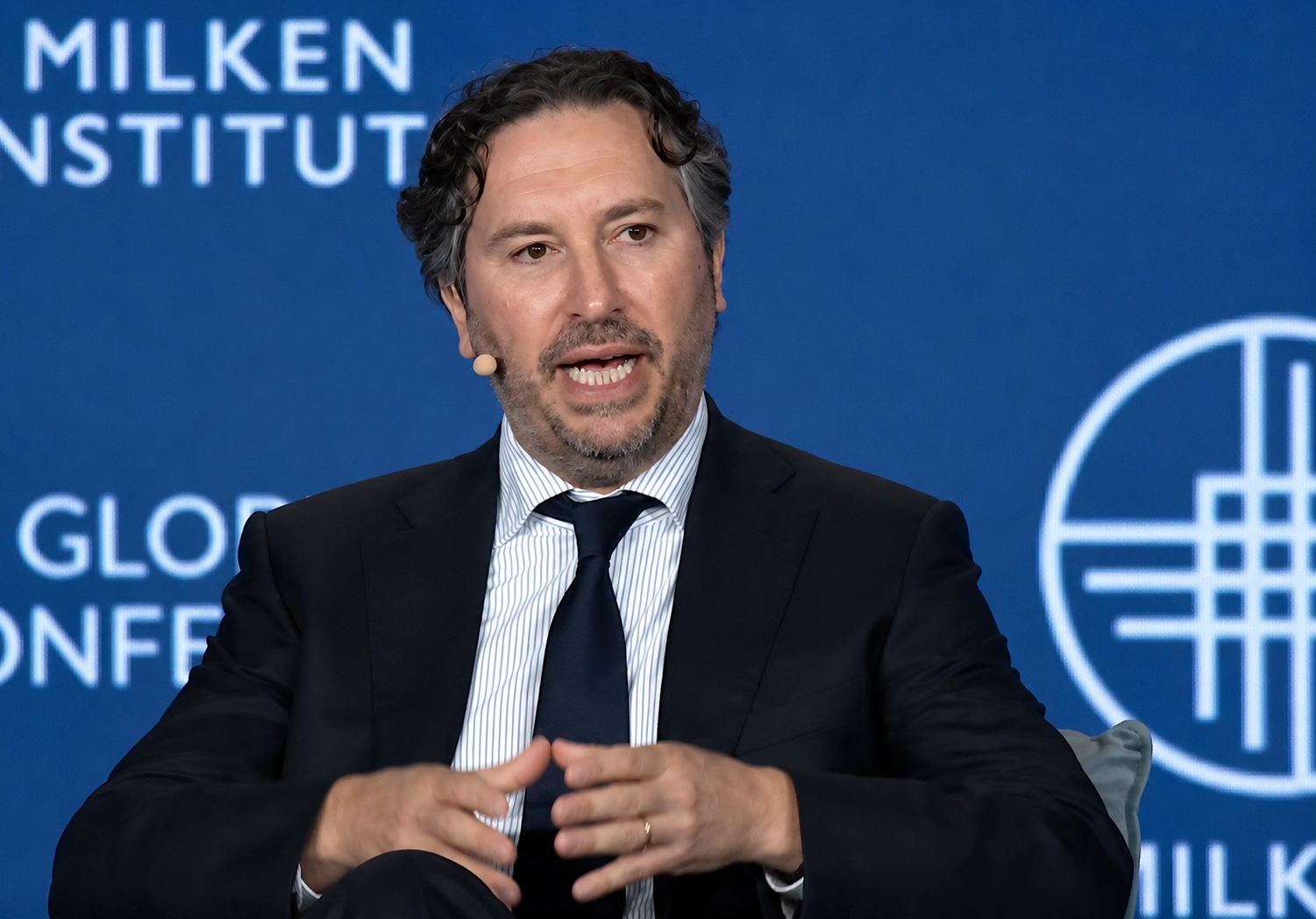
When Teddy Schwarzman, CEO of Black Bear and a two-time Academy Award-nominated producer, described the consolidation of Paramount Plus and HBO Max as a compression of the pay-one window, the Milken Institute audience nodded politely and moved on. The moderator pivoted to AI. The moment passed.
It shouldn’t have.
What Schwarzman identified — carefully, almost in passing — is the most structurally significant threat to independent film finance that nobody in mainstream entertainment press is covering with the specificity it deserves. Not the writers’ strike. Not the streaming wars. Not AI. The quiet disappearance of a buyer.
What the Pay-One Window Actually Does
For anyone outside the sales office ecosystem, a quick orientation. The pay-one window is the first exclusive licensing period after a film’s theatrical run — historically the domain of HBO, Showtime, and Starz. For independent films operating without studio backing, this window isn’t a bonus. It’s a recoupment mechanism. It’s where gap financing gets paid back. It’s where a $4 million film working a smart windowing strategy finds the margin that makes the next film possible.
When AT&T owned Warner and needed to offload assets, Ravi Ahuja’s Sony picked up Crunchyroll at a price that made sense because there were multiple buyers at the table. The pay-one market worked the same way. Competition between HBO and Showtime kept valuations honest. Independents could model a realistic floor.
That floor just got lower.
The merger of Paramount Plus and HBO Max, now Max, doesn’t eliminate the pay-one window. It consolidates it. Where two competing buyers once set price through competition, there is now effectively one. And as anyone who has watched a film market negotiate knows, a single buyer in any category is not a partner. It’s a ceiling.
“You’re seeing right now a retrenchment in the valuations that are out there for paid deals for companies overall,”
Schwarzman said at Milken
“And I think that limits competition.”
That observation is worth sitting with. Black Bear has released close to 800 titles in the US, UK, and Canada. Schwarzman has been navigating the theatrical-to-streaming windowing ecosystem since 2011. When he says valuations are retreating, he is not speculating. He is reading his own deal flow.
The Nine-Figure Bet
What makes Black Bear’s position particularly instructive is that Schwarzman isn’t retreating from the market, he’s doubling into it.
In the last nine months, Black Bear launched US distribution following fourteen years of Canadian operations where it became the number one distributor releasing roughly 50 films annually, and two years in the UK where it won the BAFTA for Conclave. He described the US distribution push as a nine-figure investment built on a thesis he called “tricky”: can you still get an audience to leave the house?
I’ve heard versions of that question at every AFM for the last several years. What’s different now is who’s asking it with real capital behind the answer.
The bet is structural, not sentimental.
Schwarzman’s model requires that specialty theatrical films that earn their audience through quality, originality, or word-of-mouth rather than IP recognition can still build a release cadence that optimizes VOD and physical windows downstream. The pay-one compression makes that math harder. It doesn’t make it impossible, but the margin for error on a $3-5 million specialty film just tightened.
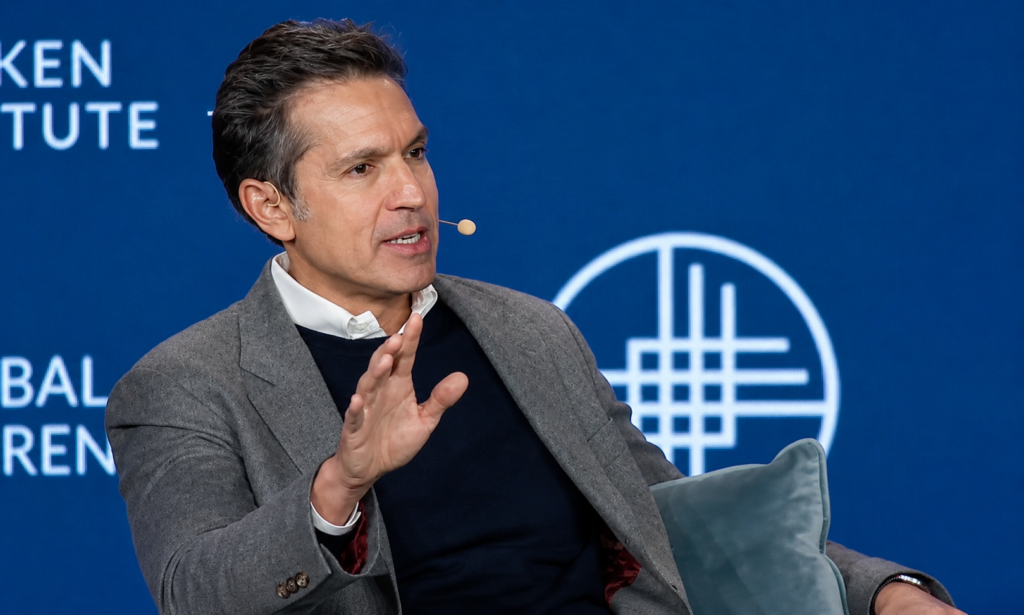
What Sony’s Arms Dealer Strategy Tells You
Ravi Ahuja, Chairman and CEO of Sony Pictures Entertainment, offered the other half of the picture from a different vantage point. Sony’s strategy — content-focused, untethered to a single streaming service — gives it distribution flexibility that most studios don’t have. Theatrical, streaming, YouTube, linear: Sony goes where the deal is best.
That flexibility is genuinely differentiated at Sony’s scale. For a studio releasing Demon Slayer as the seventh-biggest film globally last year and building K-pop Demon Hunters into a Netflix cultural moment, the arms dealer model works. The content is strong enough to command terms.
The problem is that Sony’s strategy depends on a competitive buyer market on the other end. The “arms dealer” only has leverage when there are multiple armies shopping for weapons. As pay-one consolidation reduces the number of serious buyers, even Sony’s flexibility has a ceiling.
Where This Leaves the Mid-Tier
The studios most exposed to pay-one consolidation aren’t the Black Bears — they’re the companies Schwarzman described as being “in between stages,” figuring out whether they’re buyers or sellers. Mid-tier distributors and production companies that built their recoupment models on a competitive pay-one market are now pricing deals against a market that has structurally shifted beneath them.
The Milken panel spent considerably more time on AI slop than on this. Which is its own kind of editorial commentary on where anxiety is performing versus where risk is actually accumulating.
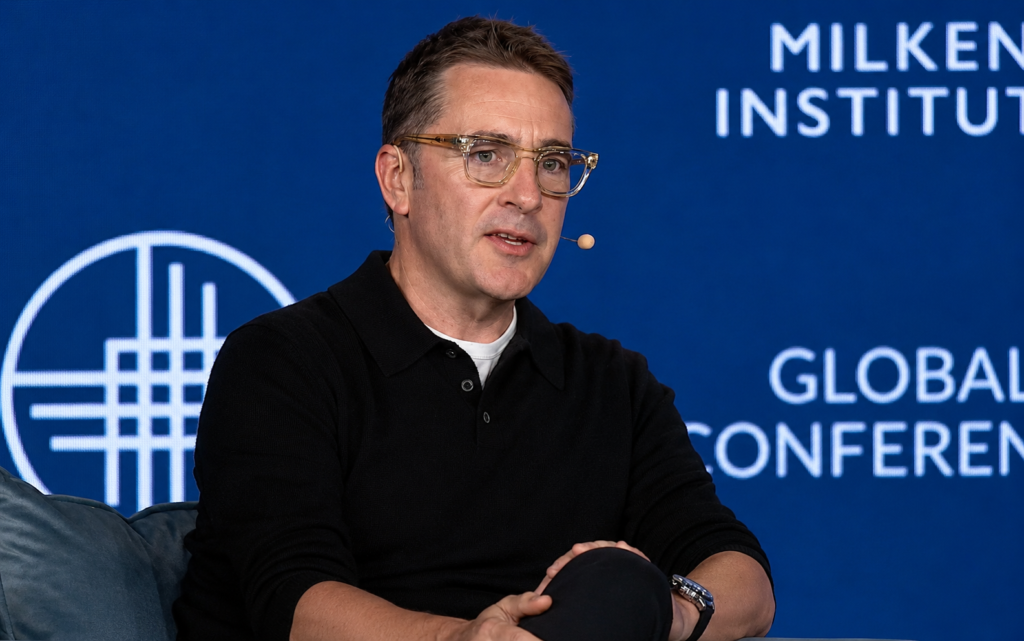
The AVOD space — Paul Cheesbrough’s Tubi now the number one long-form free streaming platform in the US — offers a partial offset. Ad-supported streaming is genuinely aggressive in licensing content, and Cheesbrough made clear that Tubi’s model is almost entirely built on other studios’ content distributed on rev-share terms. For independent films with the right audience profile, this is a real window that didn’t exist five years ago.
But AVOD economics are not pay-one economics. The valuation floor is lower, the exclusivity periods are shorter, and the recoupment math requires higher volume. It’s a distribution channel, not a replacement for a competitive premium window.
What Comes Next
Schwarzman closed with a note about Black Bear’s near-term strategy: less organic growth, more library acquisition. Films to monetize, mine for derivatives, and use to scale content volume. It’s a logical response to a market where building a release slate from scratch is getting more expensive relative to the returns available.
The broader M&A wave Schwarzman predicted — more consolidation, more studios figuring out which side of the buyer-seller line they’re on — will accelerate this. When the dust settles, the independents left standing will be the ones who either have enough IP to command terms regardless of buyer concentration, or enough distribution infrastructure to control their own windows.
Black Bear is building toward both. Most aren’t.
Mini FAQ
What is the pay-one window in film distribution? The pay-one window is the first exclusive licensing period after a film’s theatrical run, historically licensed to premium cable networks like HBO or Showtime. For independent films, it represents a key recoupment opportunity — the revenue that helps pay back production financing before a title moves into broader distribution. Consolidation in the streaming space has reduced the number of competing buyers in this window, which compresses the valuations independent studios can negotiate.
How does streaming consolidation affect independent film finance? When major streaming platforms merge, the number of competing buyers for independent film licenses decreases. Fewer buyers means less price competition, which lowers the valuation floor for licensing deals. Independent films that modeled their recoupment on a competitive pay-one market now face a structurally different negotiating environment with fewer options and lower offers.
Is theatrical still viable for independent films? Yes, but the model requires precision. Companies like Black Bear are demonstrating that specialty theatrical — films that earn audiences through quality and word-of-mouth rather than franchise IP — can still work. The key is spending efficiently on the theatrical release while optimizing the downstream windows: VOD, pay-one, and AVOD. The margin for error is tighter than it was five years ago, but the audience for well-made non-franchise films hasn’t disappeared.