





















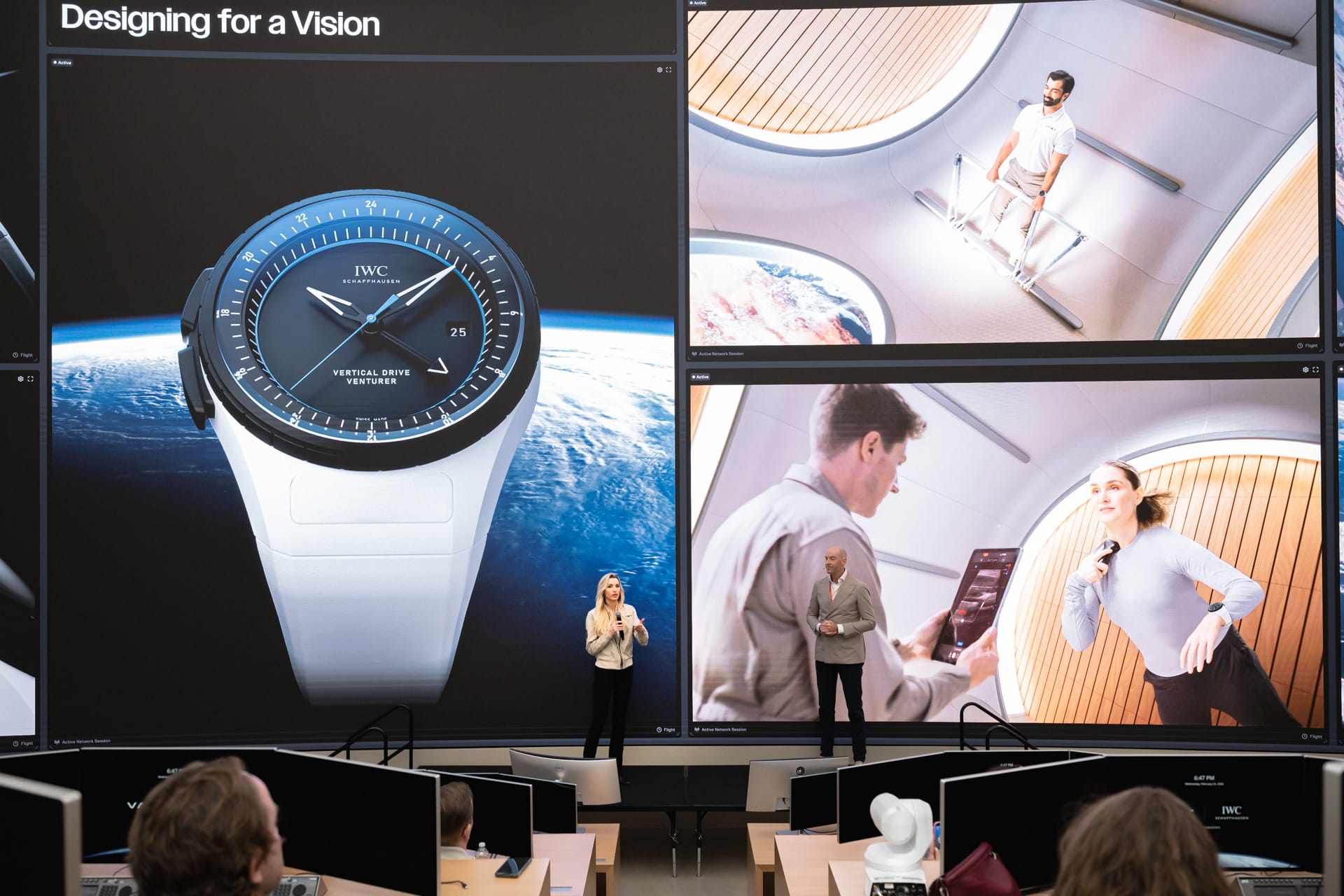
IWC’s Pilot’s Venturer Vertical Drive is space-qualified for Haven-1. Here’s why its 24-hour UTC display matters for astronauts; and serious collectors.
Aboard a spacecraft in low Earth orbit, the sun rises every 90 minutes. In a single 24-hour period, an astronaut watches it crest the horizon 16 times. The human body, wired over millennia to read light as a clock, gets no useful information from any of them.
In that environment, a watch is not an accessory. It is the only anchor to a day that no longer exists outside the window.
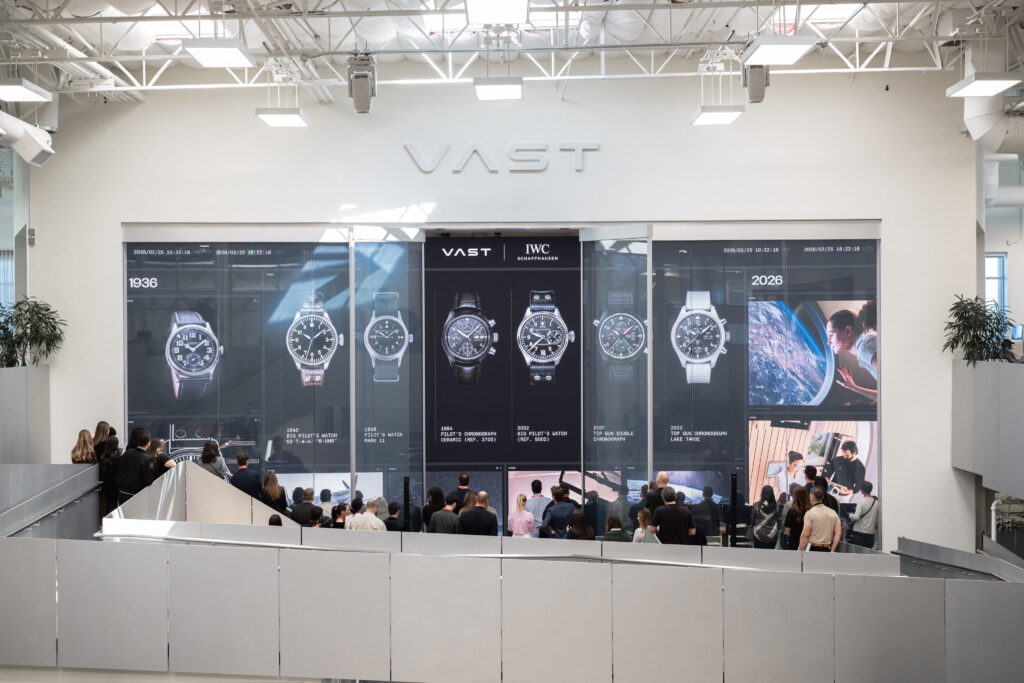
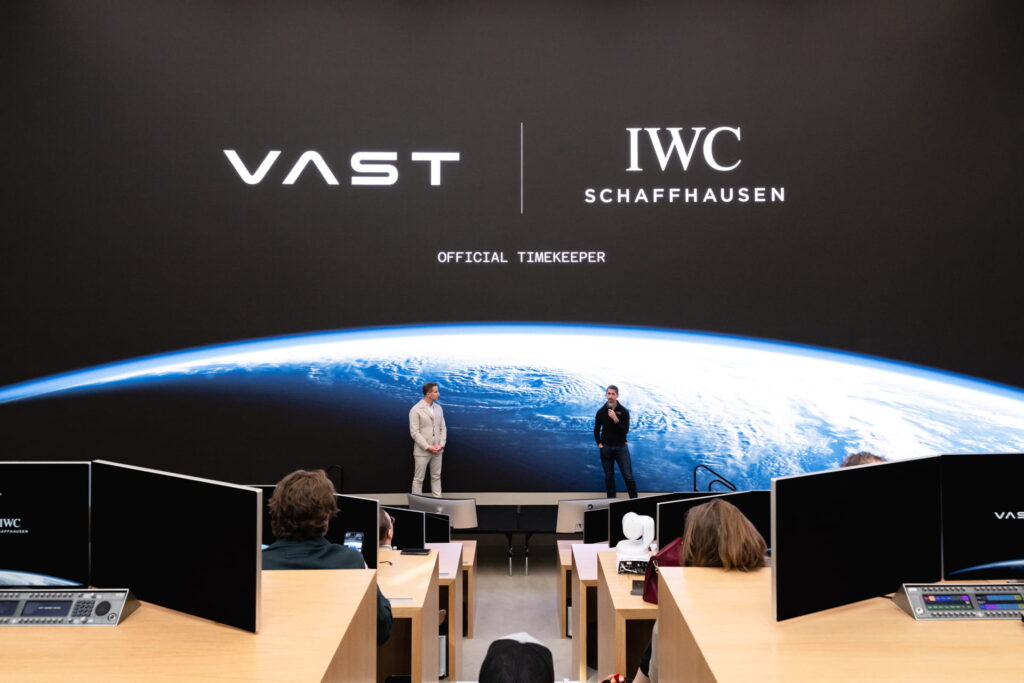
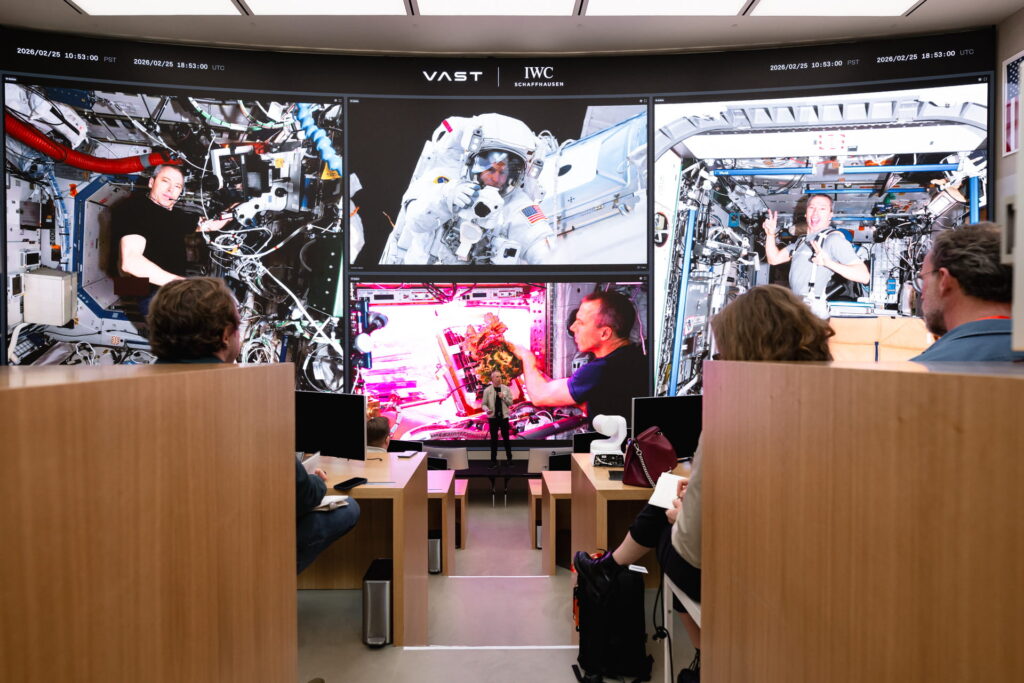
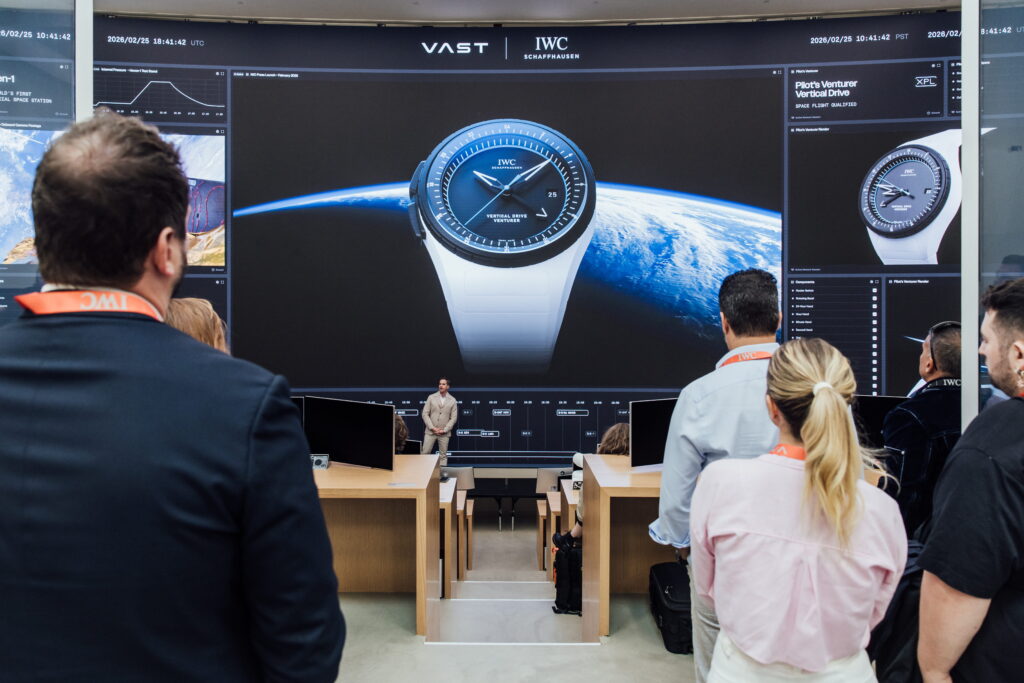 IWC Schaffhausen built the Pilot’s Venturer Vertical Drive specifically for that problem; and it has now received space qualification from Vast for flight aboard Haven-1, set to become the world’s first commercial space station.
Why 24-Hour Timekeeping Changes Everything in Orbit
Most watches display time on a 12-hour dial. On Earth, you know whether it’s 9 AM or 9 PM because the sun told you so before you looked at your wrist. In orbit, that assumption collapses entirely.
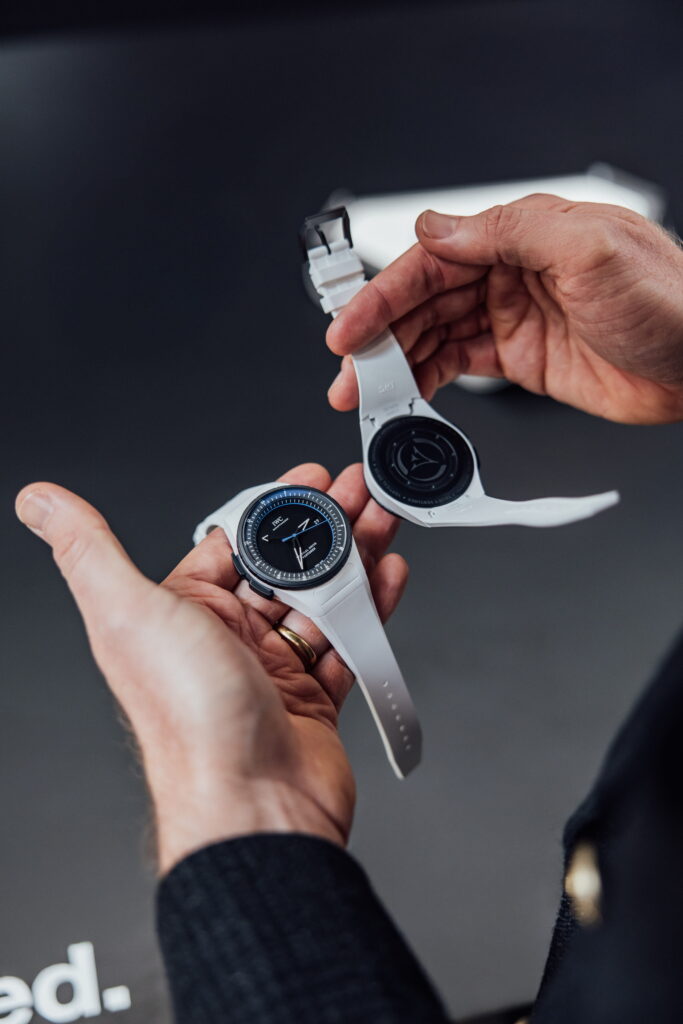
The Venturer Vertical Drive solves this with a 24-hour display showing both GMT and Universal Coordinated Time simultaneously, giving astronauts an unambiguous read on Earth reference time without any mental conversion. No AM/PM ambiguity. No cross-checking. One glance, one answer.
The “vertical drive” in the name refers to the movement architecture: a vertical clutch that engages the chronograph function without the torque spike that a traditional lateral clutch creates at the moment of activation. On a standard chronograph, that spike introduces a fractional skip in the running second hand — imperceptible on a café table, but meaningful when you’re timing a critical mission sequence. IWC has used vertical clutch construction in its in-house calibers for years; applying it here, in a piece built for microgravity operation, is the right call for the right reasons.
Andrew Feustel, Vast’s lead astronaut and a four-time spacewalker, frames the operational reality directly:
“We live by the clock in space.
The challenge is that we don’t have any natural sense of time during the day, because
we see 16 sunrises and sunsets every 24-hour period.”
That is not a marketing line. That is a constraint specification.
Space Qualification Is Not a Sticker
Plenty of watches have been to space. Most of them went as personal gear, tucked into a bag or strapped to a wrist the same way they’d be worn in Geneva. The qualification process for the Venturer Vertical Drive is a different category of claim entirely.
Space qualification from Vast means the watch has been evaluated for performance under the actual conditions of the Haven-1 mission environment: vibration loads at launch, thermal cycling between extreme cold and heat during orbital transitions, vacuum exposure, and the ergonomic constraints of operating a wrist instrument while wearing a pressure suit or in the three-dimensional orientation of microgravity.
Feustel noted this is:
“the first time we’ve seen a company purposely create a functional interface that allows a person working in space to operate a watch effectively.”
That word — effectively — is doing real work in that sentence.
The compact case design of the Venturer Vertical Drive is explicitly tailored for microgravity and three-dimensional movement. On Earth, a watch sits on the underside of a wrist, oriented by gravity and the motion of a downward-facing hand. In orbit, your wrist is just as likely to be above your head, sideways, or behind you while you work.
Crown ergonomics, bezel grip, and case proportions that read as aesthetic choices at ground level become functional specifications once gravity exits the equation.
IWC’s background as a certified maker of pilot instrument watches — tools that have had to remain legible and operable under G-force, vibration, and gloved hands — is load-bearing here, not decorative.
IWC Schaffhausen CEO Chris Grainger-Herr describes the watch as the:
“first ever designed pilot’s watch for the next space age”
CEO Chris Grainger-Herr
IWC Schaffhausen
And places the Vast collaboration within the brand’s existing trajectory in precision instrument design. That framing is accurate: IWC has been a serious player in aviation-grade timekeeping since well before space tourism became a venture-funded industry vertical.
The Commercial Space Station Timeline
Haven-1 is being developed by Vast, a company backed by significant private capital and positioning itself at the leading edge of commercial orbital infrastructure. It is designed to be the world’s first commercial space station — not a government program, not a research appendage, but a privately operated habitat for human spaceflight.
The operational tempo aboard a station like Haven-1 matters for watch design in ways that don’t apply to a three-day lunar flyby. Crews on long-duration orbital missions structure their entire day around clock time because nothing else provides structure. Sleep, meals, exercise, maintenance windows, communications with ground control — all of it runs on coordinated universal time. A watch that can display UTC unambiguously, without the wearer needing to mentally adjust for AM/PM or time zone, reduces one small cognitive load in an environment where cognitive load management is a genuine safety consideration.
Feustel situates the partnership in the broader shift happening in the industry: “This is the first time in history that we’ve seen this level of investment, engagement and capability in putting humans and hardware into space.” The commercial space sector is no longer a novelty. It is infrastructure.
IWC has spent over 150 years making watches for people who operate aircraft, dive to depth, and traverse polar ice. The logical next environment, apparently, is 400 kilometers above all of it.
Who Actually Wears This Watch
The Venturer Vertical Drive was built for astronauts. That is the design brief, not the marketing brief. The space qualification from Vast is a technical certification, not a brand partnership in the conventional sense.
For collectors and serious buyers at ground level, this is a different kind of pilot’s watch proposition than a heritage reissue or a new dial colorway. The 24-hour GMT/UTC display has genuine utility for anyone who regularly crosses time zones and wants unambiguous reference time: long-haul crews, international operators, anyone whose work runs on UTC. The vertical drive architecture means the chronograph starts cleanly. The case design works in conditions most buyers will never encounter, which is, in watchmaking, usually a sign that it will handle the conditions they do encounter without complaint.
For the IWC catalog, this sits at the sharp end of what the Pilot’s line is supposed to represent — not nostalgia for propeller aircraft, but actual instrument engineering for actual operational conditions.
FAQ
What makes the IWC Pilot’s Venturer Vertical Drive different from other space watches? Unlike watches that have been worn in space as personal items, the Venturer Vertical Drive was purpose-built for human spaceflight and has received formal space qualification from Vast for the Haven-1 mission. Its 24-hour GMT/UTC display was designed specifically to solve the disorientation caused by 16 sunrises per 24-hour orbital period — a real operational problem, not a marketing concept.
What is a vertical drive in a watch movement? A vertical drive is a clutch mechanism in a chronograph that engages the timing function using vertical pressure rather than a lateral sliding connection. This eliminates the torque spike that causes the second hand to skip at the moment of activation in traditional chronographs, resulting in more accurate time measurement from the instant the function is started.
What is Haven-1 and when does it launch? Haven-1 is a commercial space station being developed by aerospace company Vast. It is designed to be the world’s first privately operated orbital habitat for human spaceflight, representing a significant step in the commercial space industry’s expansion beyond government programs.
Conclusion
The Pilot’s Venturer Vertical Drive is not a watch designed to go with a spacesuit at a watch fair. It is a watch that passed engineering qualification for actual use aboard an actual commercial space station. Buy it because the 24-hour GMT/UTC display solves a real problem — whether that problem is 16 orbital sunrises or a weekly transatlantic rotation. Wear it knowing the case proportions and crown ergonomics were stress-tested against conditions that have nothing to do with a hotel lobby. For more on the broader Vast mission and commercial spaceflight timeline, the Vast company site is the primary source. This is what a tool watch looks like when the tool brief was written by an astronaut.