



























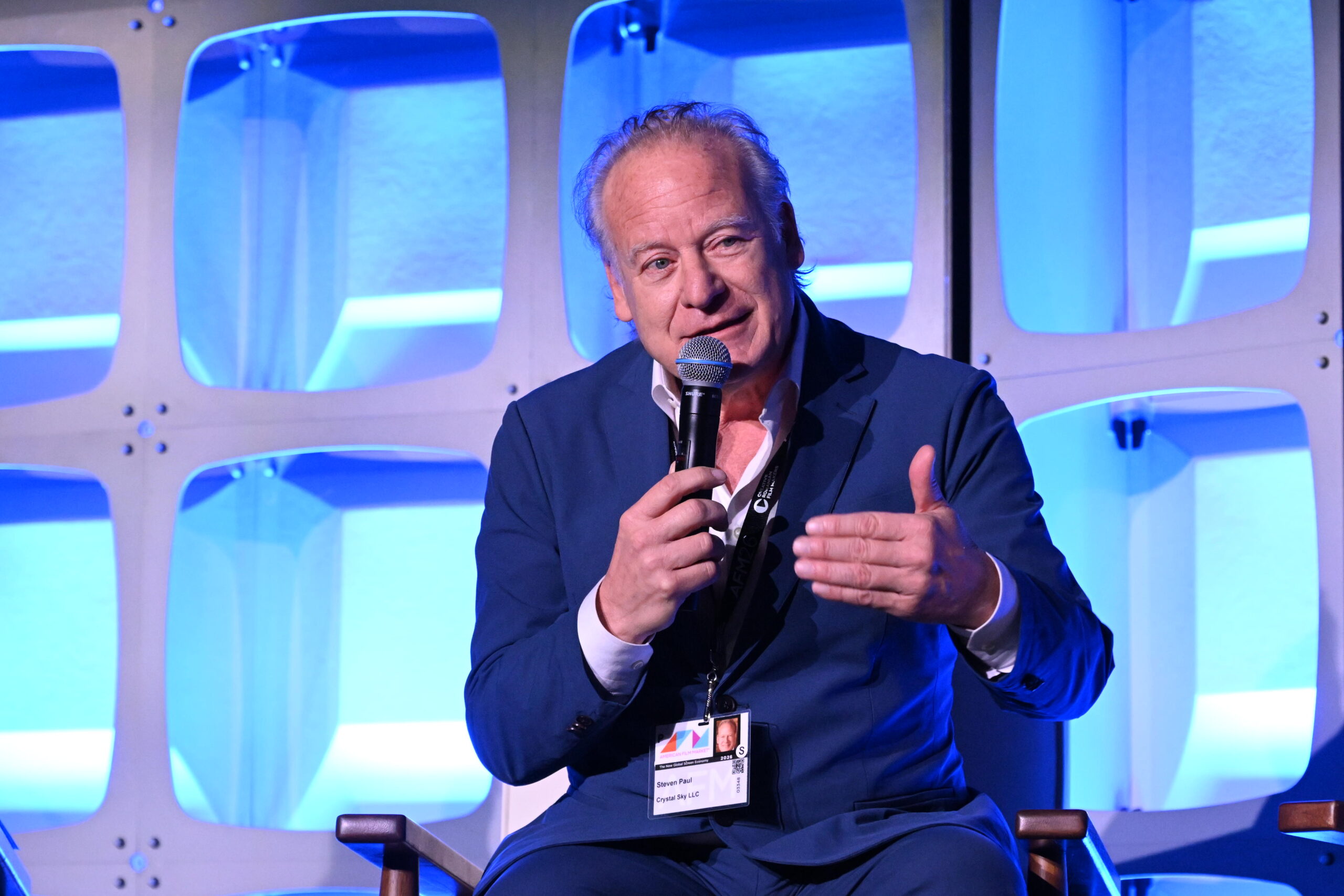
At AFM 2026, Hollywood leaders reveal how a proposed federal tax credit could change independent film financing, production costs, and investor risk.
Hollywood wants to bring production back to America. A proposed federal incentive could help. But for independent filmmakers and investors, the bigger opportunity may be how movies get financed.
Hollywood has spent years complaining about runaway production.
Canada has its tax incentives. The United Kingdom has its incentives. Australia, Ireland, and dozens of other countries offer financial reasons to bring film and television production to their shores.
Meanwhile, American producers are filming American stories overseas because the numbers make more sense.
Now Washington is considering something that could change the equation.
At the American Film Market (AFM) 2026 in Los Angeles, industry leaders gathered for a Summit panel titled The New Federal Production Incentive: A Turning Point for U.S. Production.
The discussion included executives from Entertainment Partners, SP Media Group, FilmUSA, and the Motion Picture Association.
The enthusiasm was hard to miss. After years of losing production to other countries, the industry sees an opportunity to become competitive again.
But the part that caught my attention wasn’t simply bringing jobs back to America.
It was what this could mean for financing independent movies.
A Federal Tax Credit That Could Reach 30%
The proposed Motion Picture, Television, and Entertainment Revitalization Act would establish a 20% federal tax credit on qualifying U.S. production compensation.
Independent productions could receive an additional 5%. Other incentives for qualifying locations and production activity could raise the total federal credit to 30%.
To qualify under the proposal, a production generally would need a budget exceeding $1 million and at least 75% of its principal photography days in the United States.
Here’s where it gets interesting.
The federal credit could be combined with existing state production incentives.
Joseph Chianese, Senior Vice President and Practice Leader of Production Incentives at Entertainment Partners, told the audience that his modeling showed combined effective incentive rates of 47% to 57% in California and potentially as high as 62% in New York.
Think about that.
A producer choosing between Los Angeles, Atlanta, London, or Toronto could face an entirely different financial calculation.
Of course, these percentages aren’t automatic rebates on an entire production budget. Eligibility, qualifying expenses, and the final legislation would determine what a production could actually receive.
But it’s easy to understand why producers are paying attention.
Could This Help Get More Independent Movies Made?
For major studios, incentives often determine where a movie gets made.
For independent filmmakers, the question is frequently whether the movie gets made at all.
That’s an important difference.
Scott Karol, President and Chief Operating Officer of SP Media Group, discussed how the proposed federal credit could become part of a film’s financing structure.
Chianese explained that the credit would be transferable. Producers could potentially sell it to taxpayers who can use the credit, rather than having to rely on their own federal income tax liability.
He suggested those credits might sell for approximately 90 to 93 cents on the dollar, although an actual market would still need to develop.
This is where the discussion becomes particularly relevant to investors.
Consider a hypothetical $3 million independent feature.
If $1.8 million of that budget qualifies as eligible U.S. compensation and the production earns a 25% federal credit, the potential credit would be $450,000.
If the producer could sell that credit for 90 cents on the dollar, the proceeds would be approximately $405,000 before transaction and financing costs.
That’s 13.5% of the entire production budget.
For a filmmaker trying to close a financing gap, that’s meaningful money.
But there’s a catch.
A projected tax credit isn’t the same thing as having $405,000 in the bank.
Producers may need a buyer for the credit, lender financing, completion guarantees, legal documentation, and proof that the production satisfies the eligibility requirements.
Those arrangements cost money. They also introduce timing and execution risks.
And until the legislation passes, none of this is available under the proposed new federal program.
Still, imagine how different the financing conversation could become if producers could secure a meaningful portion of their budgets through federal and state incentives before approaching equity investors.
That could make some projects easier to finance.
But does it make them safer investments?
Not necessarily.
Making Movies Cheaper Doesn’t Guarantee They’ll Make Money
This is where I think the conversation needs to go further.
Independent film financing is challenging for reasons that extend well beyond production costs.
A movie still needs a market. It needs a distribution strategy. It needs realistic revenue estimates and a clear explanation of who gets paid, when, and in what order.
A tax incentive doesn’t guarantee any of those things.
It can reduce the amount of private capital needed to produce a film, which may improve the financial structure.
But investors still face the possibility that the film won’t sell, won’t generate enough revenue, or will take years to return their money.
Those are very different risks.
A producer who can finance $1 million of a $3 million movie through properly documented incentives may have a stronger capital structure than one relying entirely on private equity.
But neither structure tells us whether the movie itself is commercially viable.
And that’s a distinction worth remembering when the conversation turns to investment opportunities.
Why Hollywood Wants This Passed Before 2027
The proposed federal incentive has created something unusual in Hollywood.
Agreement.
Major studios, independent producers, labor unions, guilds, film commissions, and industry organizations are working together through the U.S. Film and Television Production Coalition.
Josh Rogin, Senior Vice President of Federal Government Affairs at the Motion Picture Association, described the effort to advance the legislation before the end of 2026.
President Donald Trump has endorsed the proposal, and advocates have worked to build support from both parties.
Steven Paul, Chairman and CEO of SP Media Group, emphasized the urgency of getting it done this year so producers can plan for 2027.
But Washington has its own schedule.
The bill remains proposed legislation, and its final terms and passage date are far from guaranteed.
That creates a practical problem.
If you’re planning to start principal photography in January, do you budget for an incentive that might become law?
Or do you build your financing plan around the incentives that exist today?
The responsible answer is to understand the opportunity without treating proposed legislation as committed financing.
A Potential $125 Billion Production Shift
The economic argument is substantial.
An Olsberg SPI study commissioned by the Motion Picture Association projects that a competitive federal incentive could generate approximately $125 billion in additional U.S. production spending between 2027 and 2035.
The analysis also estimates nearly $250 billion in additional economic value and an annual average of 143,500 full-time-equivalent jobs supported.
Those are projections, not guaranteed results. And the study doesn’t settle the question of whether the economic benefits would justify the federal cost.
Still, the numbers help explain the industry’s enthusiasm.
Katie Pryor, co-founder of FilmUSA and executive director of the Baton Rouge Film Commission, emphasized that production incentives aren’t simply a Hollywood issue.
Film production supports construction crews, transportation providers, hotels, restaurants, equipment companies, and thousands of workers far beyond Southern California.
The benefits, if the legislation works as intended, could extend across the country.
Paul went further, predicting that federal and state incentives together could attract banks, private investors, and investment funds back into entertainment financing.
It’s an ambitious prediction.
And one I’d be interested in exploring with lenders and investors themselves.
What Happens Next?
The industry has good reasons to support a competitive federal production incentive.
More American production means more opportunities for crews, vendors, studios, and local businesses.
For independent filmmakers, it could also mean closing financing gaps that have kept otherwise viable projects from moving forward.
But investors should keep asking the difficult questions.
How much of the incentive actually qualifies? When will the money become available? What does it cost to finance the credit? Who gets repaid first? And what happens if the expected incentive is delayed or denied?
Those questions aren’t particularly glamorous.
Neither are capital stacks, debt agreements, or recoupment waterfalls.
But they’re essential if independent film wants to attract the kind of disciplined private capital that routinely finances real estate, operating businesses, and other alternative investments.
A federal incentive could help America make more movies. It might even help independent producers finance movies that otherwise wouldn’t happen.
But making movies cheaper and making movies profitable are two very different things.
That’s the next conversation Hollywood needs to have.