























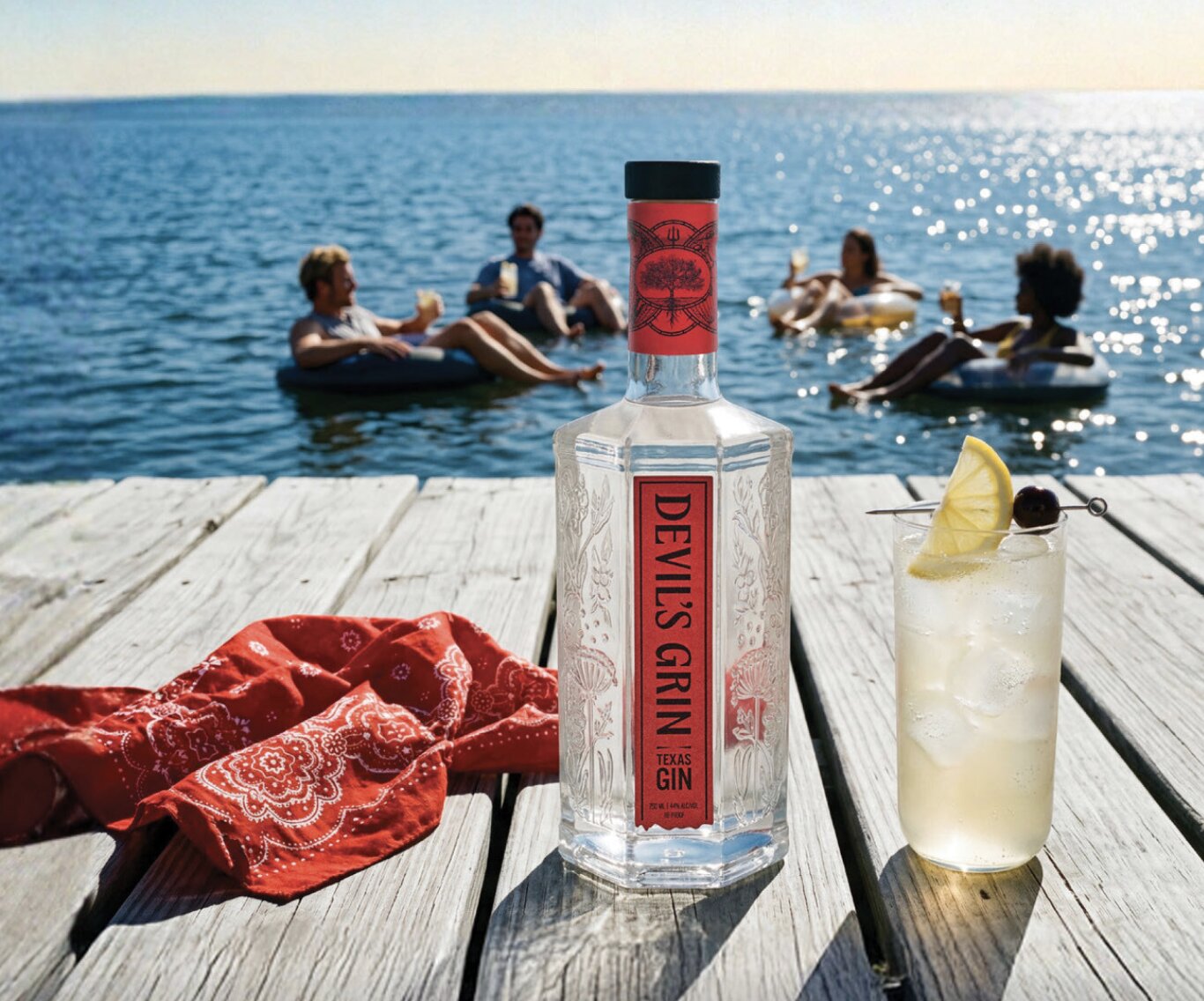
Devil’s Grin Texas Gin launches across five states. Here’s how it compares to Hendrick’s and Tanqueray and whether it can convert vodka drinkers
Gin has a problem it has been unable to solve for twenty years.
The category produces some of the most technically accomplished spirits in the world. It has prestige brands with genuine heritage, craft distilleries with legitimate innovation, and a bartender community that treats it with more reverence than almost any other base spirit. It also has a ceiling, a large and stubborn population of drinkers who tried gin once, didn’t like it, and went back to vodka permanently.
That ceiling has a name. It’s called juniper. And a Fort Worth distillery just raised serious money betting it knows how to get past it.
The Category Problem No One Has Solved
To understand what Devil’s Grin Texas Gin is attempting, you have to understand what the existing players are not.
Hendrick’s built its modern reputation on a rose and cucumber profile that softened juniper’s dominance and introduced an entirely new consumer to the category in the early 2000s. It worked — Hendrick’s is one of the most recognized premium gin brands in the world. It also created a specific kind of gin drinker: someone who likes Hendrick’s. Converting them to other gins, let alone converting vodka drinkers who watched the Hendrick’s movement from a distance, proved harder than expected.
Tanqueray and Bombay Sapphire occupy the well and speed rail tier of the premium category. Both are technically accomplished. Both are also products whose identities were built in a different era of spirits culture; before craft, before cocktail literacy, before the consumer who reads the back label and wants to know what “14 botanicals from six continents” actually means. Their marketing speaks to a gin drinker who already exists. It does not speak to the vodka drinker who is curious but unconvinced.
The craft gin explosion of the 2010s produced hundreds of interesting bottles and very few breakout brands. Most craft gins solved the wrong problem — they went further into complexity, further into botanical experimentation, further into the kind of product that rewards deep category knowledge. That’s excellent for gin enthusiasts. It does nothing for the person standing in a liquor store aisle who wants something with more character than Tito’s but isn’t ready to commit to a gin and tonic that tastes like a forest.
That is the gap Devil’s Grin is targeting. Whether they can actually occupy it is a different question.
What Devil’s Grin Actually Is
Trinity River Distillery in Fort Worth built Devil’s Grin from 14 botanicals sourced across six continents with a specific architectural intention: classic juniper character present but not dominant, with bright citrus and floral notes doing the work of making the spirit feel accessible before the finish arrives. Master Distiller Brett Luchesi describes it as “delicate complexity that showcases every botanical, while still feeling approachable and easy to enjoy.”
“delicate complexity that showcases every botanical, while still feeling approachable and easy to enjoy.”
Brett Luchesi
Master Distiller
That description is doing a lot of work. “Delicate complexity” is the promise that you can taste the craft without being challenged by it — which is precisely what the vodka-to-gin conversion requires. A drinker crossing over from Grey Goose or Tito’s is not looking to be educated. They are looking for a reason to stay.
The Double Gold medals and Best of Show accolades from major international competitions confirm the liquid is legitimate. Competition hardware doesn’t lie about quality the way marketing copy can. What it can’t confirm is whether quality translates to conversion — whether the person who has said no to gin for a decade will say yes to this one.
The Campaign Infrastructure Is the Real Signal
Here is what separates Devil’s Grin from the 400 other craft gin launches of the past decade: the campaign behind it is built like a brand that intends to win, not a distillery that hopes to be discovered.
The “America’s Craft Gin” platform — developed with Colangelo & Partners and Parabola Co — launches across California, Illinois, Georgia, Florida, and Texas simultaneously. The media stack includes Meta advertising, Google Search and Display, television placements, digital out-of-home, and Instacart-driven retail initiatives.
A bartender ambassador program across major cities is designed to address the on-premise discovery layer, which is where gin conversion actually happens — not in a liquor store aisle but at a bar, when a good bartender hands someone a drink they didn’t order and says try this.
Colangelo & Partners is not a boutique spirits PR firm. They represent significant brands and understand how to build category presence at scale. The fact that they are attached to a Fort Worth craft distillery’s launch is itself a signal that capital is behind this and expectations are set accordingly.
The five-state launch footprint is also strategic rather than arbitrary. California and Texas are the two largest spirits markets in the country. Illinois anchors Chicago, which has one of the most sophisticated cocktail cultures in America. Florida and Georgia are high-volume hospitality markets where on-premise trial drives retail pull-through. This is not a brand testing the waters. This is a brand executing a market entry strategy.
The Positioning Bet
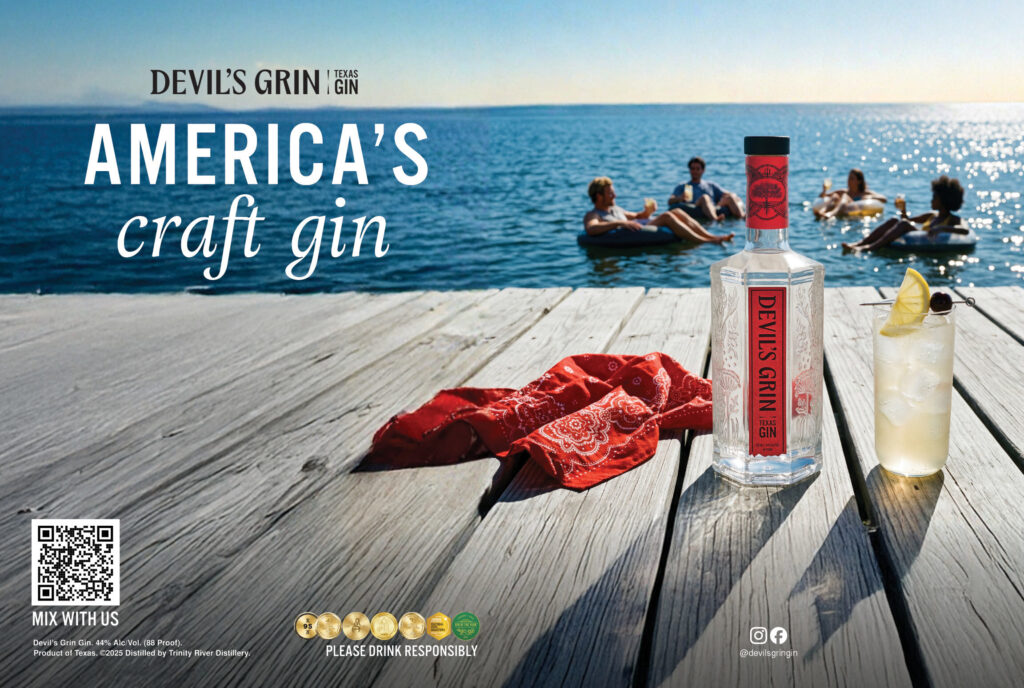
The “America’s Craft Gin” tagline is a direct play for two things simultaneously: the craft spirits consumer who has already crossed over from mass-market vodka to premium everything else, and the American identity positioning that no gin brand has successfully owned.
Gin is historically a British category. Hendrick’s is Scottish. Tanqueray is British. Bombay Sapphire is British. The craft gin movement in America produced excellent spirits but rarely produced brands that felt distinctly, unapologetically American in the way that bourbon does, or the way that Teremana has tried to claim a Mexican heritage story.
Devil’s Grin is betting that “Texas-born, American-made, built for how Americans actually drink” is an unclaimed position in the gin category. The Fort Worth origin story, the social occasions framing — casual martinis, backyard hangs, dinner parties, nights out — and the deliberate anti-intimidation positioning are all pointed at the same consumer: the American drinker who has never seen themselves in a gin advertisement.
That is either a genuinely smart read of a category gap or an optimistic misread of why vodka drinkers haven’t crossed over. The honest answer is that no one knows yet. What is clear is that Devil’s Grin has the liquid quality, the campaign infrastructure, and the market strategy to find out at meaningful scale.
The American gin category has been waiting for a brand willing to make this argument seriously. Fort Worth just volunteered.
Mini FAQ
What is Devil’s Grin Texas Gin? Devil’s Grin is a contemporary American gin crafted at Trinity River Distillery in Fort Worth, Texas. Distilled from 14 botanicals sourced from six continents, it is designed to be approachable for vodka drinkers while delivering the complexity that gin enthusiasts expect. The brand has earned Double Gold medals and Best of Show recognition from major international spirits competitions.
How is Devil’s Grin different from Hendrick’s or Tanqueray? Hendrick’s built its identity on a rose and cucumber profile that differentiated it from juniper-forward gins but created a narrow consumer base. Tanqueray and Bombay Sapphire speak to an existing gin drinker from an earlier era of spirits culture. Devil’s Grin is positioned specifically for the vodka drinker who wants more character without the botanical intimidation of traditional gin — a consumer the established players have not successfully converted.
Where can I buy Devil’s Grin Texas Gin? Devil’s Grin is currently available in California, Illinois, Georgia, Florida, and Texas. Visit DevilsGrinGin.com for retailer locations and follow the brand at @DevilsGrinGin on Instagram.
Is Devil’s Grin good for cocktails? Yes — the brand is built around cocktail culture, with a bartender ambassador program in major cities developing original recipes. The flavor profile — citrus and floral notes over a juniper base with a smooth finish — is designed to work across a range of cocktail formats, from classic gin and tonics to modern martini variations.