



























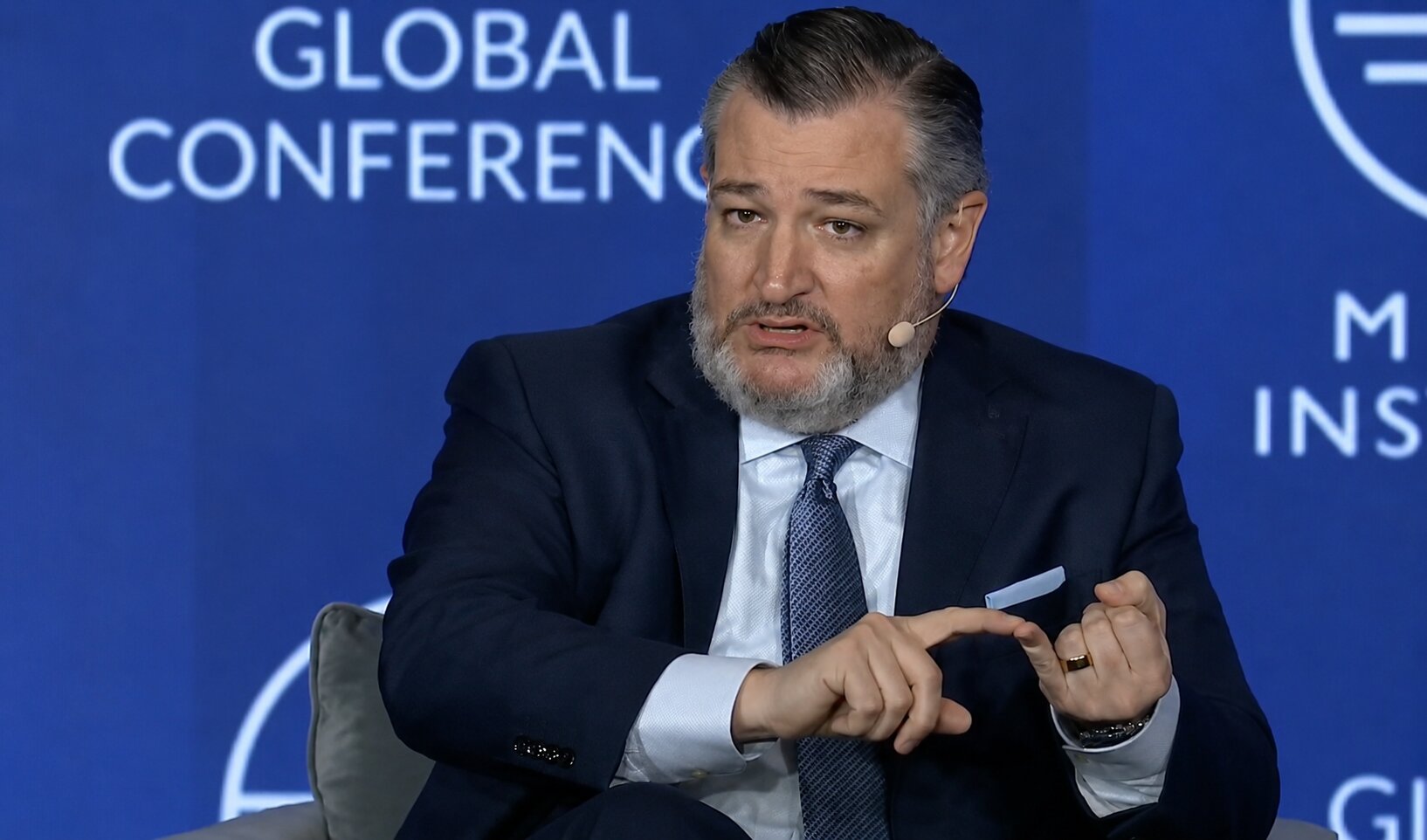
Ted Cruz, Brad Gerstner, and Kevin Hassett laid out exactly how Trump Accounts work at Milken 2026. Here’s what the coverage missed.
Ted Cruz, Brad Gerstner, and Kevin Hassett just made the case for the most significant change to the American social contract in fifty years. They may be right.
The panel was called “Investing in Economic Mobility: Building a Path to Opportunity.” It ran Monday morning at the 2026 Milken Global Conference. By the time it was over, three of the architects of the Invest America Act had laid out, in more operational detail than most coverage has captured, exactly what Trump Accounts are, how they work, who can contribute, and what they’re designed to become.
Worth paying attention to — because the numbers are not small, the policy is already law, and the July 4th launch date is forty-some days away.
What the Accounts Actually Are
The short version: every child born in the United States, starting in 2027, will receive an investment account at birth, funded with $1,000 from the federal government and linked to their Social Security number. The account invests in the S&P 500. There are no management fees and no cost to open.
That’s the floor. The ceiling is substantially higher.
Brad Gerstner, founder and CEO of Altimeter and the closest thing to the bill’s original architect in the room, described the intent with characteristic directness: “The answer to more socialism is more capitalism.”
His argument is structural. Roughly 60 to 70 percent of Americans — his figures from the panel — feel economically left out. Half own no stocks or bonds at all. The compounding engine that has built generational wealth for the top of the income distribution has simply never been accessible to them. Trump Accounts are, in his framing, the mechanism to fix that — not through redistribution, but through ownership.
Kevin Hassett, Director of the White House National Economic Council and the economist who built the policy’s intellectual architecture alongside Rob Shapiro, offered the most precise analytical case. He walked through David Bradford’s capital income tax equivalence framework: at a 5% risk-free treasury rate, a 5% wealth tax is mathematically equivalent to a 100% tax on capital income. His conclusion was unambiguous — a wealth tax would halt investment entirely. Trump Accounts are, in part, the affirmative counter-argument: instead of taxing capital at the top, put capital at the bottom.
Senator Ted Cruz made the political history explicit. Conservatives have been attempting social security personal accounts for fifty years. George W. Bush tried and failed in his second term. The reason this version passed, Cruz said with characteristic bluntness: “We gave the money to babies, and so the old people didn’t get pissed.” The political strategy was disarmingly simple. Babies grow up. The constituency builds itself.
The Mechanics Most Coverage Has Missed
The panel moved well beyond the headline $1,000 figure into operational detail that deserves wider distribution.
Contributions from employers, individuals, and philanthropists are built into the legislation — up to $5,000 per year per account. The system is integrated into ADP, Paycom, and Paylocity, the major payroll platforms, so employer contributions work exactly like 401k matches: check a box, done. Every account has a QR code. A local restaurant owner can walk into a school principal’s office with $10,000 and fund 100 kids’ accounts on the spot.
The philanthropy architecture is the more structurally interesting piece. Michael and Susan Dell committed $6.25 billion — $250 per child in America under age 10 living in zip codes where median income is $150,000 or less. Ray Dalio adopted all children in Connecticut. Brad Gerstner committed to all children under five in Indiana. The legislation was written to accept targeted philanthropy with adjustable parameters: geography, age, income threshold. A donor can dial each variable independently.
Cruz drew the Australia comparison directly. Australia’s superannuation system — mandatory 12% retirement savings in individually owned, titled accounts — has produced the highest median net worth of any country in the world. The distinction from American Social Security is fundamental: Australians own their accounts, can see them daily, can add to them, and pass them to their children. Social Security contributions vanish into a government pool. As Hassett noted, not a single person in the Milken room could say how much they had contributed to their own Social Security account. Trump Accounts are, by design, the inverse of that system.
The Compounding Argument
Cruz ran the math on stage, then immediately noted he usually doesn’t because no one believes it. A child born this year, with regular contributions, will have approximately $170,000 by age 18 and $700,000 by age 35. The compound trajectory from there enters territory most Americans have never had access to.
The app, which Gerstner and Cruz both emphasized, will not show a lump sum S&P 500 position. It will show individual holdings: Apple, Starbucks, Exxon Mobil. The intent is explicit: a new generation of capitalists who understand ownership because they experience it from birth.
What This Means in Practice
As of the panel date, approximately 6 million accounts had been opened. The target is 10 million by July 4th. On that date, a joint bell ringing from the NYSE and NASDAQ is planned from the Oval Office. Starting January 1, 2027, all 3.7 million children born in the United States annually will receive an account automatically at birth.
Gerstner announced a personal $50 million grant, $20 per account, to the first 2.5 million families that make an initial deposit after account opening. The behavioral logic is straightforward: the first deposit predicts future contributions.
For employers, the case Hassett made is simple: Trump Account contributions will become as standard as 401k matches, and at relatively low cost, the long-term benefit to employees is significant. The societal ROI argument is backed by controlled studies, per Cruz: children who begin life with savings and investment are measurably more likely to graduate high school and college, buy a home, start a business, and less likely to face incarceration.
Mini FAQ
What is the Invest America Act and who can participate? The Invest America Act — also called Trump Accounts — provides every child born in the United States starting in 2027 with a $1,000 investment account at birth, linked to their Social Security number. Children already under 18 can sign up now at the government portal. Accounts invest in the S&P 500 with no management fees. Employers, individuals, and philanthropists can contribute up to $5,000 per year per account.
How do Trump Accounts compare to Social Security? Unlike Social Security, Trump Accounts are individually owned, titled to the child, portable, and inheritable. Contributions are visible, compound in real time, and are not subject to government reallocation. The Australia superannuation model — which produced the world’s highest median net worth — is the closest structural analog.
How can businesses contribute to Trump Accounts? Employer contributions are integrated into major payroll platforms including ADP, Paycom, and Paylocity. Employers can contribute or match up to $5,000 per year per child, similar to a 401k match structure. Individual donors can contribute via QR code at the account level, and philanthropic dollars can be targeted by geography, age range, and income threshold under the legislation’s design.
The Argument That Matters
The panel at Milken was not a policy debate. It was a group of people who passed a law explaining what they built and why. Whether the political framing lands or not, the structural case Hassett, Gerstner, and Cruz made is worth sitting with: the compounding machine has been running for decades. Most Americans have never had access to it. This is an attempt — the most serious legislative attempt in a generation — to change that.
The launch is July 4th. The accounts are open now at trumpira.gov.