


























Joe Wehinger makes the case that Ryan Coogler ‘s Sinners is the most completely realized original film of 2025; and names the four Oscar nominations that its story architecture makes undeniable.
The green light meeting for Sinners probably wasn’t really a meeting about vampires. It was probably a meeting about whether Ryan Coogler had earned the right to make a $90 million original film: no sequel, no IP, no safety net, set in 1932 Mississippi, built around a dual performance from one actor, and structured as a horror movie that was actually a moral argument about who owns culture and who gets consumed by it.
Warner Bros. said yes while Sony and Universal were in the conversation too.
That bidding war is the first thing worth understanding about Sinners, because it tells you something the finished film confirms: the people who read the pitch recognized that Coogler wasn’t selling a genre picture. He was selling a question.
And the question, whether Black art can survive the forces that have always tried to possess it, was so precisely engineered into the story’s architecture that it functioned simultaneously as commercial premise and thematic argument. That compression, the ability to make the surface story and the deeper story identical, is the rarest thing in original screenwriting. It’s also the thing most green light decisions can’t accurately price.
Coogler came to the pitch with no completed script. He had a logline, something about dancing with the devil; and a character description, because he needed to cast a blues prodigy before he could write the film around him.
The production company Proximity Media was already moving. Cameras would roll in April 2024 with a spring 2025 release target, a timeline that producer Sev Ohanian described as almost literally impossible. That institutional momentum, a director betting on himself before the script existed, is itself a story decision. It tells you how clearly Coogler saw the film he was making. You don’t run toward an impossible deadline unless you already know what you’re running toward.
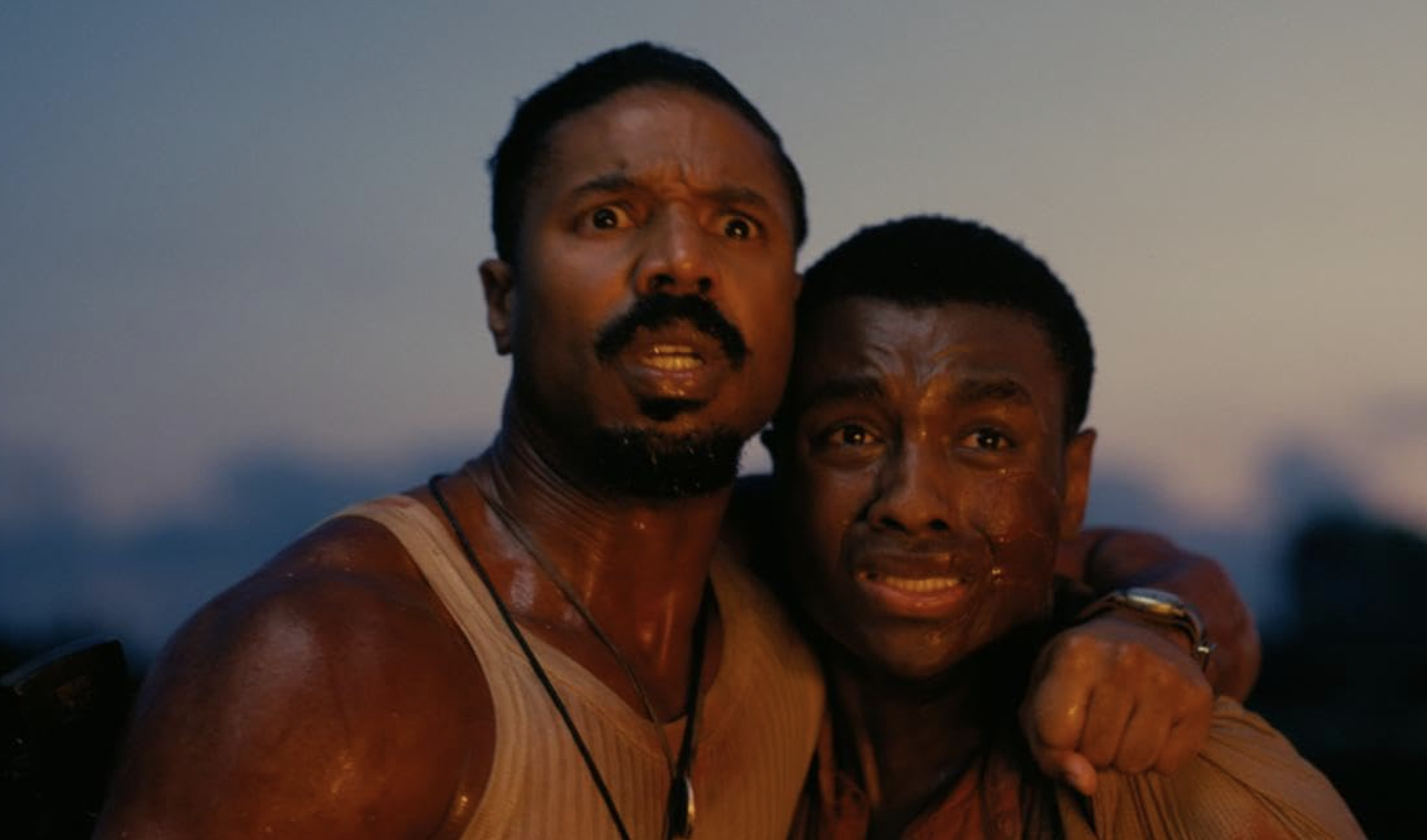
What he was running toward was Sammie Moore, a preacher’s son and blues prodigy played by Miles Caton, discovered through a casting search that began before the screenplay existed. The film unfolds over a single night in Clarksdale, Mississippi, as twin brothers Smoke and Stack (both played by Michael B. Jordan) open a juke joint for the local Black community, only to find their celebration besieged by a vampire horde drawn to Sammie’s gift. The surface mechanics are horror. The actual engine is something older and more precise: a story about a young man who possesses something the world wants to take from him, and what it costs him to keep it.
The twin brothers function as Sammie’s external world; the men who built the space where his gift could exist, who made the bet that a community could own something for itself, at least for one night. Their want is tangible and economic: a fresh start, a business, a foothold in a world designed to deny them all three. Their need is something they can’t yet articulate — to protect not just their investment but the thing their investment was always actually for. Sammie. The music. The idea that beauty produced by Black hands could stay in Black hands.
Remmick, the Irish vampire played with disturbing empathy by Jack O’Connell, is where the story earns its complexity. He isn’t constructed as a villain so much as a mirror. He wants Sammie’s gift not to destroy it but to possess it; to commune with something ancient and powerful that he recognizes but cannot claim by birthright.
The film draws a deliberate line between the Klan members who function as the story’s bluntest antagonists and Remmick, who represents something more insidious: the machinery of cultural appropriation wearing the face of admiration. He wants to make beautiful music together. He means it. That’s what makes him dangerous in a way that hate alone could never be.
Coogler’s direction of Remmick’s scenes is calibrated to produce discomfort rather than contempt, which is the harder and more honest choice. It forces the audience to sit inside the film’s actual argument; that the most effective theft of culture doesn’t announce itself as theft. It arrives with appreciation. It arrives with love.
The vampire mythology, deployed this precisely, stops being genre decoration and becomes the film’s controlling metaphor. Vampires don’t just take blood. They convert. They make you one of them. They make you want to be.
The production bet on authenticity at every level.
Cinematographer Autumn Durald Arkapaw shot on IMAX 65mm film, grounding a supernatural narrative in the visceral texture of 1932 Mississippi in ways that digital capture would have laundered into abstraction. The juke joint set was built entirely from scratch. Ludwig Göransson, Coogler’s longtime composer and an executive producer on the film, pulled from the lineage of Mississippi Delta blues and from the personal record collection Coogler shared with him: Robert Johnson, Tommy Johnson, the musicians who understood that the crossroads deal was a real transaction. The production’s from-scratch philosophy was itself an argument about the film’s subject: you cannot tell a story about cultural ownership by borrowing someone else’s aesthetic infrastructure.
Michael B. Jordan’s dual performance as Smoke and Stack is the production’s greatest technical achievement and its most important story decision. The twins are not the same person split into two. They’re the same origin split into two different relationships with the world: different tolerances, different strategies, different ideas about what the juke joint is actually for. Jordan’s ability to make that distinction legible in shared frames, without the screenplay stopping to explain it, is what allows the film’s final act to carry the weight it needs. When the brothers are forced to choose what they’ll protect and what they’ll sacrifice, the audience understands the cost because they’ve been watching two men all night who cost different things.
The deal Coogler negotiated with Warner Bros. is perhaps the most structurally elegant element of the entire production. In exchange for the controlled timeline, the $90 million budget, and certain creative controls including final cut, Coogler accepted a gross participation deal, receiving a percentage of ticket sales before the studio deducted costs, and a clause reverting full ownership of Sinners to him 25 years after release. Coogler was transparent about why that clause mattered: it reflected the film’s own argument. A filmmaker making a movie about Black ownership who negotiates ownership of the film is not performing irony. He’s proving the thesis. The story he was telling and the deal he was signing were the same document.
The audience understood something was different about this film before the trades could explain it to them. Sinners opened to $48 million domestically on Easter weekend; surpassing Warner Bros.’ own projections of $35 to $40 million and beating every independent tracking estimate, with a global debut of $63.5 million that made it the biggest opening weekend for an original film in the post-pandemic era.
Forty-six percent of the opening-day audience was Black, a number that shifted to 38 percent by the weekend’s end, representing a genuine crossover that had nothing to do with marketing and everything to do with a story that knew who it was for while being legible to everyone.
The film closed its domestic run at $279.9 million and $370.3 million worldwide, finishing as the fifth highest-grossing horror film in box office history and the highest-grossing original film of the 2020s.
For a fully original, non-franchise, non-IP horror film built around a moral argument about cultural theft, those numbers aren’t just commercial validation. They’re structural proof.
Now comes the question the Academy will answer in a matter of weeks.
Sinners deserves to be in contention for every major category on the ballot: Best Picture, Best Director, Best Actor, Best Supporting Actor, Best Original Screenplay, Best Original Score, Best Cinematography. That is not a hyperbolic statement. It is a structural one. This film was conceived, written, produced, performed, photographed, and scored with the kind of total intentionality that the awards conversation is supposed to exist to recognize. Every element serves every other element. Nothing is decorative. Nothing is accidental. The gap between what a film like this deserves and what it will actually receive is always, in part, a gap in institutional courage.
The four nominations that should be considered near-certainties; and that the film’s architecture makes undeniable are: Best Original Screenplay, Best Actor, Best Original Score, and Best Cinematography.
Coogler’s screenplay is the most precisely engineered original script of 2025, a story in which the surface genre and the moral argument are not layered on top of each other but are literally the same thing.
Jordan’s dual performance carries the film’s entire emotional weight across two distinct human beings sharing every frame.
Göransson’s score isn’t accompaniment, it’s argument, pulling from blues lineage in ways that make the music itself a character with a stake in the outcome.
Arkapaw’s IMAX 65mm photography doesn’t serve the story — it proves it, making the tactile reality of 1932 Mississippi the condition under which everything the film argues becomes credible.
Best Director and Best Picture are the categories that will reveal whether the Academy has evolved in its relationship to horror as a vehicle for serious moral argument. Both nominations are deserved. Whether they arrive will say more about the institution than about the film. Sinners doesn’t need the Academy to confirm what it already is. But the Academy needs films like this to confirm what it’s supposed to be for.
The green light for Sinners was the right call. The story knew what it was, the production served what the story knew, and the audience received exactly what the green light promised. That chain of alignment, from the room where the bet is made to the room where the audience sits in the dark, is rarer than any of the individual elements that compose it.
Ryan Coogler didn’t make a vampire movie. He made a film about what it costs to own something in a world that wants to take it from you, and then he went out and owned it.
What the Academy does with that is its own verdict.
FAQ
Q: Does Sinners deserve a Best Picture Oscar nomination?
Yes — and the case isn’t built on sentiment or cultural significance alone. Sinners is the most structurally complete original film released in 2025: a story in which the surface genre mechanics and the moral argument are not two separate layers but literally the same thing. The vampire mythology doesn’t illustrate the theme of cultural appropriation — it is the theme of cultural appropriation, made physical and predatory and immediate. Best Picture exists to recognize exactly this kind of total intentionality. Whether the Academy nominates it will say more about the institution’s evolving relationship with horror as a serious genre than about the film’s qualification.
Q: Why is Michael B. Jordan’s performance in Sinners an Oscar-worthy achievement?
Jordan plays twin brothers Smoke and Stack; not as one person split in two, but as the same origin split into two fundamentally different relationships with the world. Different tolerances, different strategies, different ideas about what the juke joint they’re building is actually for. His ability to make that distinction legible across shared frames, without the screenplay stopping to explain it, is what allows the film’s final act to carry the moral and emotional weight it demands. When the brothers are forced to choose what they’ll protect and what they’ll sacrifice, the cost registers completely because Jordan has spent two hours making them cost different things. That’s not a technical achievement. That’s acting in full service of story.
The Data
The Bet Budget: $90–100 million | P&A: $50–60 million global marketing | Financing: Proximity Media / Warner Bros. Pictures
The Package Director/Writer: Ryan Coogler | Cast: Michael B. Jordan, Hailee Steinfeld, Miles Caton, Jack O’Connell, Wunmi Mosaku, Jayme Lawson, Omar Benson Miller, Delroy Lindo | Composer: Ludwig Göransson (also executive producer) | Cinematographer: Autumn Durald Arkapaw | Production Company: Proximity Media
The Release Wide theatrical | April 18, 2025 | Warner Bros. Pictures | 2 hr 17 min | Rated R | 3,308 theaters
The Verdict Opening weekend (domestic): $48 million | Global opening weekend: $63.5 million | Domestic total: $279.9 million | Worldwide gross: $370.3 million | All-time horror ranking: #5 worldwide | Highest-grossing original film of the 2020s
The Audience CinemaScore: A (first horror film in CinemaScore history to receive this grade; previous high was A- earned by Get Out and A Quiet Place Part II) | Rotten Tomatoes critics: 97% | Rotten Tomatoes audience: 97% | Opening-day audience composition: 46% Black, 30% White, 15% Latino/Hispanic, 5% Asian
Oscar Contention (as of January 2026) Nominations pending — announcement expected January 19, 2026 Categories deserving nomination: Best Picture, Best Director, Best Actor (Jordan), Best Original Screenplay (Coogler), Best Original Score (Göransson), Best Cinematography (Arkapaw) Four most likely: Best Original Screenplay, Best Actor, Best Original Score, Best Cinematography
The Shelf Life Ownership reverts to Coogler 25 years post-release per his Warner Bros. deal — making Sinners one of the rarest studio films of the modern era: a work that will legally belong to its creator. Cultural staying power: near-certain. The film’s argument about ownership, appropriation, and the price of beauty is not period-specific. It compounds.