





















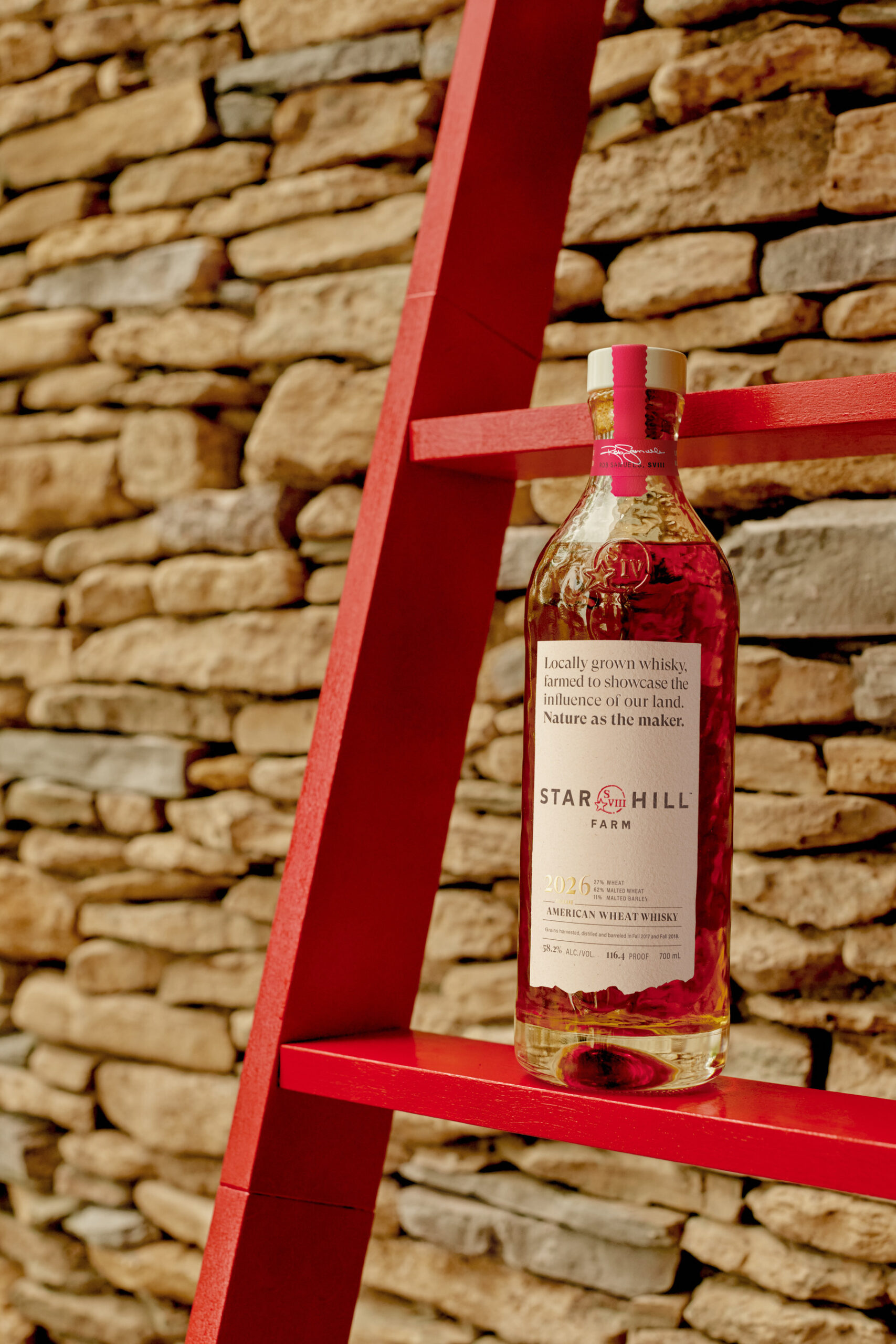
Maker’s Mark Star Hill Farm Whisky 2026 upgrades its annual mash bill for harder wheat varieties, two new grain configurations, cask strength 58.2% ABV. Here’s what’s in the blend and why it matters.
Most bourbon distilleries spend decades perfecting a single mash bill. Maker’s Mark found theirs in 1953 and hasn’t touched it since. Star Hill Farm Whisky is doing something deliberately different: every annual release uses a new grain configuration, a new blend ratio, a new answer to the question of what wheat can become when you’re paying attention to the soil it grew in.
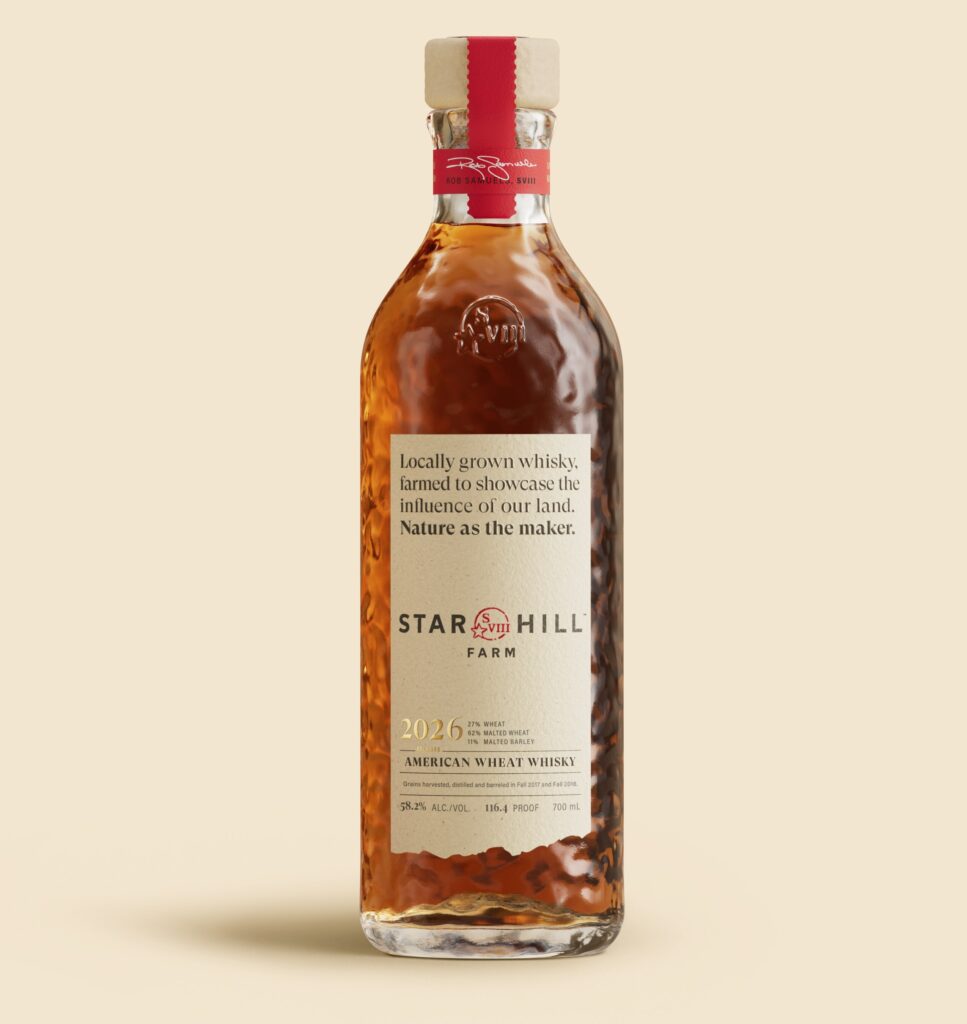
The 2026 release — awarded World’s Best Wheat Whisky this year and now expanding to Japan and Duty Free after a U.S., U.K., and Australia debut in 2025 — is built from hard red and hard white wheat varieties, a departure from the soft red winter wheat that defines Maker’s Mark’s standard mash bill and anchored the inaugural release. That shift isn’t cosmetic. It’s the whole point of the project.
What changed from 2025, and why it matters
The 2025 release was, by its own master distiller’s description, “bright, approachable and straightforward.” The 2026 release was engineered to be more demanding.
Star Hill Farm Whisky 2026 runs two separate mash bills through distillation: one composed entirely of malted wheat, and a second at 70% wheat and 30% malted barley. The final blend lands at 27% wheat, 62% malted wheat, and 11% malted barley — a ratio that pushes malted grain character to the foreground while the unmalted wheat provides structural weight.
Dr. Blake Layfield, master distiller at Maker’s Mark, describes the aromatic opening as molasses, fig, and delicate baking spices, moving into zesty citrus, ripe pear, and buttery shortbread before settling into a soft cinnamon finish. That arc — from dark dried fruit to bright citrus to baked warmth — is what happens when seven and eight-year whiskies from two different grain configurations are blended at cask strength and allowed to resolve into each other.
Cask strength here means 58.2% ABV, or 116.4 proof. At that concentration, the grain character isn’t filtered or diluted into approachability — it’s present in full. The fruit amplification the distillery notes relative to 2025 is the malted barley’s contribution: barley brings a depth and roundness that straight wheat distillates don’t produce on their own, and at cask strength that addition is audible in every stage of the tasting arc.
The shift from soft red winter wheat to hard red and hard white varieties is worth understanding as more than a recipe change.
Hard wheats carry higher protein content and a denser starch structure than soft wheats, which affects fermentation efficiency and ultimately the congener profile that survives distillation and maturation. Soft wheat — the Maker’s Mark signature — yields a creamier, sweeter base. Hard wheat introduces a nuttier, more mineral-forward dimension. Put both through malting and a seven-to-eight-year barrel program and you get a whisky that tastes like the grain has something to say.
Estate certification and why provenance is becoming a real conversation
Star Hill Farm Whisky 2025 became the first whisky to earn Estate Whiskey certification from the Estate Whiskey Alliance, established by the University of Kentucky to recognize whiskey produced entirely on the distillery estate from grains grown on estate-owned or controlled land. The 2026 release carries that certification forward.
This matters in the same way that estate bottling matters in wine — it creates a documented, traceable link between soil, grain, distillation, and bottle. The EWA’s director noted the organization has tripled its membership in one year and certified its first products, which suggests the designation is gaining enough institutional weight to function as a real signal rather than a marketing label.
For a category that has spent decades selling heritage through barrel imagery and copper pot photography, the shift toward soil documentation and regenerative certification is either an evolution or an overcorrection — the market will sort that out — but Maker’s Mark is positioning early and with specificity.
The Maker’s Mark Regenerative Alliance, launched alongside the 2025 release, has already helped convert 58,000 acres of conventional farmland to certified regenerative practices and brought on more than 14 bar and restaurant partners for menu storytelling programs.
Rob Samuels, eighth-generation whisky maker and managing director, described the ambition directly:
“working to make Star Hill Farm the most endearing, culturally rich and environmentally responsible homeplace in the world.”
That’s a long sentence, but the operational commitments behind it — B Corp certification, Regenified certification, EWA designation — are independently verified, not self-reported.
Who this bottle is actually for
Star Hill Farm Whisky 2026 is available at $100 suggested retail, limited release, at select retailers nationwide and at the Maker’s Mark Distillery with a bookable guided tour of Star Hill Farm paired with cocktails. The Japan and Duty Free expansion means international whisky buyers now have access alongside U.S., U.K., and Australian markets.
At $100 cask strength with verifiable estate provenance and a World’s Best Wheat Whisky award, the value proposition is aimed squarely at the collector who wants documentation alongside the pour — someone who cares why the grain configuration changed, not just that it did.
This is not a casual purchase or a cocktail whisky. At 116.4 proof, it wants water or patience. The reward is a tasting arc that actually moves — from dark dried fruit aromatics through citrus brightness to a spiced, buttery close — which is more than most bottles at this price point deliver from start to finish.
FAQ
What is Star Hill Farm Whisky 2026?
Star Hill Farm Whisky 2026 is the second annual release of Maker’s Mark’s wheat whisky, built from hard red and hard white wheat varieties across two mash bills — one all-malted wheat and one 70% wheat, 30% malted barley. The final blend runs at 27% wheat, 62% malted wheat, and 11% malted barley, bottled at cask strength 58.2% ABV. It carries Estate Whiskey certification from the University of Kentucky’s Estate Whiskey Alliance and was awarded World’s Best Wheat Whisky 2026.
How is Star Hill Farm Whisky different from standard Maker’s Mark bourbon?
Standard Maker’s Mark uses the same soft red winter wheat mash bill every year for consistency. Star Hill Farm Whisky changes its grain configuration annually to demonstrate how soil, grain variety, and regenerative farming practices translate into flavor differences. The 2026 release uses hard red and hard white wheat — higher protein, denser structure — versus the soft wheat base that defines the core Maker’s Mark profile.
Where can I buy Star Hill Farm Whisky 2026?
Star Hill Farm Whisky 2026 is available at select retailers nationwide in the U.S. and at the Maker’s Mark Distillery in Loretto, Kentucky, with a bookable guided farm tour. It is also available internationally in the U.K., Australia, Japan, and Duty Free, at a suggested retail price of $100.
The bottom line
Maker’s Mark built a reputation on consistency. Star Hill Farm Whisky is built on the opposite proposition — that changing the grain, changing the soil management, and changing the mash bill annually produces a more honest record of what a place can do. The 2026 release is the second data point in that record. The molasses-to-citrus-to-cinnamon arc at cask strength is the evidence that the proposition isn’t just conceptual.
If you can find a bottle, open it with a few drops of water and give it ten minutes. The complexity the distillery is claiming is there — it just needs room to move.