

















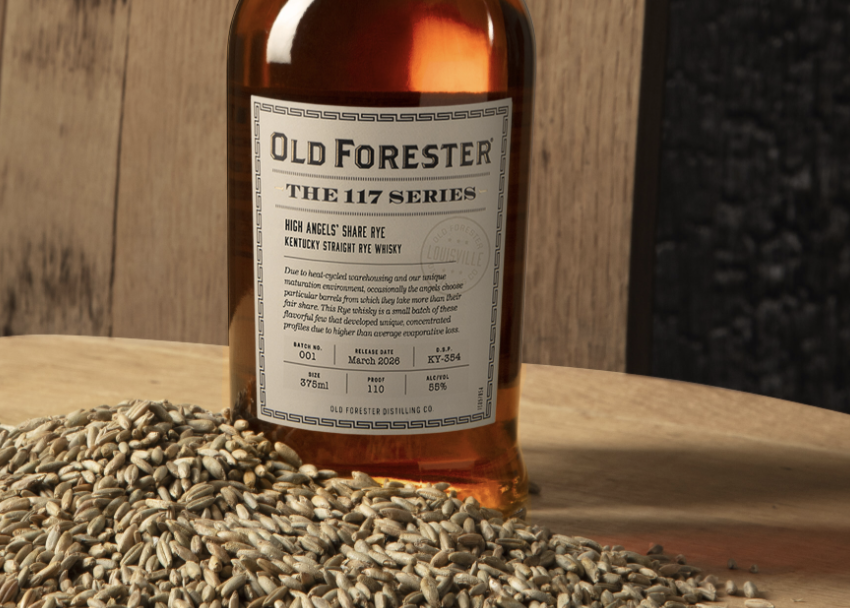
Old Forester’s High Angels’ Share Rye delivers concentrated barrel flavor at 110 proof. Here’s what makes this limited Kentucky rye worth hunting down.
Every whiskey distillery has a ghost story.
In Kentucky, they call it the angels’ share, that invisible, inexorable pull the heavens exert on aging spirit. Most barrels lose somewhere between 3 and 5 percent of their contents each year to evaporation. But a rare few barrels, baked by heat-cycled warehousing and peculiar air flow, surrender far more. What’s left behind is something extraordinary.
Old Forester just bottled it.
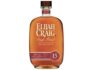
The brand’s newest release, High Angels’ Share Rye, joins the acclaimed 117 Series as Batch No. 001, a 110-proof Kentucky straight rye built from those exceptional outlier casks where the angels apparently couldn’t keep their hands off the inventory.
Why These Barrels Are Different
Not every barrel in a warehouse experiences the same conditions. Position matters. Temperature matters. The Old Forester rickhouses sit at the intersection of physics and patience, where summer heat can push internal barrel temperatures far above the ambient air outside. That cycling, repeated hundreds of times over years, forces the spirit deep into the wood and back out again, concentrating every compound left inside.
When evaporative loss runs unusually high in a given cask, what remains is intense. Think of it like a slow reduction in cooking. The nose on this rye opens with rich dark chocolate and toasted hazelnut, threaded through with ripe strawberry and a snap of bright herbal lift. It’s the kind of aroma that stops you mid-pour.
“We’re continually amazed by what our warehouses can produce,”
Caleb Trigo
Assistant Master Distiller
“With High Angels’ Share Rye, the angels clearly left their mark, yielding a rye whiskey that’s bold, concentrated, and deeply rewarding. It’s a celebration of both old-world tradition and the serendipitous magic that comes from maturation in motion.”
The Flavor Profile: Bold, Layered, Unapologetic
High Angels’ Share Rye is not a quiet sipper. This is whiskey with something to say.
On the palate, citrus oils arrive first, bright and almost juicy, before burnt sugar and sandalwood pull the conversation somewhere earthier. Then peppercorn and eucalyptus emerge in layers, the kind of complexity that rewards a second slow sip more than a first fast one.
The finish is the standout.
A textural, earthy peppercorn note lingers far longer than you expect, before toasted oak, cedar, and that eucalyptus thread round it all out into a warm, contemplative close.
At 110 proof (55% ABV), this rye has enough backbone to hold its own over ice or in a Manhattan, though sipping it neat will reveal everything the barrel had to offer. According to the American Distilling Institute, concentration of flavor through evaporation is one of the oldest and least predictable forces in American whiskey. Some of the most revered single barrels in history came from exactly these conditions.
The 117 Series: Where Outliers Become Icons
The 117 Series from Old Forester has always been about finding the exceptional within the expected. Where a standard production run rewards consistency, this series rewards curiosity. Previous releases have highlighted distinctive barrel conditions, unusual maturation paths, and the kind of distillery knowledge that only comes from generations of paying close attention.
High Angels’ Share Rye is bottled in a 375 mL format, priced at $64.99. That half-bottle sizing is a smart call. It lets the collector, the cocktail enthusiast, and the food-pairing-obsessed home chef each explore a limited release without committing to a full 750 mL at a price point that might otherwise give pause.
Your wallet will write you a thank-you note.
The release is currently available at the Old Forester Distillery and select Kentucky retailers, which means this one will move fast. Batch No. 001 is not a concept they’ll run forever.
Old Forester’s Legacy and What It Means Here
Founded in 1870 by George Garvin Brown, Old Forester has the rare distinction of being Brown-Forman’s founding brand. Brown’s original promise was audacious for its time. He sealed every bottle personally and pledged, “There is nothing better in the market.” Over 150 years later, that commitment hasn’t faded. It’s just taken on more interesting shapes.
High Angels’ Share Rye is one of those shapes. It’s not a product designed to appeal to everyone. It’s designed to appeal to the drinker who leans in when a whiskey gets strange, concentrated, and unexpected.
FAQ: Old Forester High Angels’ Share Rye
What is angels’ share in whiskey? Angels’ share refers to the portion of whiskey lost to evaporation during barrel aging. In Kentucky’s climate, a typical barrel loses 3 to 5 percent of its volume each year. Barrels stored in high-heat positions within a rickhouse can lose significantly more, concentrating the remaining liquid’s flavor.
How is Old Forester High Angels’ Share Rye different from other rye whiskeys? This expression was built from a small selection of barrels that experienced unusually high evaporative loss during maturation. That concentration produces a bolder, more intensely flavored rye than a standard release, with layered notes of dark chocolate, citrus, peppercorn, and sandalwood at 110 proof.
Where can I buy Old Forester High Angels’ Share Rye? Batch No. 001 is available at the Old Forester Distillery in Louisville and select Kentucky retailers as of March 2026, priced at $64.99 for a 375 mL bottle.
Don’t Wait on This One
Small-batch releases built around anomalous barrel conditions don’t come back. When Batch No. 001 is gone, it’s gone. If you’re in Kentucky, head to the distillery. If you’re not, call your retailer now and ask them to hold one. Pour it neat the first time. Let it breathe three minutes. Then decide if you agree with the angels’ taste in whiskey.
You probably will.