























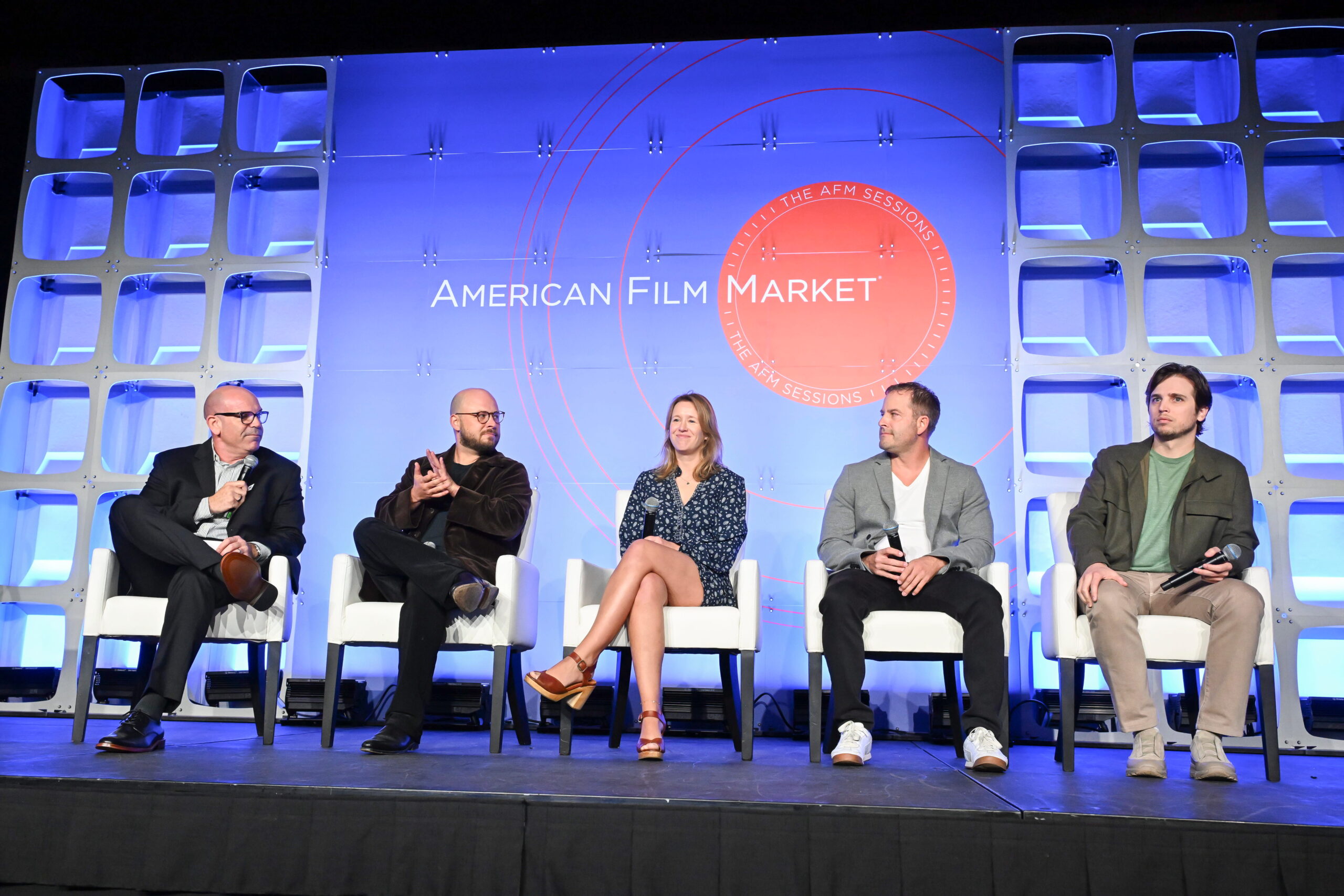
AFM 2025 producers and financiers reveal how independent film finance is evolving. Incentives, budgets, distribution, and what actually gets films made.
The Ground Has Shifted
Independent film finance has always been a high-wire act. But walk the corridors of the Santa Monica Loews during AFM 2025 and you’ll feel something different in the air. The bravado is quieter. The calculation is sharper. And the producers who are still making movies, good ones, are doing it with a kind of disciplined creativity that looks nothing like it did a decade ago.
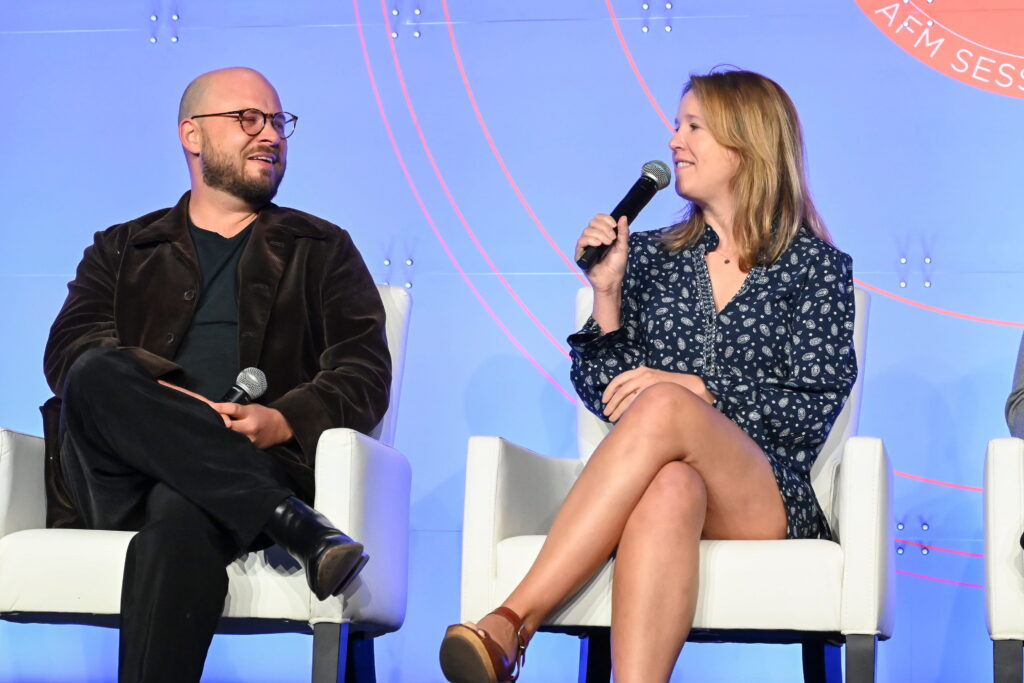
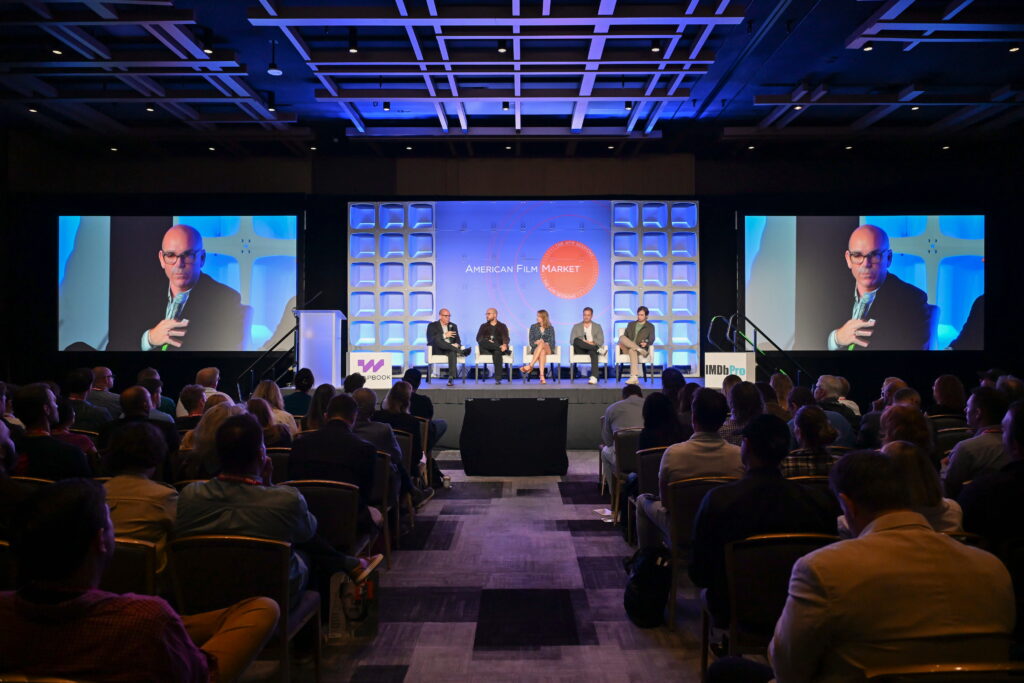
At the opening panel, From Packaging to Payback: Investment, Incentives, and International Markets, four of the industry’s most respected voices sat down to lay it out plainly.
Josh Rosenbaum of Waypoint Entertainment
Jeremy Ross of Rabbits Black
Sam Pressman of Pressman Film
tax incentive expert Jeanine Davey of Callisto Advisory.
No spin. No green-lighting mythology. Just the real architecture of how films get made in 2025.
What followed was one of the most candid conversations heard on any festival or market stage this year, from Cannes to Toronto to right here on the California coast.
Reverse Engineering the Green Light
The days of walking into a room with a great idea and sheer confidence are gone. Rosenbaum, whose Waypoint slate runs from Charlie Kaufman to Yorgos Lanthimos to the already-buzzed-about Project Hail Mary, put it plainly: the approach now is about working backward from what will actually get a film made.
“We’re taking more of an approach of how are we reverse engineering a film into a green light, whether we’re part of the financing or just selling it to a major studio or a mini-major or another equity financier.”
Josh Rosenbaum
That reverse-engineering mindset reflects something broader. The merger wave sweeping through the studios, Paramount’s consolidation plays, the ongoing contraction of streaming acquisitions, has left fewer buyers at the table and more anxiety at every level of the development chain. Rosenbaum didn’t mince words about the downstream effect.
“The anxiety of making a mistake is at every level of the distribution landscape.”
Josh Rosenbaum
For independent film finance, that anxiety translates into one practical imperative: drive the budget down. Not as a creative compromise, but as a structural strategy.
“The price point has just gotten too high… it leads to this exodus of trying to get the lowest net budget possible around the world.”
Where the Smart Money Looks First: Tax Incentives and Global Soft Money
Ask any experienced line producer or financier what has changed most in independent film finance over the past five years and the answer is usually the same: the incentive landscape has become the backbone of nearly every finance plan.
Jeanine Davey, who has safeguarded billions in tax incentives for clients at PwC, 20th Century Fox, and Netflix before founding Callisto Advisory, brought clarity to the noise around tariffs and domestic policy shifts. When the Voight proposal made waves in May 2025, studios scrambled to analyze their slates.
“A lot of studios understandably took a hard look at their slates and spent a lot of time analyzing how quickly they could pivot production plans if necessary.”
Jeanine Davey
The proposed tariff, clarified Davey, was not a blanket tax on foreign production. It was a penalty specifically targeting the foreign incentives claimed on movies that could have been made domestically, set at 120 percent of those incentives. A carve-out existed for official US co-productions, but as Davey noted, the US has no such treaties currently in place.
New York has moved aggressively to address one of independent producers’ long-standing frustrations: the lag between production wrap and actual credit monetization. Previously, refundable tax credits sometimes had to be claimed over three years, beginning as long as five years after shooting concluded. The state changed that.
“As soon as you’re able to claim it, you can claim the whole thing in one fell swoop.”
Jeanine Davey
New Jersey, meanwhile, is emerging as a serious competitor for East Coast productions, particularly for studio partners. Netflix built a major hub there. Paramount followed. Pressman noted that Kentucky and Missouri delivered close to 40 percent in combined credits on two of his 2025 productions, with above-the-line spend qualifying in both states.
Internationally, the calculus involves more than the size of the credit. Film Independent’s annual filmmaker survey consistently shows that crew quality, production services relationships, and currency risk all factor into where a film actually lands. Rosenbaum described shooting in Serbia as a question of trust: you find the best local partner and you learn to rely on them.
German filmmaker Tilman Singer’s English-language debut Cuckoo was a case study in how smart location decisions can transform a finance plan. Waypoint tapped German soft money and incentives to cover a major portion of the budget. That kind of layered financing, combining a US equity partner with local incentives and soft money grants, is increasingly the template for genre films in the $3 to $10 million range.
The Distribution Problem Nobody Wants to Talk About
No conversation about independent film finance is complete without confronting the part of the equation that has broken the most deals: distribution. The panel spoke about it with the kind of weariness that comes from living inside the problem for years.
Sam Pressman described selling Dead Man’s Wire, Gus Van Sant’s latest, to new distributor Roq out of the Toronto International Film Festival. The deal came together at midnight, the kind of old-school urgency that his producing partner Cassian Elwes, who helped architect the modern independent sales market, recognized as real momentum. The agencies wanted to wait. Pressman’s instinct said move.
“Your commodity is depreciating in value with every day that you haven’t sold the film.”
Sam Pressman
The broader point landed harder. Even films that perform, and Long Legs, which both Waypoint and Rabbits Black were involved in, was one of the genuine success stories of 2024, face a system where profits rarely find their way back to the creators. Jeremy Ross put the frustration bluntly:
“Make net profits real again.”
Sam Pressman
Ross has started building his own distribution apparatus. On one recent film, Rabbits Black partnered with a major media buying company and a large online ticketing platform, put in their own marketing dollars, and negotiated a fundamentally different deal with the theatrical distributor as a result. The downstream numbers surprised even him.
“Movies that would do a few million dollars of box office and you would think that’s probably not very good. And then there’d be some huge number in home entertainment because there’s so few films that are getting promoted theatrically.”
Pressman pointed to Roq’s move on Dead Man’s Wire the way a decade ago you might have pointed to A24 acquiring Sea of Trees. New distributors, willing to bet on quality and commit to real release strategies, represent the best hope for independent film finance actually closing the loop between production and profit.
Crowd Equity, Blockchain, and the Next Financing Frontier
Pressman Film was the first film company to use Republic.com as a crowd equity vehicle, allowing fans to invest as little as $200 in a slate of films and own a piece of the revenue. Eli Roth followed with a $10 million raise for a horror studio. Robert Rodriguez raised $2 million for action films. Ron Perlman’s group Waterfall closed a $1 million raise.
Pressman framed the larger idea carefully. The creator economy is succeeding at something the traditional film industry keeps chasing: genuine audience participation in the value cycle of a film.
“We need innovation in the space. We need new ways of seeing films come to fruition and find audiences. So if we’re not thinking about what might be next…
blockchain…
I’m hopeful that might be one kind of value proposition in the coming years.”
Sam pressman
It is not a guarantee. But the argument is compelling: a community that has a financial stake in a film’s success becomes a built-in distribution engine. The Filipino film example that came up in the Q&A, where producers booked theaters in advance and spent weeks canvassing local communities in neighborhoods with dense Filipino populations, suggested a version of the same idea at street level. You find your audience first. You build toward them.
The October Collapse and What It Actually Means
October 2025 was, by most accounts, a disaster at the box office. Adult dramas opened wide and stalled. The panel did not pretend otherwise. But Rosenbaum offered a more nuanced read than the headlines.
“There are a lot of great movies, honestly, but they were made for way too much money. And so then the narrative just gets to be spun.”
Rosenbaum
His own film Sentimental Value, a Norwegian adult drama released through Neon with Elle Fanning, had the highest per-screen average of its opening weekend, achieved through a careful platform release built for awards season. The lesson is not that audiences have abandoned drama. It is that drama released at blockbuster scale, with blockbuster budgets, cannot survive on drama-sized returns.
Rosenbaum’s other observation cut deeper. Comedies have essentially disappeared from the theatrical calendar, not because audiences stopped wanting them, but because studios stopped greenlighting them. The Naked Gun reboot and Friendship were outliers.
“There’s not gonna be any comedies until someone takes a risk and goes and makes one that breaks out.”
rosenbaum
COVID-trained viewer behavior also looms over all of this. Audiences have been conditioned to expect certain genres, rom-coms, comedies, smaller dramas, on streaming within weeks of release. Reversing that expectation requires a sustained theatrical commitment that very few distributors are currently willing to make.
Frequently Asked Questions About Independent Film Finance
Q: What is the most important factor in structuring independent film finance right now?
A: According to producers at AFM 2025, budget discipline is paramount. Driving the net budget down through strategic use of tax incentives, soft money grants, and international co-production structures is the foundation of any viable finance plan in the current market. Pre-sales have weakened, so the incentive layer often carries more weight than it ever has.
Q: How do film tax incentives actually work in a film finance plan?
A: Film tax incentives are credits or rebates offered by state and national governments to attract film production. They typically apply to qualifying spend within a territory, sometimes including above-the-line costs. Producers often borrow against the anticipated credit value to fund production, then repay the loan when the credit is processed. New York’s 2025 legislative changes allow the full refundable credit to be claimed in a single payment rather than over multiple years, which significantly reduces the interest burden.
Q: Does a film need a distribution deal in place before approaching investors?
A: Increasingly, yes. Multiple producers at AFM 2025 noted that talent representatives and financiers now routinely ask who the distribution partner is before committing. Jeremy Ross of Rabbits Black described partnering with a distributor on roughly 90 percent of productions before greenlight. Having a distribution commitment in place allows you to define the creative parameters clearly and present a full picture to talent and investors.
The Producers Who Will Survive This Are Already Adapting
The picture that emerges from AFM 2025 is not pessimistic. It is realistic. Independent film finance has always demanded creativity, not just in the storytelling but in the deal-making. The tools are different now. The buyers are fewer. The windows are shorter. The incentive landscape is shifting under geopolitical pressure.
But the producers at the top of their game are not waiting for conditions to improve. They are reverse-engineering green lights from the market backward. They are layering incentives across jurisdictions. They are partnering with distributors before the camera rolls. They are building audience participation into the financing structure itself.
Sam Pressman put it with the kind of clarity that only comes from growing up inside the dream machine his father helped build.
“Every movie is a miracle.”
The miracle still happens. The math just has to be right first. If you are developing your next project and want to understand how the current incentive landscape applies to your specific production, [Insert Internal Link: Complete Guide to Film Tax Incentives by State and Country] is a good place to start. And if you are heading to Cannes, Berlin, or the next AFM, the conversation on that opening panel is the one worth carrying into every meeting