

























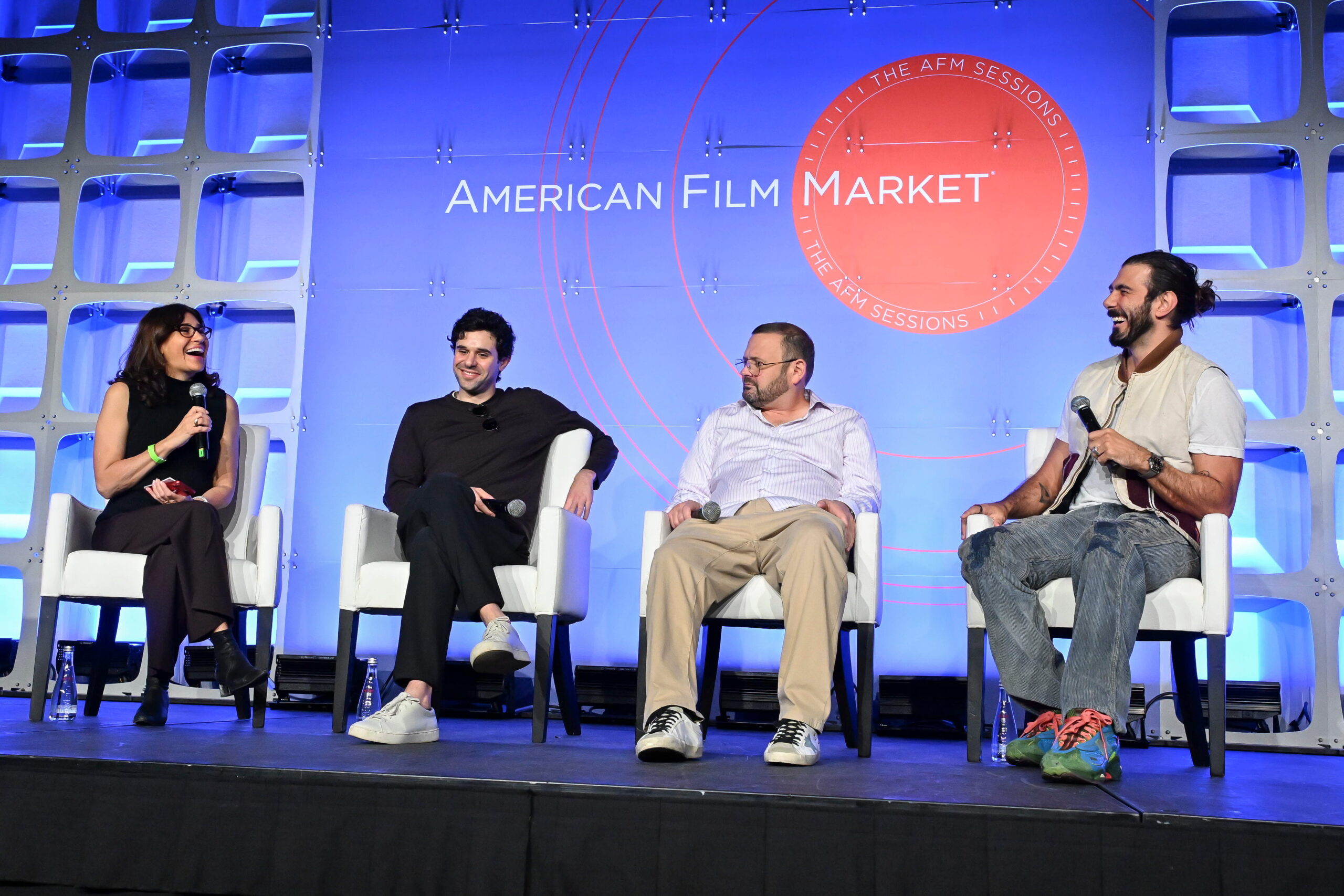
New independent film financing models are giving fans, crew, and creators real equity. Here’s how Republic, Asylum, and MCT are rewriting the rules at AFM 2025.
The film business has always had a velvet rope. On one side: studios, streamers, and a very short list of wealthy investors. On the other side: everyone else — the fans who fill the seats, the crew who builds the world, the filmmaker with the vision and no table to sit at. But at the American Film Market 2025 in Santa Monica, three of the industry’s sharpest innovators made the case that the rope is coming down. New independent film financing models are opening the door to retail investors, giving equity to crew members, and building distribution infrastructure that hands real data back to creators. The era of the gatekeepers may not be over. But it’s getting crowded at the gate.
The $100 Film Investment That Could Change the Industry
For most of cinema’s history, backing a film was a privilege of the wealthy. SEC accredited investor rules kept private market opportunities — including virtually every independent film deal — out of reach for anyone with a net worth under a million dollars. The 2014 JOBS Act changed that, creating regulatory exemptions that let everyday Americans invest in private ventures for the first time since the aftermath of the 1929 crash.
Marc Iserlis, Head of Film at Republic Film, has built his business on exactly that opening. Republic’s platform, which launched in 2016, holds the licenses globally to allow investments as small as $100 into private opportunities — startup tech, real estate, gaming, and now film. The platform counts 3 million users who have collectively deployed over $3 billion.
“If you’re an IP or a talent and you have that community,”
Marc Iserlis
“You can finally now tap them — access capital from them. And logically, if you’ve got a community of thousands of investors backing your film from day one, that creates a built-in audience.”
The results speak for themselves. Republic Film has raised over $30 million from 40,000 retail investors. Skybound Entertainment, the studio behind The Walking Dead, raised nearly $18 million on the platform alone. Robert Rodriguez ran a campaign in which every investor received the right to pitch him a film — he received over a thousand submissions. The winner, a group that calls itself the Brass Knuckle Warriors, has become an organic, self-organizing community that greets each other daily online. Eli Roth used Republic to capitalize The Horror Section, his 360-degree horror media company covering film, TV, games, podcasts, and live events.
This is not Kickstarter. There are no hats. There is equity.
When the Grip Gets a Cut: Equity for Every Person on Set
Willie Morris and Ron Perlman launched Asylum Studios on a deceptively simple idea: everyone who makes a film should own a piece of it. Director, cinematographer, actor, the crew member cleaning the trailers — all of them should participate in the upside if the film succeeds.
“There’s enough pie to go around for everybody,”
Morris said
“We just need to strip out some of the middlemen and be a little more efficient.”
The problem they ran into is structural. The main distribution channel for most independent films is the major streamers — and streamers share no meaningful performance data with producers. Without data, you cannot enforce equity. You cannot distribute profits you cannot verify.
That realization sent Morris and his partners down a different path: build their own platform. In partnership with former DHX/Wildbrain executives, they created Waterfall — a streaming and funding platform engineered around transparency. Any independent creator or studio can use it to distribute their work, access real performance data, and fund new projects through the platform’s investor community. Waterfall is designed to sit alongside existing distribution windows — foreign sales, theatrical, streaming — not replace them. It adds a revenue channel while giving creators the numbers they need to negotiate from a position of strength.
“We can provide a new revenue channel to independent creators and filmmakers,” Morris explained, “so that they can have streaming, foreign sales, theatrical release — and a new one that will grow and give them data so they can actually negotiate better with streamers.”
The Waterfall fundraising campaign, run through Republic, attracted between 1,000 and 1,500 investors who will share in platform profits in perpetuity. Asylum’s debut film, Kodak Super XX — a dark psychological thriller — is set to shoot in Los Angeles in early 2026, a deliberate choice to support a local industry under genuine strain.
The response from cast and crew to the equity model has been, Morris said, “overwhelmingly positive — because everyone has been told they’re not worth anything.”
How Institutional Capital Is Filling the Gap Left by Studio Consolidation
While Republic and Waterfall are building from the ground up, Christopher Woodrow’s Media Capital Technologies is operating at the institutional level — and finding that the two approaches are more complementary than they might appear.
Woodrow came to film by way of Wall Street, and has since financed or executive produced 55 films grossing over a billion dollars at the box office, including Birdman, which won Best Picture at the 2015 Academy Awards. MCT’s current infrastructure includes a co-financing partnership with Lionsgate (20 pictures over two and a half years), a credit investment platform backed by approximately half a billion dollars from MassMutual, and a target of raising a billion dollars in third-party LP capital for collateralized entertainment lending.
The most concrete expression of MCT’s market thesis is Roque Entertainment, a theatrical distribution company launched ahead of the 2024 Toronto International Film Festival and led by Megan Colligan, former president of IMAX Entertainment and former head of worldwide marketing and distribution at Paramount. Roque acquired four titles at TIFF — including Cliffhanger, slated for a 3,000-screen release in August 2025, and Poetic License, Maude Apatow’s directorial debut produced by Judd Apatow.
The strategic logic is straightforward: studio consolidation has left a hole in the mid-budget commercial market that once belonged to companies like New Line Cinema. Roque is built to fill it.
“We identified a real hole in the market,”
Woodrow
“Roque is designed to be a mid-budget commercial distributor to play in the same market that New Line used to occupy back in its heyday.”
For independent filmmakers navigating the current landscape, understanding the full range of independent film financing models — from crowd investing through institutional debt to equity-based distribution — has never been more strategically important. The American Film Market remains one of the best places in the world to see these models converge in real time.
The Creator Economy Is Already Rewriting the Rules
All three panelists pointed to a shift already in motion that will accelerate everything they are building. YouTube overtook Disney as the largest distributor in 2024. The creators commanding tens of millions of subscribers are functioning as celebrities in their own right — with built-in audiences that no studio marketing budget can easily replicate.
“A lot of these creators might make a sizzle or the next Squid Game-style pitch out of their basement with some of these tools,” Iserlis said. “And if it starts to get viral on YouTube or on some of these platforms, they can now turn to their fans to finance and independently control and make these new IP.”
Morris added a counterweight to the AI enthusiasm in the room. Community, he argued, is what no algorithm can manufacture at scale. “If you have a strong, engaged community, they’re still going to want to see your face — the humanity behind what you build — versus a nameless studio who can throw out hundreds of AI movies a year.”
Woodrow offered the data point that tends to surprise people: the fastest-growing segment of moviegoers is currently under 40, and Generation Alpha — those born after 2013 — is already trending ahead of any prior generation in its appetite for theatrical experiences. The cinema is not dying. It is finding a new audience.
Frequently Asked Questions About Independent Film Financing Models
Q: What is the difference between crowdfunding and crowd investing for films? A: Crowdfunding — through platforms like Kickstarter — offers backers perks or products in exchange for contributions. Crowd investing, as practiced through platforms like Republic Film, gives investors actual equity in the project or company. Backers can receive a share of profits, a preferred return, or equity in an emerging studio.
Q: Can everyday investors really invest in independent films? A: Yes, thanks to the JOBS Act of 2014, non-accredited investors can participate in private securities offerings through licensed platforms. Republic Film is one of the few platforms with the regulatory licenses to facilitate these offerings globally, with minimum investments as low as $100.
Q: How does the Waterfall platform differ from traditional streaming services? A: Waterfall is built around transparency and creator ownership. Unlike major streamers, which share little to no performance data with rights holders, Waterfall is designed to give independent filmmakers full visibility into how their content performs — and a stake in the platform itself.
The Gate Is Getting Crowded. That Is Good News.
The independent film world has always rewarded persistence. Woodrow lost money on his first two films. Morris spent a year and a half solving a problem that turned out to require building an entirely new platform. Iserlis is working to change a mental model — moving an industry from “crowdfunding” to “crowd investing” — one bespoke deal at a time.
But the infrastructure is real, the capital is moving, and the audience is ready. If you are a filmmaker, producer, or financier still waiting for the old system to come back, these three would like a word. The next Sundance, Cannes, or Toronto could look very different. The independent film financing models being built right now will be the reason why.